
Bottom line: An ab wheel will not give you abs. Nothing will, except being lean enough to see the ones you already have, and that happens in the kitchen. What an ab wheel will do is train your core harder than almost any floor exercise, for about the price of two sandwiches. The Perfect Fitness Ab Carver at around $45 is the one most people should get. If $45 feels steep for a wheel, the rebound-assisted roller at $28 is a smart beginner pick.
Wide wheel, real bearings, and a spring that helps on the way back. The version that stays stable instead of skating sideways.
Let’s separate the two things this product gets sold on, because only one of them is real.
The Abs Part Is a Kitchen Problem
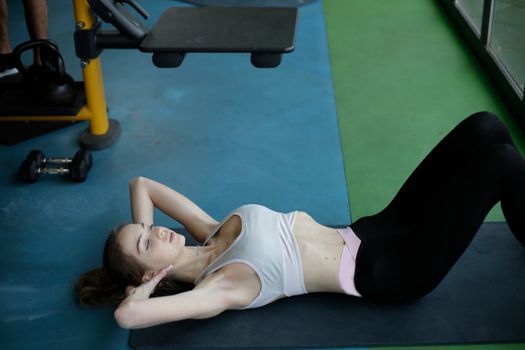
Everyone has abs. The rectus abdominis is standard equipment. Whether you can see it depends almost entirely on how much fat sits on top of it, and you cannot choose where your body pulls fat from. Spot reduction has been tested repeatedly and it does not work that way. Doing a thousand rollouts trains the muscle underneath and does essentially nothing to the layer above it.
So if visible abs are the goal, the ab wheel is not the tool. Your diet is the tool. This is the least popular sentence in fitness content and it stays true anyway.
Now the part that is real, and it’s better than the marketing angle. A rollout is an anti-extension exercise. As you roll forward, gravity tries to pull your hips down and arch your lower back, and your entire trunk has to fight that from happening. That resistance to unwanted motion is what your core actually does in real life, whether you’re carrying groceries or holding position under a barbell. It’s a genuinely demanding movement, and most people cannot do a full standing rollout on their first try.
That’s the honest pitch: excellent core strength trainer, terrible fat loss device. Buy it for the first reason. Our strength program guide covers where core work fits in a real week.
Perfect Fitness Ab Carver Pro: Best Overall
Perfect Fitness Ab Carver Pro, around $45. Wide contoured wheel, internal spring assist, ergonomic grips.
Two design details separate this from a $12 wheel. The tire is wide and slightly contoured, so it tracks straight instead of skating sideways when one arm is stronger than the other. And there’s a carbon steel spring inside that pushes back a little as you return, which takes some load off the hardest part of the movement.
That spring is why this is the pick for most people. The return is where beginners fail and where lower backs get compromised, so a bit of help there is the difference between building the movement and abandoning it. The wide wheel also lets you roll at angles rather than straight ahead, which brings your obliques in.
Who this is for: pretty much anyone, from a beginner working on knee rollouts to someone chasing standing ones. It’s also the pick if your floors are hard, since the wide tire is kinder than a narrow plastic wheel. Skip it only if you want maximum difficulty, because that spring assist makes it slightly easier than a bare wheel.
Rebound Ab Roller with Knee Mat: Best for Beginners
2026 Upgraded Ab Roller Wheel with Knee Mat and Timer, around $28. Automatic rebound, elbow support, included mat.
This one leans harder into assistance. The rebound mechanism gives a stronger push on the return than the Ab Carver’s spring, which makes rollouts accessible to people who genuinely cannot do one yet. The included knee mat matters more than it sounds, because kneeling on hardwood for three sets is its own small misery.
Who this is for: complete beginners, anyone returning to training after time off, and people who have tried a plain wheel and could not complete a rep. Also good if you’re buying for a household where people are at different strength levels. The honest caveat is that stronger assistance means less work for you, so you’ll want to progress off it eventually. That’s fine. A tool that gets you doing the movement beats a purer tool you can’t use.
DMoose Ab Roller with Elbow Support: Best for Wrists and Shoulders
DMoose Fitness Ab Roller with Elbow Support, around $95. Forearm platform instead of hand grips, knee pads included.
This changes the mechanics rather than just the price. Instead of gripping handles, your forearms rest on padded platforms, which moves load off your wrists and shoulders and onto a bigger, more stable base. If wrist extension under load is uncomfortable for you, that single change is what makes rollouts possible at all.
It also lets you go further with better control, since a forearm base is more stable than two hands on a bar. Owner reports from people with wrist issues are consistently positive on exactly that point.
Who this is for: anyone with wrist pain, previous wrist injury, or cranky shoulders, plus lifters who already do a lot of pressing and don’t want more wrist loading. At $95 it’s a specialist purchase and it’s overkill if your wrists are fine. If they’re not, it’s the difference between doing this exercise and not.
How We Evaluate
We don’t own and roll on every wheel here, and we won’t pretend we do. This ranking uses manufacturer specifications for wheel width, bearing type, assist mechanism, and grip design; the biomechanical difference between hand-grip and forearm-supported rollers and between assisted and unassisted return, which is what determines who can actually use each one; established exercise science on anti-extension core training and on the absence of spot reduction, which drives the expectations section rather than any product claim; and long-term owner feedback weighted toward months of use, since bearing wear, tire grip on different floors, and handle comfort only reveal themselves with repetition. Specs come from manufacturers. Recommendations are our judgment, labelled.
How to Not Hurt Your Back
The failure mode here is specific and worth naming. If your core gives out mid-rollout, your hips drop and your lower back arches hard under load. That’s the position people tweak themselves in, and it happens because they went too far too soon.
Start on your knees with a short range. Roll out only as far as you can go while keeping your ribs down and your lower back flat, then come back. That might be twelve inches at first and that’s completely fine. Squeeze your glutes during the movement, which sounds unrelated and actually helps hold your pelvis in the right position.
Progress by adding range before adding reps. Three sets of five good short rollouts beats three sets of fifteen sloppy ones by a wide margin. Standing rollouts are the eventual goal and most people take months to get there, if they get there at all, which is normal.
If your lower back is currently unhappy, skip this entirely for now and build with planks and carries first. Anything from our adjustable dumbbell guide works for loaded carries, and hanging from a pull-up bar is a good decompression counterbalance to all the flexion work.
The Progression, From Zero to Standing
Most people buy a wheel, fail a standing rollout, and shelve it. Here’s the ladder that actually works, and each step is a real training stage rather than a warm-up.
One: kneeling rollout to a wall. Kneel a foot from a wall and roll until the wheel touches it. The wall caps your range so you cannot overreach, and you move it back an inch at a time as you get stronger. Two: full kneeling rollout, nose nearly to the floor, controlled both directions. Three: negatives from standing, where you roll out slowly from your feet and drop to your knees to come back. Four: the full standing rollout, which is a legitimately impressive display of core strength that most gym regulars cannot do.
Expect months between steps two and four, not weeks. That’s not slow progress, that’s what the movement costs. Two or three sessions a week is plenty, and it stacks fine alongside heavier work like the routines in our suspension trainer guide or the pressing and pulling in a normal split. Core work has a low recovery cost, which is why it survives on days when your legs are wrecked and why anything from our recovery tracker roundup will barely register it as training load.
FAQ
Does an ab wheel give you abs?
It builds the muscle. Whether you can see it depends on body fat, which is determined by diet rather than by any exercise. Spot reduction does not work, so use the wheel for core strength and handle visibility in the kitchen.
Is an ab wheel better than crunches?
For most purposes, yes. A rollout is an anti-extension exercise, meaning your core resists your spine bending, which is closer to what your trunk does in real life. Crunches train repeated spinal flexion, which is a narrower and less transferable stimulus.
How many ab wheel rollouts should you do?
Start with three sets of five to eight, using only the range you can control. Add range before reps. Quality matters far more here than volume, because a failed rep puts your lower back in a bad position under load.
Are ab wheels bad for your back?
Not inherently, but overreaching is. Rolling past what your core can hold makes your hips drop and your lower back arch under load, which is where injuries come from. Kneeling rollouts with a short range are safe for most people. Anyone with current back pain should get it assessed first.
Do I need the version with a spring or rebound?
If you cannot yet complete a controlled rollout, yes, it genuinely helps and gets you training the movement sooner. If you already have solid core strength, a plain wheel gives you more work per rep and costs less.