
Bottom line: Suspension training is genuinely effective, and it is also the category where brand premium is hardest to justify on mechanism alone, a $70 strap and a $190 TRX move your bodyweight the same way. What you actually pay TRX for is hardware you are trusting with your body weight overhead, and that is a defensible reason. The TRX All-In-One at around $190 is the safe, complete answer. The $70 Bodytorc is the honest budget pick if you inspect it regularly.
Commercial-grade straps, every anchor you need, and the hardware quality that matters when you are hanging your bodyweight from it.
A suspension trainer is two straps, a handle at each end, and an anchor, which makes it one of the highest ratios of training value to storage space in home fitness. It fits in a drawer, works in a hotel room, and covers rows, presses, squats, lunges, and core work with the same piece of equipment. This guide covers what it does well, where the real cost difference lies, and the constraint most buyers overlook until the box arrives.
It pairs naturally with the equipment in our home gym guide and adjustable dumbbell roundup.
What Suspension Training Actually Does Well
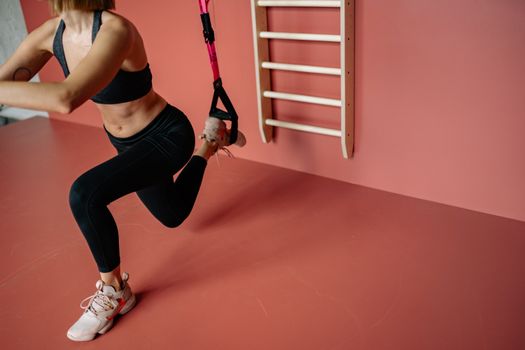
The mechanism is simple and genuinely useful: because you are anchored to a single point and supporting your own bodyweight, changing your body angle changes the resistance continuously. Step your feet forward and a row gets harder; step back and it gets easier. That means one piece of equipment scales from a complete beginner to someone doing single-arm work, with no plates to buy and no adjustment beyond where you place your feet.
The second real benefit is that almost every exercise becomes a core exercise. Because the anchor point is unstable, your trunk works continuously to keep you aligned, which is why people who train on straps often report noticeable core strength without doing dedicated ab work. For anyone building a program around compound movement patterns, as covered in our strength program guide, that carryover is legitimate.
Where suspension training is weaker is straightforward and worth saying: it is bodyweight training, so progressive overload is limited by how much you weigh and how extreme an angle you can hold. Building maximal strength or substantial muscle mass eventually requires external load. Straps are excellent for general strength, endurance, travel, and rehabilitation-style work, and they are not a substitute for a barbell or heavy dumbbells if size and maximal strength are the goal.
The Real Constraint: Your Anchor Point
This is the thing people discover after buying. Straps need somewhere to hang from, and your options shape what you can actually do. A door anchor ships with nearly every set and works, but it limits you to pulling away from the door, rules out anything directly beneath the anchor, and depends entirely on the door being solid and closing toward you, an outward-opening door is genuinely dangerous. A ceiling or beam mount unlocks the full exercise range including overhead work, but requires drilling into structural timber, not drywall.
A sturdy pull-up bar, rafter, or outdoor tree branch covers most of the middle ground. Before buying any set, decide where it will hang, because a trainer you cannot anchor safely is a trainer you will not use, and this constraint matters far more than the differences between the products below.
TRX All-In-One: Best Overall
TRX All-In-One Home Gym System, around $190. Commercial-grade straps, door and suspension anchors, extension strap, training app access.
The All-In-One is the sensible default. You get TRX’s commercial-grade webbing and hardware, every anchor type in one box, and the adjustment mechanism that made the brand, a single locking loop that changes strap length in one motion rather than fiddling with buckles mid-set. Owner reports on durability are the strongest in the category, with sets lasting many years of regular use.
The honest question is whether the mechanism justifies triple the budget price, and the honest answer is that the mechanism does not. The hardware does. Carabiners, stitching, and webbing rated for repeated bodyweight loading are the difference, and when a failure means falling, that is a reasonable place to spend money. If you will use it regularly, buy this one.
TRX GO: Best for Travel
TRX GO Suspension Trainer, around $140. Lighter webbing, packs to roughly one pound, door and suspension anchors.
The GO is the same system built lighter for portability. It weighs about a pound and packs down to roughly the size of a water bottle, which makes it a genuinely practical way to keep training while travelling, the specific problem it was designed for. It keeps TRX’s adjustment mechanism and hardware standards.
The lighter webbing has a lower load rating than the All-In-One and is built for portability rather than daily heavy use. If the trainer will live in one place, the All-In-One is more strap for $50 more. If it will spend its life in a suitcase, this is the right one.
TRX Pro3: Best for Heavy Use
TRX Pro3 Home Gym System, around $230. Professional-grade construction, textured rubber handles, dual-locking carabiners.
The Pro3 is the version built for gym-floor duty. The upgrades are unglamorous and real: dual-locking carabiners, more durable webbing, and textured rubber grips that stay usable when your hands are sweaty, the point at which cheaper foam handles get slippery and unpleasant.
For a home user, the All-In-One covers the same exercises with the same safety margin, and the extra $40 buys longevity most people will not reach. Choose the Pro3 if you train hard and often, share equipment across a household, or simply want the version that will outlast everything else in the room.
Bodytorc Suspension Trainer: Best Budget Pick
Bodytorc Suspension Trainer, around $70. Door anchor, extension arms, foot cradles included.
The budget option deserves a fair hearing, because mechanically it does the same job. You anchor it, you change your body angle, you train. It ships with a door anchor, extension straps, and foot cradles, and owner reports are broadly positive for home use at moderate intensity. At $70 including accessories, the value is obvious.
The honest caveat is where your caution should go: hardware quality and quality control are less consistent than TRX’s, and this is equipment holding your bodyweight. If you buy at this price, inspect the stitching and carabiners before every session for the first few weeks, avoid explosive movements, and replace it at the first sign of fraying. Treated that way it is a sound purchase, and if you find yourself training on it four times a week, the upgrade becomes easy to justify.
How We Evaluate
We do not train on every suspension trainer on this list, and we will not imply otherwise. This ranking is built from manufacturer specifications for webbing, load rating, hardware, and included anchors; the design differences that determine safety margin and adjustment speed; the exercise physiology of bodyweight training and angle-based resistance, which informs the expectations section; and a large volume of long-term owner feedback, weighted toward reports covering months or years of use, because stitching wear, carabiner failure, and strap slippage are the outcomes that matter and only appear with time. Specifications are attributed to the manufacturer; comparative judgements are ours and labelled.
Who Should Buy One, and Who Should Not
A suspension trainer is an excellent purchase if you train at home with limited space, travel often, want a scalable option that works for a beginner and stays useful later, or need a low-equipment way to cover pulling movements, which are the hardest patterns to train without a gym. For most home setups it is the highest-value single item after a set of adjustable dumbbells.
Skip it if you have no viable anchor point, or if your goal is maximal strength or significant muscle size, where external load does more, the kettlebell and dumbbell routes serve that better. And if you already own gymnastic rings, you have most of this capability already; rings are harder to learn but more versatile. Whatever you choose, pair it with sensible recovery, as covered in our recovery gear guide.
FAQ
Is a cheap suspension trainer as good as a TRX?
Mechanically it works the same way: resistance comes from your body angle, not the brand. The difference is hardware quality and quality control on equipment that holds your bodyweight. Budget sets are viable for moderate home use if you inspect them regularly and replace them at any sign of wear.
Can you build muscle with a suspension trainer?
Yes, particularly as a beginner or when returning to training, because bodyweight at a hard angle is a genuine stimulus. Progress eventually plateaus, since load is capped by your bodyweight and the angles you can hold. For continued size and maximal strength, external load is needed.
Where can you anchor a suspension trainer?
A solid door that opens away from you using the supplied anchor, a ceiling or wall mount screwed into structural timber, a sturdy pull-up bar, an exposed beam, or a strong tree branch outdoors. Never anchor to drywall alone or to a door that opens toward you.
Is suspension training good for beginners?
Unusually so. Because you adjust difficulty by moving your feet, the same exercise scales from very easy to very hard without changing equipment. That makes it one of the more forgiving ways to start strength training, and it keeps working as you progress.
Suspension trainer or gymnastic rings?
Rings are more versatile and better for advanced calisthenics, but harder to learn and to anchor. A suspension trainer is easier to set up, more beginner-friendly, and better suited to a door anchor. For general home fitness, straps are the more practical choice.