
Bottom line: These two cost the same, within a dollar, and they are built around opposite ideas. The RENPHO Active+ hits harder: 10mm amplitude and a claimed 45 pounds of stall force. The Bob and Brad Q2 Pro hits gentler at 7mm but adds heat and comes from two physical therapists who built their name explaining exactly how to use it. If you want depth, take the Renpho. If you want something you will actually pick up and use correctly, take the Bob and Brad.
Check RENPHO Active+ Price → Check Bob and Brad Q2 Pro Price →
Both were about $70 when we checked in July 2026. Prices in this category swing hard, so confirm before buying.
Amplitude Is the Spec, and Almost Nobody Explains It
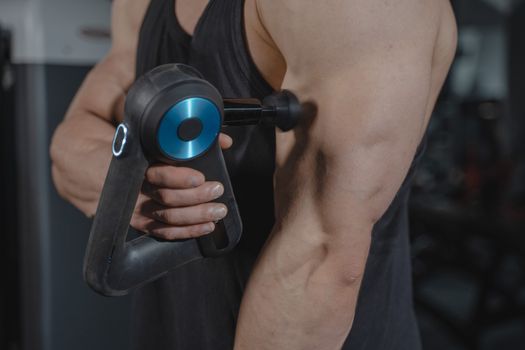
Massage guns get sold on percussions per minute, which is close to meaningless. Speed tells you how often the head taps you. Amplitude tells you how far it travels into the muscle on each tap, and that is what determines whether you are working tissue or just buzzing skin.
The manufacturer figures make the comparison unusually clean. Renpho lists the Active+ at 10mm amplitude with a brushless motor delivering 45 pounds of force. Bob and Brad list the Q2 Pro at 7mm across five speeds from 1,800 to 3,000 percussions per minute. That is a 43 percent difference in stroke depth at the same price.
Stall force matters alongside it. That is how much pressure you can lean in with before the motor gives up and the head stops moving. A gun that stalls the moment you press into a glute is doing nothing useful. Renpho publishing a 45 pound figure at this price is genuinely competitive, and it is the strongest argument in this comparison.
Worth knowing what all that force is actually doing, though, because it is not what the packaging says. Percussion does not break up scar tissue or physically restructure fascia. The effect is neurological: sustained pressure reduces pain sensitivity, stretch tolerance rises, and the muscle stops guarding. a systematic review of percussive therapy in the International Journal of Sports Physical Therapy (2023) found the measurable effects concentrated in flexibility and pain rather than in strength or power output, which is what you would expect if the mechanism is a nervous-system response rather than a change to the tissue itself. We go through that in our massage ball guide, and it matters here because it means more amplitude is not automatically more benefit.
See RENPHO Active+ on Amazon → See Bob and Brad Q2 Pro on Amazon →
What Bob and Brad Sell That Renpho Cannot
Two things, and the second one is underrated.
Heat. The Q2 Pro has a heated head. Heat raises tissue temperature and most people find it makes the same pressure feel more tolerable, which in practice means you stay on a sore spot longer instead of flinching off it. Treat it as a comfort feature that improves adherence rather than a separate therapeutic mechanism, because that is what the evidence supports.
The instruction problem. Bob and Brad are physical therapists with an enormous following built entirely on showing people how to use recovery tools properly. That is not marketing fluff for a device most people use wrong. The single biggest failure mode with a massage gun is grinding as hard as possible on a painful spot, which fights the exact relaxation response you want. Buying from people whose whole output is technique instruction is a legitimate reason to choose a product.
Renpho counters with app-connected video courses, which is the same idea executed through software rather than a YouTube back catalogue. Whether that lands depends on whether you will open another app.
Check Bob and Brad Q2 Pro Price →
Size, Noise, and the Stuff You Notice on Day Three
The Q2 Pro is a mini. That means it travels, fits a gym bag, and reaches your own upper back more easily than a full-size gun with a long handle. It also means a smaller motor and less sustained power.
The Active+ is a conventional full-size unit with five heads and a case. More capable, more to carry. Renpho specifically markets the brushless motor as quiet, and brushless motors do generally run quieter and last longer than brushed ones, which is a real durability point in a category full of disposable units.
Noise is the spec people regret ignoring. A loud gun is one you avoid using while someone else is in the room, and a recovery tool you avoid is worth nothing. Neither of these is in the whisper class of a premium Therabody, but both are far quieter than the cheap generics.
If You Want to Spend More
Bob and Brad make a step-up. The D6 Pro runs about $200 and buys a bigger motor, more amplitude, and the professional-grade build their PT positioning implies.
Our honest read, labelled as editorial judgment: at three times the price, it makes sense for someone treating clients, working on very large muscle groups, or using a gun daily for years. For the person buying their first massage gun to deal with tight calves after runs, it is more device than the job requires. Start at $70 and find out whether you use it. The upgrade will still be there. We cover the wider field in our massage gun roundup and the premium end in our Theragun versus Hypervolt comparison.
Check Bob and Brad D6 Pro Price →
The Eight Dollar Alternative We Are Obliged to Mention
For targeted work on a glute, a foot arch, or the muscles beside your spine, a firm lacrosse-style ball does most of what either gun does, for under ten dollars. Your bodyweight supplies the force, which is more pressure than any handheld motor can produce, and there is no battery.
What you give up is convenience and reach. A gun is faster across large areas like quads, works on your own shoulders without contorting, and requires no floor space. Those are real advantages worth $70 to plenty of people. But if your entire complaint is one knotted glute, buy the ball first and keep the sixty dollars.
Check Massage Ball 2-Pack Price →
How We Evaluate
We do not own and run both guns through a training block, and we will not imply otherwise. Specifications here come from Renpho’s and Bob and Brad’s own Amazon product listings, checked in July 2026, including the 10mm amplitude and 45 pound force figures for the Active+ and the 7mm amplitude and 1,800 to 3,000 percussion range for the Q2 Pro. Prices were read live on the same date and move constantly in this category. The explanation of what percussion therapy actually does to muscle reflects the current physiological understanding rather than either brand’s marketing copy, and where we recommend one over the other that is our judgment, labelled as such.
Who Should Buy Which
Buy the RENPHO Active+ if you have large or dense muscle groups, if you have used a weaker gun and found it stalled under pressure, or if depth is the reason you are shopping. The 10mm amplitude and 45 pound force are the numbers to beat at this price, and the app courses are a genuine bonus if you will use them.
Buy the Bob and Brad Q2 Pro if you travel, if you want heat, if you are new to recovery tools and want guidance from people who teach technique for a living, or if you want something small enough to reach your own shoulders. Gentler is not worse when gentler is what gets used.
Buy neither if you have not yet fixed sleep and training load, which do more for recovery than every tool in our recovery gear guide combined. A massage gun makes a good week feel better. It does not rescue a bad one, and our recovery stack guide puts the order of operations in one place.
Check RENPHO Active+ Price → Check Bob and Brad Q2 Pro Price →
FAQ
Is RENPHO or Bob and Brad better?
Renpho hits deeper, with 10mm amplitude and a claimed 45 pounds of stall force against Bob and Brad’s 7mm at the same roughly $70 price. Bob and Brad add a heated head and technique instruction from two physical therapists. Choose depth or choose comfort and guidance.
What amplitude do you need in a massage gun?
Amplitude is how far the head travels into the muscle, and it matters far more than percussions per minute. Around 10mm is genuinely deep tissue territory. Around 7mm is gentler and suits smaller muscles, sensitive users, and travel-size units.
Does massage gun heat actually help?
Heat makes the same pressure more tolerable, so people tend to stay on a sore area longer instead of pulling away. Treat it as a comfort feature that improves how consistently you use the tool rather than as a separate therapeutic mechanism.
Are cheap massage guns worth it?
At around $70 both of these deliver real amplitude and usable stall force, which is the functional core. Premium models buy quieter motors, better build, and longer service life. Start cheap, confirm you use it, then upgrade if you outgrow it.
Massage gun or massage ball?
For one specific knot in a glute, foot, or upper back, a $8 ball applies more pressure using your bodyweight and works fine. A gun is faster over large areas, easier on hard-to-reach spots, and needs no floor. The ball is the better first purchase for targeted pain.