
Bottom line: A massage ball does most of what a $400 massage gun does for a knotted glute or a sore foot, for the price of a sandwich. It also does not work the way the packaging claims, and knowing the difference will make you better at using it. The two-pack of firm lacrosse-style balls at $8 is all most people need. If you want something for your spine specifically, the peanut at $15 is shaped for exactly that.
Two firm balls for eight dollars. Same pressure a massage gun delivers, aimed with your bodyweight instead of a motor.
This is the cheapest useful thing in the recovery aisle, which is probably why it gets buried under products costing fifty times more.
You Are Not Breaking Up Anything
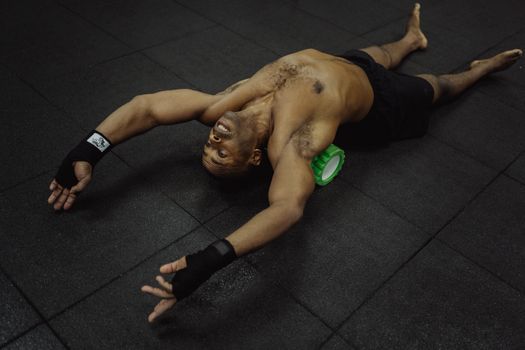
Every product in this category talks about myofascial release, breaking up adhesions, or smoothing out scar tissue. It’s a satisfying mental image and it isn’t what’s happening.
Fascia is genuinely tough connective tissue. Estimates from cadaver research suggest deforming it meaningfully would take forces well beyond what you can generate leaning on a rubber ball. If you could physically restructure your connective tissue by rolling on the floor, that would be a fairly alarming property for a load-bearing tissue to have.
What actually happens is neurological, and it’s more interesting. Sustained pressure on a sore spot changes how your nervous system responds to that area. Pain sensitivity in the region drops, your tolerance to stretch increases, and the muscle relaxes because the signal telling it to guard has quieted down. The effect is real, it’s measurable as increased range of motion, and it is what the research actually captures: a systematic review in the International Journal of Sports Physical Therapy (2023) examining pressure-based therapies found the measurable benefits concentrated in flexibility and pain rather than in strength or power, exactly the pattern you would expect from a nervous-system response rather than a change to the tissue. It is also it’s temporary, typically lasting minutes to hours rather than permanently changing tissue.
Why does this matter for a buying decision? Because it tells you how to use the thing. If the mechanism is nervous-system-based, then grinding harder on a spot until you’re gasping is not more effective, it’s just more painful. Moderate sustained pressure while you breathe and let the muscle relax is what actually produces the change. That’s also why the same logic applies to the tools in our foam roller guide and massage gun roundup, which do the same job with different geometry.
Firm Lacrosse-Style Balls: Best Value
Massage Lacrosse Balls, set of 2, around $8. Firm rubber, roughly 2.5 inches, two colours.
The classic and still the correct default. A firm ball about this size concentrates your bodyweight into a small area, which is exactly what you want for glutes, upper back, and feet. Two of them lets you place one on each side of your spine, which is the safe way to work your upper back without pressing directly on vertebrae.
Who this is for: almost everyone, and especially anyone dealing with a sore arch after running. Rolling a ball under your foot is one of the more reliably pleasant things in this category, and it’s a standard suggestion for plantar fascia irritation. Also ideal for desk workers whose upper back tightens up, which pairs with the setup advice in our posture corrector guide. At $8 there’s no real argument against owning a pair.
Check Lacrosse Ball 2-Pack Price →
Peanut Massage Ball: Best for Your Spine
Peanut Massage Ball, around $15. Two balls fused in a peanut shape, firm density.
The shape is the whole product and it solves a specific problem. Two joined balls straddle your spine with a channel down the middle, so you can roll along the muscles either side of your vertebrae without ever pressing on the bones themselves. Trying to do that with a single ball is fiddly and you’ll slip onto your spine repeatedly.
Who this is for: anyone whose main complaint is the long muscles running either side of the spine, which is most people who sit a lot, plus anyone doing thoracic extension work over it. It’s also easier for beginners than a single ball because it stays put instead of squirting across the floor. Not the pick if your main targets are glutes and feet, where a single ball digs in better.
4KOR Massage Ball Set: Best Range of Densities
4KOR Massage Ball Set, around $44. Multiple balls at different sizes and firmness levels, carry case.
The argument for a set is that different areas want different tools. A very firm small ball is right for a glute; that same ball on your neck or a bony area is unpleasant and counterproductive. Having a softer, larger option means you’ll actually use it on sensitive areas instead of deciding the whole approach hurts too much.
Who this is for: people who’ve used a single ball and want to work more areas, anyone particularly sensitive to pressure who needs a gentler starting point, and travelers who like the case. The honest caveat is that this is $44 for something whose core function costs $8, so buy it only if you know you’ll use the variety. For most people, one firm ball and a bit of patience covers it.
How We Evaluate
We don’t own every ball on this list and we won’t pretend otherwise. This guide draws on manufacturer specifications for size, density, and materials; the physiological literature on why pressure-based techniques change range of motion, which supports the neurological rather than mechanical explanation given above and is presented as the current best understanding rather than settled fact; the geometric differences between single balls, peanut shapes, and multi-density sets, which determine what each can safely reach; and long-term owner feedback weighted toward months of use, since surface grip and whether a ball goes soft over time are the practical failure points. Specs come from manufacturers. Interpretation is our judgment, labelled.
How to Use One Without Wasting Your Time
Find the sore spot, apply pressure you’d rate around a six or seven out of ten, and then stop moving. Hold for 30 to 90 seconds while breathing normally and deliberately relaxing the muscle. That last part is the whole technique. Tensing against the ball fights the exact response you’re trying to produce.
Rolling back and forth quickly feels productive and does less. So does going so hard you hold your breath, because bracing against pain keeps the muscle guarded. If you’re wincing, back off until you can breathe through it.
Timing matters too. Because the effect is largely about tolerance and temporarily increased range of motion, using a ball before training can help you get into positions more comfortably, and using it after is mostly about feeling better. Neither replaces sleep, which does more for recovery than every tool in our recovery gear guide combined. And if a spot has been sore for weeks and keeps coming back, that’s a pattern worth showing a physio rather than a knot to grind harder on.
The Four Spots Worth Learning
Most people buy a ball, roll around aimlessly for a week, and forget it exists. Four targets cover the vast majority of what this tool is good for, and each has a reason.
Under the arch of your foot. Sit down, put the ball under your foot, and apply gentle pressure while slowly rolling heel to toe. This is the classic suggestion for arch soreness after running and it’s also just pleasant. Glutes. Sit on the ball, cross one ankle over the opposite knee, and hunt around. This is the highest-value target for anyone who sits all day, and it’s hard to reach any other way.
Upper back, either side of the spine. Lie on your back with a ball or a peanut placed beside the vertebrae, never on them, and let your bodyweight do the work. Between your shoulder blade and spine. Stand against a wall with the ball in that gap and lean in. The wall version gives you far finer control over pressure than the floor does, which makes it the right starting point if you’re new to this.
Two or three minutes total, most days, does more than a punishing half hour once a week. It also stacks fine with hard training since the recovery cost is zero, which is why it fits the kind of routine our recovery stack guide lays out, and why anything from our recovery score guide will not register it as load at all.
FAQ
Do massage balls break up knots or scar tissue?
No. Fascia and scar tissue require far more force than you can apply with bodyweight on a ball. The benefit comes from your nervous system reducing pain sensitivity and letting the muscle relax, which produces real but temporary improvements in range of motion.
How long should you hold pressure on one spot?
Roughly 30 to 90 seconds at a moderate intensity, breathing normally and relaxing the muscle. Sustained pressure works better than fast rolling, and grinding harder does not accelerate the effect.
Massage ball or massage gun?
For targeted pressure on glutes, feet, and upper back, a ball does the same job for a fraction of the cost, because your bodyweight supplies the force. A gun is faster to use on large areas and easier if reaching the spot is awkward. Start with the ball.
Can you use a massage ball on your neck or lower back?
Be careful. Avoid pressing directly on the spine, and use a softer ball or a peanut shape near the neck. If you have disc issues, nerve symptoms, or unexplained pain, get it assessed before applying pressure to the area.
Is a lacrosse ball the same as a massage ball?
Functionally yes, and plenty of people use an actual lacrosse ball. Purpose-made massage balls tend to have more grip so they slide less on floors, and come in varied densities. The mechanism and the price range are effectively the same.