
Bottom line: A balance board will not give you abs and it will not make you better at your sport by itself. What it does have is one of the more solid evidence bases in home fitness, and it’s for something unglamorous: ankles. If you’ve rolled one before, or you want to keep your balance as you age, the StrongTek rocker board at about $32 does the job. If you surf, skate, or ski and want something that actually feels like your sport, the Revbalance 101 is a different machine.
A simple rocker board that covers the actual use case: ankle stability and balance work, for the price of a takeout order.
Balance training has a marketing problem. It gets sold as a core workout and a sports performance hack, which are the two things it’s weakest at. The real case is quieter and better supported, so let’s start there.
What Balance Training Actually Does
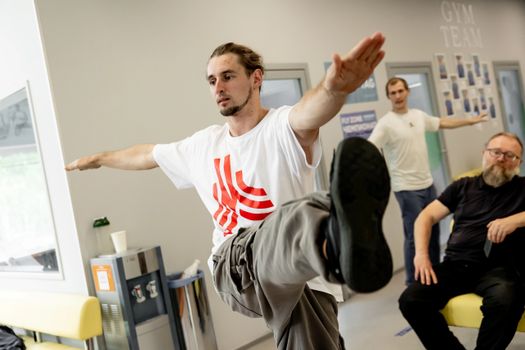
Your body knows where your joints are without you looking. That sense is called proprioception, and it runs on receptors in your muscles, tendons, and joint capsules feeding position data to your brain. When you stand on something unstable, those receptors fire constantly and your nervous system gets faster at responding to them. That’s the adaptation. It’s neural, not muscular.
Here’s where it pays off. When you roll an ankle, you damage ligaments and you also damage the proprioceptive receptors in them, which is a big reason one sprain makes the next one more likely. Balance training rebuilds that sense, and proprioceptive training after ankle sprain is well supported in the sports medicine literature as a way to reduce recurrence. It’s standard physiotherapy practice, not a wellness trend.
The second real benefit is fall prevention. Balance genuinely declines with age, falls are a serious health event for older adults, and balance training is one of the interventions with actual support behind it. That’s not exciting content, but it’s the strongest argument this category has.
What balance boards don’t do well is transfer to sport. Getting good at standing on a wobbly disc mostly makes you good at standing on a wobbly disc. Skill is specific, and if you want better balance on a bike, ride the bike. Treat the board as joint insurance and rehab, not as a performance shortcut.
StrongTek Rocker Board: Best for Most People
StrongTek Wooden Balance Board, around $32. Single-axis rocker, wide deck, high weight capacity.
A rocker board tilts on one axis, like a seesaw under your feet. That sounds less impressive than a full wobble board and it’s actually the right starting point, because a single axis is stable enough that beginners can hold position and progress instead of falling off and giving up.
The wide wooden deck fits most feet comfortably and it holds up under repeated use. It also slides under a couch, which matters more than people admit when deciding whether a piece of equipment stays in the rotation.
Who this is for: anyone rehabbing an ankle, older adults working on stability, beginners of any age, and people who want a few minutes of balance work while brushing their teeth. Also a good pick for a standing desk if you want gentle movement, though be honest that at a desk it’s a fidget rather than training. Skip it if you already have solid balance and want a real challenge, because a single axis will feel easy quickly. Runners in particular tend to progress fast here, and pairing it with the strength work in our weighted vest guide covers more ground than balance work alone.
Professional Wobble Board: Best Budget Multi-Axis
Balance Board Professional Wobble Board, around $27. 360 degree multi-axis tilt, anti-slip surface, 350lb capacity.
A wobble board tilts in every direction at once, which is meaningfully harder than a rocker and closer to what real-world balance demands. Your ankle has to respond to tilt from any angle rather than just front to back, and that’s the more complete stimulus once you can handle it.
At $27 it’s cheaper than the rocker board, which is a little odd, and the trade is a smaller platform and a steeper learning curve. Expect to hold a wall for the first few sessions. That’s normal and not a defect.
Who this is for: people who’ve outgrown a rocker board, anyone in the later stages of ankle rehab where their physio wants multi-directional work, and athletes in sports with lots of cutting and direction changes. Also the pick if you just want the hardest version for the least money. Not the right first purchase if you’re genuinely unsteady, because falling off is a real possibility and defeats the point.
Revbalance 101: Best for Board Sports
Revbalance 101 v2, around $160. Deck and roller design, adjustable difficulty, built for surf and skate training.
This is a completely different product from the other two. A deck sits on a free rolling cylinder, so you’re balancing side to side on something that actively moves under you rather than tilting on a fixed pivot. The feel is much closer to a surfboard or skateboard, and the difficulty scales with roller size.
It’s also the one product here where the sport transfer argument holds up, because the movement pattern genuinely resembles the target activity. That’s specificity working in your favor rather than against it.
Who this is for: surfers in flat season, skaters, snowboarders and skiers training in summer, and anyone who wants balance work that feels like a skill to develop rather than a chore. The honest catch is the price and the footprint. At five times the StrongTek, this only makes sense if board sports are actually your thing. For pure ankle rehab it’s overkill and harder than you need.
How We Evaluate
We don’t own and use every board on this list, and we won’t pretend we do. This ranking draws on manufacturer specifications for deck size, weight capacity, tilt range, and construction; the mechanical difference between single-axis rockers, multi-axis wobble boards, and roller-style boards, which determines difficulty and who each suits; the sports medicine literature on proprioceptive training for ankle sprain recurrence and on balance training for fall prevention, which drives the expectations section rather than any product claim; and long-term owner feedback weighted toward months of use, because deck wear, grip surface durability, and whether the thing keeps getting used are what actually separate them. Specifications come from manufacturers. Recommendations are our judgment, labelled as such.
How to Actually Use One
Short and frequent beats long and rare. Five minutes most days does more for proprioception than a punishing half hour on Sunday, because you’re training a nervous system response and those adapt with repetition rather than volume.
Start next to a wall or a counter. Touching it is not cheating, it’s how you build enough control to eventually not need it. Once you can hold steady for a minute, progress by closing your eyes, which removes visual input and forces the proprioceptive system to work alone. That’s a genuinely large jump in difficulty and it costs nothing.
From there you can add single leg holds, or do light dumbbell work while balancing, though keep the weight modest because the point is stability rather than load. Pair it with the pulling and carrying work in our suspension trainer guide, and if you’re rehabbing something, follow your physio’s plan over anything written here.
Balance Is a Use-It-Or-Lose-It System
Here’s the part that should motivate you more than any product feature. Balance isn’t fixed. It’s a trainable capacity that quietly erodes when you stop challenging it, and modern life challenges it almost never. Flat floors, supportive shoes, sitting for hours. Your proprioceptive system has very little to do all day.
That’s why balance work pays off disproportionately for people who train otherwise seriously. You can squat well and still have unreliable ankles, because a barbell squat on a flat floor doesn’t demand much from the stabilising system. Runners are the classic case: thousands of single leg contacts on uneven ground, and one badly placed step is how the season ends. A few minutes of instability work is cheap insurance against that.
It stacks well with everything else too. Balance work goes fine on the same day as hard training because the fatigue cost is near zero, which makes it easy to slot in beside the routines in our strength program guide or after an easy run. If you’re tracking load with something from our recovery tracker roundup, you’ll notice a balance session barely registers, and that’s the point.
FAQ
Do balance boards actually work?
For proprioception, ankle stability, and fall prevention, yes, and that’s supported in the sports medicine literature. For core strength or direct sports performance gains, the evidence is much weaker. Buy one for joint stability and balance, not as a core workout.
Rocker board or wobble board?
Rocker boards tilt on one axis and are the better starting point because you can actually hold position. Wobble boards tilt 360 degrees, which is harder and more complete once you have the basics. Beginners and rehab usually start with a rocker.
Are balance boards good for standing desks?
They add gentle movement and most people find them pleasant, but at a desk you’re fidgeting rather than training, because your attention is on your screen. That’s fine, just don’t count it as your balance work.
How long should you use a balance board each day?
Five to ten minutes most days is plenty. Proprioceptive adaptation responds to frequency more than duration, so short daily sessions outperform occasional long ones.
Can a balance board help after an ankle sprain?
This is the strongest use case. Proprioceptive training after ankle sprain is well supported for reducing the chance of spraining it again, and it’s standard physiotherapy practice. Work with your physio on timing and progression rather than starting on your own.