

Best Massage Gun in 2026: Ranked on Amplitude, Noise, and Price
Percussion therapy is one of the most well-supported recovery tools available. The problem is that most massage gun marketing is noise. Here is what actually separates good devices from expensive ones.
Best overall: Theragun Prime ($199): 16mm amplitude, quiet motor, app-guided recovery protocols. Best value: Renpho R3 ($50–$70): 10mm amplitude, 5 attachment heads, nearly silent. Best for serious athletes: Theragun Pro ($499): 16mm amplitude, adjustable arm, longest battery in class. Most people do not need to spend more than $100.
What Actually Matters in a Massage Gun
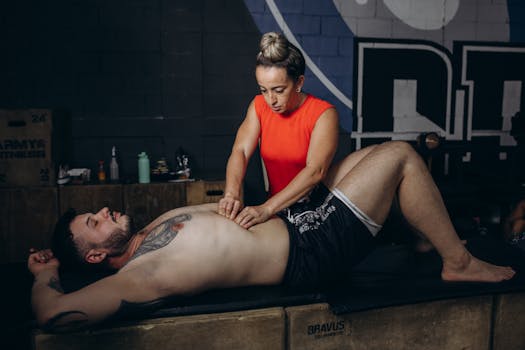
The massage gun market has one meaningful variable that most buyers ignore and most marketing obscures: amplitude, the distance the head travels per stroke in millimeters. Amplitude determines how deep the device reaches into muscle tissue. A 10mm amplitude device provides surface-level percussion. A 16mm amplitude device (Theragun’s standard) reaches deeper tissue layers, which is why physical therapists and athletic trainers consistently use higher-amplitude devices for actual therapeutic work.
Everything else (speed settings, attachment variety, battery life, app connectivity) is secondary to amplitude. A quiet motor matters for usability but does not change outcomes. Attachments allow targeting of different muscle groups but the same outcomes can be achieved with fewer. When comparing massage guns, check amplitude first. If it is not listed, the device likely has 10–12mm, which is the standard for lower price tiers.
#1 Best Overall: Theragun Prime
The Theragun Prime sits at the intersection of performance and usability. At 16mm amplitude it matches professional-grade devices in tissue penetration depth. The QuietForce Technology motor is significantly quieter than previous Theragun generations, audible but not intrusive during use. Five speed settings from 1750–2400 RPM cover warm-up activation (lower speeds) through deep tissue work (higher speeds). The ergonomic triangle handle allows three grip positions that reach any body part without awkward shoulder angles.
What makes the Prime specifically the best starting point for most athletes: it delivers professional amplitude at a consumer price, the app-guided protocols are genuinely useful (they prescribe speed, location, and duration for specific muscle groups and recovery scenarios), and it lasts 120 minutes per charge, enough for two weeks of daily use before needing a charge.
#2 Best Value Under $75: Renpho R3
The Renpho R3 is the benchmark for value percussion therapy. It delivers 10mm amplitude: adequate for warm-up activation, surface soreness reduction, and circulation improvement, with a motor that is genuinely quiet at low speeds (comparable to typing) and manageable at high speeds. Five speed settings, five attachment heads, USB-C charging, and a 6-hour battery cover everything a general training population needs from a massage gun.
The honest comparison: the Renpho R3 at $55–$70 produces 70% of the recovery outcomes of the Theragun Prime at $199 for athletes using it for general post-workout soreness and pre-workout activation. The 6mm amplitude difference matters for deep tissue work on large, dense muscle groups (glutes, hamstrings, thoracic paraspinals) but is irrelevant for most surface work. For casual gym-goers, the Renpho R3 is correct. For serious athletes or athletes managing specific chronic tightness, the Prime is worth the difference.
#3 Best for Serious Athletes: Theragun Pro Gen 5
The Theragun Pro is the device used by professional sports teams and clinical practitioners. What justifies the $499 price over the Prime: an adjustable arm that changes the angle of percussion without changing grip, OLED screen with force meter (shows how much pressure you are applying, the most common user error is either too much or too little), 150-minute battery, and a rotating arm that makes self-application to mid-back and posterior shoulder genuinely possible.
The Pro is for athletes who use percussion therapy as a deliberate recovery modality: planned sessions targeting specific tissue, managed application pressure, routine documentation of response. For athletes who just want to roll out sore spots, the Prime is more appropriate. The Pro earns its price for clinical use cases.
#4 Best Budget: Ekrin B37 V2
The Ekrin B37 V2 splits the difference between budget devices and the Theragun Prime: 12mm amplitude (better than standard 10mm), five speeds, four attachment heads, 8-hour battery, and a 45-degree angled handle that reduces wrist strain compared to straight-handle designs. At $100–$130 it is the best option for athletes who want more than basic amplitude but cannot justify Theragun pricing. The lifetime warranty is unusual at this price point and reflects genuine confidence in build quality.
#5 Best Compact: Theragun Mini
The Theragun Mini is a 12mm amplitude, single-grip compact device designed for travel and targeted use. At 3.5 inches long it fits in a gym bag side pocket, jacket pocket, or desk drawer without dedicated storage. Three speed settings, 150-minute battery, three attachment heads. For athletes who already have a full-size device and want something small enough to actually travel with (or for a specific chronic area that benefits from daily quick maintenance) the Mini is the right secondary purchase.
How to Use a Massage Gun Correctly
Speed: Start low (1,500–1,800 RPM) on sensitive areas post-workout, use higher speeds (2,000–2,400 RPM) for pre-workout activation of large muscle groups. The common mistake is using maximum speed everywhere. It does not increase benefit and increases the risk of bruising sensitive tissue.
Pressure: Float the device across the muscle surface rather than pressing in. The percussion mechanism does the work. Pressing hard does not increase depth meaningfully at standard amplitudes and fatigues your arm. Apply enough pressure to maintain consistent contact, approximately 2–3 lbs.
Duration: 60–90 seconds per muscle group is sufficient for any single application. Full-body sessions targeting all major groups take 12–15 minutes. More time on a single area does not produce proportionally more benefit and can cause local inflammation with aggressive devices.
Avoid: directly over joints, bones, the spine, varicose veins, areas of acute injury or swelling, or the neck/throat. Percussion on bony prominences is uncomfortable and produces no tissue benefit.
Massage Gun vs Foam Roller: Which First?
They are complements, not substitutes. The practical division: foam roll first for broad surface coverage of large muscle groups (quads, hamstrings, thoracic spine), then use the massage gun for targeted spot work on specific areas of tightness. Foam rolling takes 10–15 minutes for full coverage; the massage gun can address specific hot spots in 2–3 minutes per area. Athletes with limited time should foam roll the primary muscle groups being trained and use the massage gun only on the worst tightness points.
Frequently Asked Questions
Is a more expensive massage gun actually better?
For amplitude above 12mm: yes, meaningfully. The Theragun’s 16mm amplitude genuinely reaches deeper tissue than a 10mm budget device. Beyond amplitude, the price differences are primarily about build quality, noise level, battery life, and ergonomics. For athletes doing regular deep tissue work, the amplitude difference justifies premium pricing. For general warm-up and post-workout surface work, budget devices are adequate.
How often should you use a massage gun?
Daily use is appropriate and well-tolerated by most athletes. Post-workout sessions (10–15 minutes targeting trained muscles) and pre-workout activation (5 minutes of lower-speed work on key muscle groups) are the two most evidence-supported applications. There is no evidence that more than 2 sessions per day produces additional benefit, and overuse on a single muscle group (more than 2–3 minutes in one session) can cause local irritation.
Can a massage gun replace professional massage?
For maintenance work between sessions: managing training-induced tightness, activating muscles pre-workout, reducing DOMS: yes, a massage gun handles these effectively at home. For structural issues, chronic dysfunction, or therapeutic work on significantly restricted tissue, professional massage therapy or physical therapy remains superior. Use a massage gun to extend the interval between professional appointments, not to eliminate them.
What attachment should I use for what muscle?
Ball attachment: large muscle groups (quads, hamstrings, glutes, pecs). Flat attachment: dense areas requiring broad contact (thoracic spine, IT band). Dampener: sensitive areas and bony regions where the ball produces too much localized pressure. Fork attachment: either side of the spine, Achilles tendon, calf. Cone/bullet: trigger point work on specific tight spots, plantar fascia.
Related: Best Foam Roller · Best Massage Gun Under $100 · Cold Plunge Benefits · How to Build a Recovery Stack