
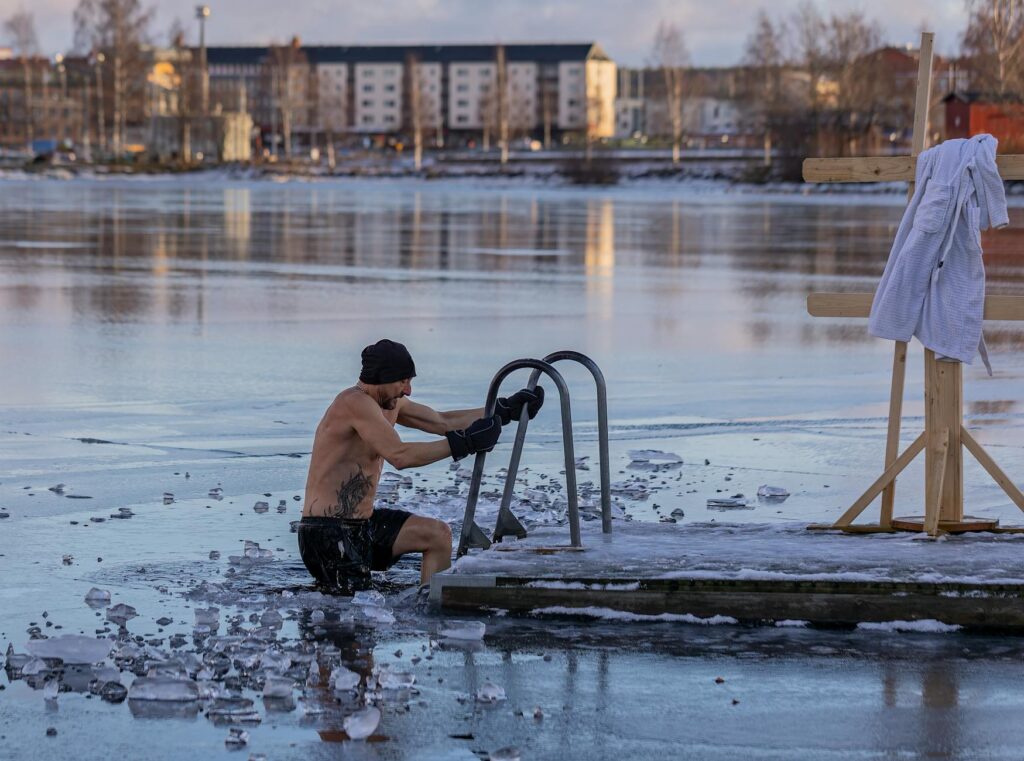
Cold Plunge Benefits: What the Research Actually Says in 2026
Cold water immersion has genuine research support for specific recovery applications. It also has a large volume of marketing claims that outrun the evidence. Here is the honest breakdown of what it actually does.
Cold water immersion (10–15°C / 50–59°F, 10–15 minutes) meaningfully reduces muscle soreness and subjective fatigue after endurance training. It does not significantly accelerate strength adaptation, and may blunt hypertrophy if timed poorly. The mental health and mood benefits are real and increasingly well-documented. The “metabolic” and “inflammation curing” claims are largely overstated.
What Cold Exposure Actually Does to Your Body
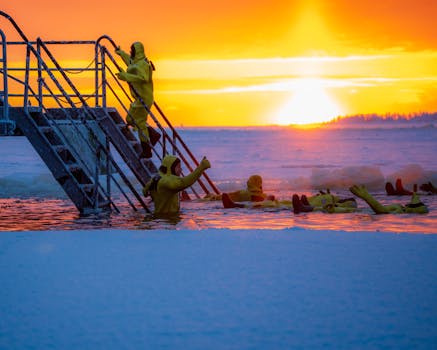
When you enter cold water (below 15°C / 59°F), your body responds immediately through vasoconstriction: blood vessels near the skin surface constrict, redirecting blood flow to core organs. Heart rate increases. Norepinephrine (a stress hormone with mood and alertness effects) spikes dramatically, studies show 200–300% increases within minutes of cold immersion. Core temperature begins to drop after several minutes of sustained immersion.
After you exit, vasodilation (blood vessel widening) creates a flushing effect: blood returns to peripheral tissues, carrying metabolic waste products from recently trained muscles toward elimination. This post-immersion circulation effect, combined with reduced nerve conduction velocity during immersion (temporarily reducing pain signal transmission), accounts for most of the soreness-reduction benefit.
The catecholamine response is real and the numbers get repeated constantly, so it is worth knowing exactly where they come from. Šrámek and colleagues in the European Journal of Applied Physiology (2000) immersed young men in 14°C water and measured plasma noradrenaline up 530% and dopamine up 250%. Three caveats change how much that should mean to you. The immersion lasted one full hour, not the two to five minutes an actual plunge takes, so the dose is nothing like what you will do. The measurements were plasma catecholamines, which do not straightforwardly reflect brain levels, since dopamine does not readily cross the blood-brain barrier. And a related study from overlapping authors in the same journal found plasma dopamine not significantly increased after a comparable immersion, so even the plasma finding is not uniform. The mood lift people describe after cold water is real and widely reported. Attributing a specific percentage of brain dopamine to it goes beyond what these data support, and that is our editorial read rather than a study finding.
Benefits With Strong Research Support
Reduced Muscle Soreness After Endurance Training
This is the most consistent finding across cold immersion research. Meta-analyses of randomized controlled trials show meaningful reduction in DOMS (delayed onset muscle soreness) 24–96 hours after endurance exercise when cold water immersion is applied within 1 hour post-exercise. Effect sizes are moderate to large, studies typically show 20–40% reduction in soreness ratings versus passive recovery. For athletes training frequently (every 24–48 hours), reduced soreness is directly relevant to training quality on subsequent sessions.
Acute Recovery Between Training Sessions
For athletes competing on consecutive days (tournament formats, stage races, back-to-back training camps) cold water immersion shows consistent benefit for maintaining performance on day 2 relative to day 1. The mechanism is the circulation-flush effect combined with soreness reduction. Elite sports teams and national training programs have used cold water immersion as a standard between-session recovery protocol for decades based on this evidence.
Mood and Cognitive Benefits
The norepinephrine and dopamine effects of cold exposure are among the better-supported findings in this area, with several small controlled trials reporting improved mood, reduced anxiety, and increased alertness after cold immersion. Evidence linking regular cold-water swimming to lower depression and anxiety scores is mostly observational or drawn from small samples, so treat the direction of the effect as plausible and the size of it as unsettled. The proposed mechanism is the large norepinephrine spike cold exposure produces.
Where the Evidence Is Weaker
Hypertrophy and Strength Gains
This is the most important caveat for strength athletes. Cold water immersion applied within 1 hour of resistance training has been shown in multiple studies to blunt hypertrophy adaptations. The mechanism: the inflammatory response to strength training is not purely damaging. It is part of the anabolic signaling cascade. Cold immersion suppresses this inflammation before it can complete its anabolic function. Studies show reduced satellite cell activation, lower myofibrillar protein synthesis, and blunted strength gains over training periods in athletes who cold-plunge after strength sessions.
The practical recommendation: avoid cold immersion within 4–6 hours of strength training sessions where hypertrophy is the goal. Cold plunging in the morning before an afternoon strength session, or on rest days, preserves the hypertrophy response while still capturing recovery benefits.
Fat Loss and Metabolic Effects
Cold exposure does activate brown adipose tissue (brown fat), which generates heat by burning calories. The metabolic effect is real but modest, studies show 100–300 extra calories burned during a 1-hour cold immersion, which is not a meaningful fat loss intervention by itself. Claims that cold plunging “supercharges metabolism” significantly overstate a real but small effect.
At-Home Cold Plunge Options
Dedicated cold plunge tubs maintain temperature automatically and are the most convenient option for daily use. The Pod Company Ice Bath Tub is a popular mid-range option: an insulated 84-gallon tub with a cover lid that holds ice-water temperatures and accepts a chiller through a conversion kit.
For athletes not ready to invest in a dedicated tub, a chest freezer converted to a cold plunge (the “chest freezer plunge” method popular in athlete communities) produces equivalent results at a fraction of the cost. A new chest freezer plus a $30 submersible pump and water sanitizer runs approximately $200–$300 total, similar to a budget inflatable cold plunge but significantly more durable for daily long-term use.
Protocol: How to Cold Plunge Effectively
Temperature: 10–15°C (50–59°F) is the range most research uses. Colder is not necessarily better, below 10°C produces similar outcomes with more stress and greater shock risk. Above 15°C, the stimulus is insufficient for the full norepinephrine response.
Duration: 10–15 minutes is sufficient. Studies using longer durations do not show meaningfully better outcomes on recovery or mood metrics. Limit sessions to 20 minutes maximum.
Timing: After endurance training, within 1 hour post-session for maximum soreness reduction. After strength training, wait 4–6 hours minimum if hypertrophy is a priority. Morning cold plunges (independent of training) produce mood and alertness benefits without affecting training adaptation.
Frequency: 3–5 sessions per week is the sweet spot supported by research. Daily cold exposure is used by many practitioners without apparent harm but may reduce the contrast effect that drives some of the norepinephrine response.
Common Questions
How cold does a cold plunge need to be?
Research consistently uses 10–15°C (50–59°F). This is cold enough to trigger meaningful vasoconstriction, norepinephrine release, and the full recovery response. Colder temperatures (5–8°C) increase the physical discomfort and cold shock risk without producing proportionally better outcomes. For beginners, starting at 15°C and gradually decreasing over weeks as tolerance develops is the appropriate progression.
Can cold plunges replace ice baths?
Cold plunges and ice baths are functionally identical from a physiological standpoint. The mechanism is cold water immersion below 15°C. Ice baths (a tub with ice added) are cheaper short-term but impractical for daily use at home. Cold plunge tubs maintain temperature automatically, making daily use more convenient. The recovery outcomes are the same if the temperature and duration are equivalent.
Is it safe to cold plunge alone?
Cold water immersion carries risk of cold shock response (an involuntary gasp reflex upon immersion that can cause aspiration of water) and, less commonly, cardiac events in individuals with cardiovascular disease. Best practice: never cold plunge alone if you are new to it or have cardiovascular risk factors, keep sessions to 15 minutes maximum, and ensure someone is nearby for the first several sessions.
Frequently Asked Questions
How long does it take to adapt to cold plunges?
Most people find the psychological difficulty of cold entry reduces significantly after 2–3 weeks of consistent exposure. The physiological cold shock response (involuntary gasp, hyperventilation, heart rate spike) attenuates faster, typically after 5–10 sessions. The norepinephrine and dopamine spikes do not habituate in the same way; regular cold exposure practitioners continue to show significant neurochemical responses even after months of daily plunging, which explains the sustained mood benefits.
What temperature should a beginner start with?
Begin at 15–16°C (59–60°F), cold enough to trigger the physiological response but manageable for 5–10 minute sessions without excessive discomfort. Decrease by 1–2°C every 2 weeks as tolerance develops. Most experienced cold plunge practitioners settle between 10–12°C (50–54°F) for regular sessions. Going below 8°C provides minimal additional benefit and substantially increases cold shock risk.
Should you shower before or after a cold plunge?
Neither is required, but if you shower first, warm showers before plunging are counterproductive, they dilate blood vessels and make the initial cold shock more intense. A brief warm shower after a cold plunge is fine and helps restore core temperature faster if you are cold after a session. Most practitioners plunge first thing in the morning without a prior shower.
Can cold plunging help with anxiety?
Emerging research suggests yes, the norepinephrine spike from cold exposure has anxiolytic (anxiety-reducing) properties through mechanisms similar to those of some anti-anxiety medications. Multiple controlled studies show reduced anxiety scores in regular cold water swimmers compared to control groups. The effect appears to be cumulative with regular practice rather than acute with single sessions.
The bottom line on cold water immersion: the evidence supports it as a legitimate recovery and mood tool when used correctly. Cold plunging after endurance training reduces soreness meaningfully; cold plunging immediately after strength training may blunt hypertrophy; morning cold plunges independent of training produce mood and alertness benefits with no adaptation trade-off. The anecdotal enthusiasm around cold plunging has outrun the evidence in some areas, but the core claims: reduced post-exercise soreness, elevated norepinephrine and dopamine, improved mood, are real and increasingly well-documented. Match the protocol to your goals, approach it progressively, and treat it as one recovery tool among several rather than a standalone intervention.
Related: How to Build a Recovery Stack · Best Recovery Gear · Sleep Optimization Guide · HRV Training Guide