

Best Resistance Bands in 2026: Ranked for Strength Training and Rehab
Resistance bands are not beginner equipment or substitutes for real weights. They are legitimate training tools used by powerlifters, physical therapists, and professional athletes. Here are the best options for every application.
Best loop bands for strength: WODFitters Pull-Up Resistance Bands (4-Band Set): competition-grade rubber, lasts years. Best set for general training: Fit Simplify Resistance Loop Bands (5-pack, $10–$15), the benchmark budget set. Best tube bands with handles: Bodylastics, clip-on stackable resistance up to 96 lbs. Best for travel: any flat latex loop bands in a set, packs to the size of a wallet.
Types of Resistance Bands and What Each Is For
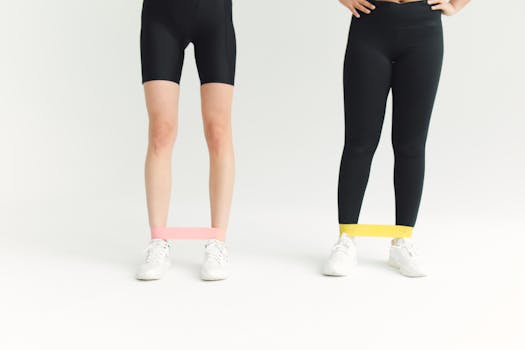
Loop Bands (Flat Latex Loops)
The most versatile format. Used for assisted pull-ups, band-resisted barbell work (accommodating resistance on squats and deadlifts), lower body activation work (clamshells, banded walks, hip thrusts), and upper body warm-up drills. Resistance ranges from 5 lbs (mobility work) to 200+ lbs (elite powerlifter assistance). These are what serious lifters and physical therapists primarily use.
Mini Bands (Short Loop Bands)
Shorter loop bands worn around ankles, knees, or thighs for lower body activation work specifically. Clamshells, lateral band walks, banded squats, and glute bridges with a mini band are standard warm-up and accessory work for runners, powerlifters, and athletes managing knee tracking issues. Separate from full-length loop bands.
Related: best resistance bands for glutes
Tube Bands with Handles
Rubber tubes with D-ring handles and a door anchor, used for cable-machine-style exercises: rows, presses, lateral raises, tricep pushdowns. More versatile than loop bands for upper body isolation work. Less useful for barbell accommodation and pull-up assistance. Best for home gym athletes who want cable machine mimics without the equipment.
#1 Best for Serious Strength Training: Rogue Monster Bands
Rogue’s Monster Bands are competition-grade 41-inch loop bands made from natural latex with consistent resistance across the full band. Used by powerlifters for accommodating resistance (attaching bands to a loaded barbell to increase resistance at lockout where the lift is mechanically strongest), assistance on pull-ups and dips, and heavy mobility work. They last 3–5 years of regular use with proper care, other bands at lower price points lose elasticity within 6–12 months of daily use.
The Rogue band set comes in seven resistance levels from #0 (approximately 5–35 lbs) to #5 (approximately 50–125 lbs). Powerlifters typically use the #2 and #3 for accommodating resistance and the #0 and #1 for warm-up and activation work. The investment is significant ($30–$35 per band) but justified for athletes who will use them daily for years.
#2 Best Value Set: Fit Simplify Resistance Loop Bands
The Fit Simplify set, five latex loop bands in increasing resistance levels from extra-light to extra-heavy, is the benchmark budget resistance band recommendation for a simple reason: at $10–$15 for five bands, they deliver what 90% of general training needs require. The resistance range covers warm-up, glute activation, upper body mobility, and moderate accessory work. They are not as durable as Rogue bands and lose tension more quickly with heavy use, but for athletes using them 2–3 times per week for activation and mobility rather than heavy accommodation resistance, they last 12–18 months comfortably.
#3 Best Tube Bands: Bodylastics Stackable Resistance Bands
Bodylastics bands use a clip-based system where multiple bands attach to a single set of handles, allowing resistance stacking up to 96 lbs (or higher with extended sets). For athletes who want to replicate cable machine exercises (rows, face pulls, tricep pushdowns, bicep curls, standing chest press) tube bands with stackable resistance are the most practical home solution. The Bodylastics system is the most durably engineered at this price point; the anti-snap technology inside the tubes reduces the risk of a band snapping at full extension.
#4 Best Mini Bands: WODFitters Pull Up Assistance Bands
WODFitters makes both standard loop bands and the short mini-band format used for lower body activation. Their material quality is above average for the price, the latex holds tension longer than most budget mini bands and the resistance labeling is accurately calibrated. For glute activation circuits before lower body training, banded walks, and knee tracking rehabilitation exercises, a set of 4–5 mini bands at progressive resistance levels covers all needs. The WODFitters set runs approximately $15–$20 for four bands.
How to Use Resistance Bands for Strength Training
Accommodating Resistance on Barbell Work
Attaching loop bands to a loaded barbell (wrapped around the bar and anchored under the feet or to rack hooks) adds resistance that increases as you approach lockout, where most barbell movements are mechanically strongest. This trains explosive power out of the bottom of the lift and increases the total mechanical demand of the top position. Powerlifters use this method extensively for building strength through the full range of motion. Bands are typically added at 25–35% of total bar weight for accommodating resistance work.
Pull-Up Assistance
A loop band hung from a pull-up bar and stepped or kneeled in provides assistance at the bottom of a pull-up (where most beginners cannot produce enough force to initiate the movement). As strength improves, progressively lighter bands reduce assistance until the movement is performed unassisted. This is the most evidence-supported method for progressing toward unassisted pull-ups faster than doing negative-only or jumping pull-up alternatives.
Warm-Up and Activation
Band pull-aparts (holding a band at chest height and pulling it apart to full arm extension behind the body) are the single best shoulder warm-up for athletes who press. Banded clamshells and lateral walks activate the gluteus medius before lower body training. Both take 2–3 minutes and meaningfully reduce injury risk by ensuring the stabilizing muscles are recruited before loading the primary movers.
Common Questions
Do resistance bands actually build muscle?
Yes, research confirms that resistance band training produces hypertrophy comparable to free weight training when the load and volume are matched. The variable resistance profile of bands (lighter at the start of a movement, heavier at the end) may actually provide a more favorable stimulus for some muscle groups than constant-load dumbbell work. Bands are not a substitute for progressive overload (you still need to increase resistance over time) but they are legitimate muscle-building tools.
How long do resistance bands last?
Quality latex bands (Rogue, WODFitters) last 3–5 years with regular use if stored away from direct sunlight, stretched from a neutral position rather than a fully elongated state, and not exposed to oils or lotions that degrade latex. Budget bands (Fit Simplify level) typically last 12–18 months of moderate use before losing meaningful tension. Bands that snap or tear should be replaced immediately, a snapping band at full extension can cause injury.
What resistance level should a beginner start with?
For activation and warm-up work: extra-light and light (approximately 5–25 lbs resistance). For assisted pull-up training: medium to heavy depending on bodyweight. For accommodating resistance on barbell work: this requires intermediate lifting experience; start with a band that adds 15–20% of your working weight at lockout. Most beginners should start with a 5-band set (extra-light through extra-heavy) and work through progressive resistance levels as strength improves.
Frequently Asked Questions
Can resistance bands replace a gym membership?
For most athletes at beginner-to-intermediate training levels, resistance bands paired with bodyweight movements and a pull-up bar produce adequate muscle and strength development without a gym membership. The ceiling on resistance bands is lower than free weights: most loop band sets max out at 150–200 lbs of resistance, which becomes limiting for advanced lower body training. For athletes who bench press, barbell squat, or deadlift significant loads, bands supplement but do not replace barbell training.
Do resistance bands lose their elasticity?
Quality latex bands do lose some elasticity over time, particularly with frequent use at maximum stretch. Natural latex bands stored away from UV light, heat, and oils maintain good elasticity for 2–4 years of regular use. Signs of deterioration: visible cracking or crazing on the latex surface, resistance that feels significantly lower than when new, sticky or powdery texture. Replace bands showing these signs, a deteriorating band is more likely to snap unexpectedly.
What is the difference between flat bands and tube bands with handles?
Flat loop bands (used for pull-up assistance, banded barbell work, and lower body activation) are the more versatile format for athletes. Tube bands with handles mimic cable machine movements better and are more appropriate for standing upper body exercises (rows, presses, lateral raises). Most athletes benefit from owning both, a set of flat loop bands for the gym/training movements and a tube band set for cable machine substitution at home.
Related: How to Build a Strength Program · Best Strength Training App · Strong App vs Hevy · Best Recovery Gear