
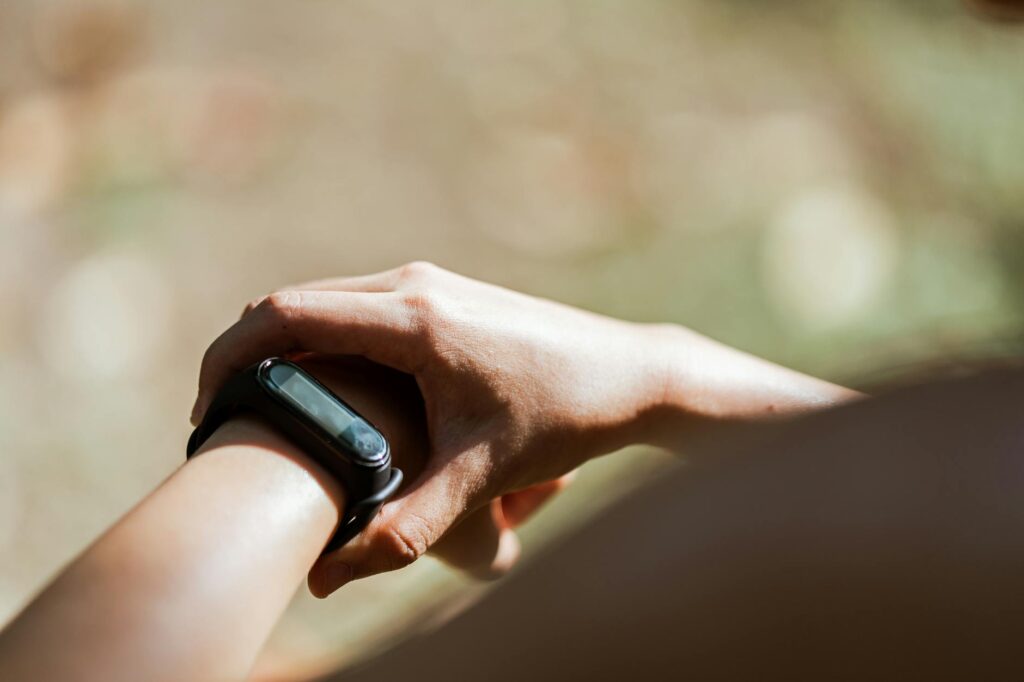
Apple Watch vs Fitbit: Which Fitness Tracker Is Right for You?
Apple Watch starts at $399. Fitbit Charge 6 costs $160. The price gap is real, but so is the feature gap. Here is the honest breakdown of which one is worth it for you.
- You have an iPhone and want full ecosystem integration
- You want a smartwatch that also tracks fitness
- Notifications, apps, and payments matter to you
- Budget is not the primary concern
- You want solid fitness and sleep tracking under $200
- You want 5+ day battery without thinking about charging
- You use Android or want device flexibility
- Fitness tracking is the priority, not a smartwatch
Apple Watch and Fitbit are often compared as if they are competing for the same customer. They mostly are not. Apple Watch is a smartwatch that tracks your fitness. Fitbit is a fitness tracker that has some smartwatch features. That distinction sounds trivial but it drives almost every difference between them, and it should drive your buying decision.
Battery Life: Fitbit Wins Decisively

The Fitbit Charge 6 runs 5–6 days on a single charge under normal use, or 4–5 days with GPS-heavy sessions. The Apple Watch Series 9 runs 18 hours. These are not comparable. With Apple Watch you charge every night. With Fitbit you charge once or twice a week.
This matters for sleep tracking specifically. If you want to wear your tracker to sleep (and sleep data is one of the most valuable things a wearable tracks) Apple Watch forces you to make a choice: charge at night and lose sleep data, or charge in the morning and risk running out of battery before bed. Fitbit eliminates that trade-off entirely.
Fitness Tracking: Closer Than You’d Expect
Both devices track steps, heart rate, calories, sleep stages, and common workout types. Both have built-in GPS for outdoor activity tracking. Both measure blood oxygen. For the basics of fitness tracking, Fitbit and Apple Watch are much closer than the price difference suggests.
Where Apple Watch pulls ahead: ECG (electrocardiogram) for heart rhythm detection, crash detection, fall detection, more accurate heart rate during intense exercise, and a larger third-party app ecosystem for fitness-specific apps like Strava, Nike Run Club, and training plan apps.
Where Fitbit holds its own: Active Zone Minutes (a more meaningful activity metric than step count), daily readiness score, excellent sleep staging, and the Google ecosystem integration that makes it particularly strong for Android users and people already using Google Fit.
Smartwatch Features: Apple Watch by a Wide Margin
If you want a device that handles notifications intelligently, lets you reply to messages from your wrist, runs third-party apps, supports Apple Pay, integrates with Siri, and generally extends your iPhone to your wrist, Apple Watch is in a different league. The Fitbit Charge 6 shows notifications and can control music, but it is not a smartwatch in any meaningful sense.
This is the most important question to ask yourself: do you want a smartwatch that tracks fitness, or a fitness tracker that has a few smart features? Your honest answer to that question makes the decision straightforward.
Head to Head
| Feature | Apple Watch S9 | Fitbit Charge 6 |
|---|---|---|
| Price | $399 | ~$160 |
| Battery life | 18 hours | 5–6 days |
| Built-in GPS | ✅ | ✅ |
| Sleep tracking | Good | Good |
| ECG | ✅ | ✅ |
| App ecosystem | Extensive | Limited |
| Works with Android | ❌ | ✅ |
| Smartwatch features | Full | Basic |
The Bottom Line
For iPhone users who want the full smartwatch experience alongside solid fitness tracking, Apple Watch Series 9 is the right buy. It is significantly more capable as a wrist computer and integrates seamlessly with the iPhone ecosystem.
For anyone who primarily wants fitness and sleep tracking: especially if they use Android, want multi-day battery, or are not willing to spend $400, the Fitbit Charge 6 delivers most of the fitness tracking value at less than half the price. The gap in actual fitness data quality is much smaller than the price gap implies.
Health Sensors: Closer Than the Price Difference Suggests
Both the Apple Watch Series 9 and Fitbit Charge 6 include ECG (electrocardiogram) monitoring, blood oxygen sensing, heart rate monitoring, and menstrual health tracking. The sensors themselves are comparable in specification. Where they diverge is in how that sensor data is processed and surfaced. Apple Health aggregates data from multiple sensors into a coherent health picture that integrates with third-party medical apps, shares with your doctor, and connects to hospital health records in supported regions. Fitbit’s health data stays largely within Google’s ecosystem.
For athletes, the most relevant difference is heart rate accuracy during intense intervals. Apple Watch uses a higher frequency optical sensor that holds accuracy better during high-intensity exercise than the Fitbit Charge 6. If your training involves a lot of HIIT, sprint intervals, or threshold work where accurate heart rate zones matter, Apple Watch is the more reliable tool. For steady-state cardio, walking, and moderate exercise, both are accurate enough that the difference is irrelevant.
Workout Tracking: What Each Does Well
Apple Watch detects workouts automatically and handles a huge range of sports through the Workout app. Third-party apps like Strava, Nike Run Club, and TrainingPeaks run directly on the watch, giving you full training platform integrations without carrying your phone. The Workout app itself has improved significantly, it now surfaces real-time metrics including heart rate zones, elevation, and pace with minimal lag.
Fitbit’s workout tracking is streamlined but narrower. The built-in GPS tracks running, walking, cycling, and swimming accurately. The Exercise app auto-detects common activities. For athletes who primarily run, walk, and cycle, Fitbit’s workout tracking covers everything needed. For athletes who do niche sports (rowing, skiing, surfing, golf) Apple Watch’s sport mode library is significantly larger and more detailed.
The Android Question
Apple Watch requires an iPhone. This is a hard requirement with no workaround: Apple Watch will not pair with Android phones, and the health and fitness features depend on that pairing for setup, app downloads, and data sync. If you use an Android phone and want the Apple Watch experience, the closest equivalent is the Samsung Galaxy Watch paired with a Galaxy phone, or a Garmin for training-focused features.
Fitbit works with both iPhone and Android, though iPhone users lose some features that are only available on the Android app. The Fitbit app itself is available on both platforms with near-feature parity. If you split your time between iOS and Android devices, or if you are buying for someone whose phone platform you are not sure of, Fitbit is the safer choice.
Long-Term Value: Durability and Software Support
Apple Watch Series 9 runs the latest watchOS and will receive software updates for at least 5–6 years from launch, based on Apple’s historical support timeline. The aluminum case is the most susceptible to scratching of Apple’s materials (the titanium Ultra 2 and stainless steel models are more durable) but the Ion-X glass holds up well under typical daily use. Most athletes report their Apple Watch lasting 4–5 years before battery degradation becomes noticeable enough to affect daily use.
Fitbit’s software support timeline is less clear following Google’s acquisition. Google has committed to maintaining the Fitbit platform, but the long-term roadmap, whether Fitbit-branded devices continue or get absorbed into Google’s Pixel Watch line, is not settled. If you want certainty about a 4–5 year device lifespan, Apple Watch is the safer long-term investment.
Where to buy: Both are strong picks \u2014 the right one depends on your priorities above. Check current pricing to decide:
Check Apple Watch Series 11 Price → Check Fitbit Charge 6 Price →
Frequently Asked Questions
Can Fitbit Charge 6 track swim workouts?
Yes. It is water-resistant to 50 meters and tracks lap swimming with auto-detection. It does not have GPS in the water (no open water swim tracking), but pool workouts are tracked with stroke count, lap count, and heart rate.
Does Apple Watch work with Android phones?
No. Apple Watch requires an iPhone for setup and full functionality. If you use Android, the Samsung Galaxy Watch 6 is the closest functional equivalent.
Which has better stress tracking?
Fitbit measures electrodermal activity (EDA) for stress detection on the Sense model. Apple Watch does not have dedicated stress monitoring but uses Heart Rate Variability data in the Mindfulness app. Neither is a clinical stress assessment, both provide directional awareness rather than precise measurement.
Final Verdict
Apple Watch and Fitbit represent two genuinely different philosophies about what belongs on your wrist. Apple Watch is a miniature iPhone extension that also tracks fitness: the smartwatch experience is the product, and the health tracking is excellent but secondary. Fitbit is a health and fitness tracker that also does some smart things. The data is the product, and the smart features are secondary. Getting this hierarchy right before you buy prevents the disappointment of a Fitbit buyer who wanted notification management, or an Apple Watch buyer who wanted a week of battery. Know which primary use case you are buying for and the decision becomes obvious.
The right decision comes down to your specific training goals, device ecosystem, and budget. Use this guide as a framework, not a formula: every athlete’s situation is different, and the device that serves your specific combination of needs is the one worth buying. If you are still undecided after reading, the safest starting point is always the device with the lower cost of entry: you can always upgrade once you have identified the specific gaps your current tool is not filling.
Related: Apple Watch Series 9 Review · Fitbit Charge 6 Review · Best All-in-One Fitness Watch in 2026 · Apple Watch Series 9 vs Ultra 2 · best fitness tracker for beginners · how to choose a fitness tracker