
Best All-in-One Fitness Watch in 2026: Compared on Specs, Battery, and Value
One watch for training, daily life, sleep, and recovery. Here are the five that actually deliver.
An all-in-one fitness watch has a harder job than a dedicated sport computer. It has to track your workouts accurately, handle notifications gracefully, look acceptable in a meeting, last through a full day, and monitor your sleep. Most devices do two or three of those things well. The ones on this list do all of them.
A dedicated running watch like the Garmin Forerunner 265 is a better running computer than anything on this list. A dedicated recovery tracker like WHOOP is better at recovery intelligence. The all-in-one category is not about being best at any single thing. It is about being genuinely capable at everything without carrying two devices.
Our Top Picks
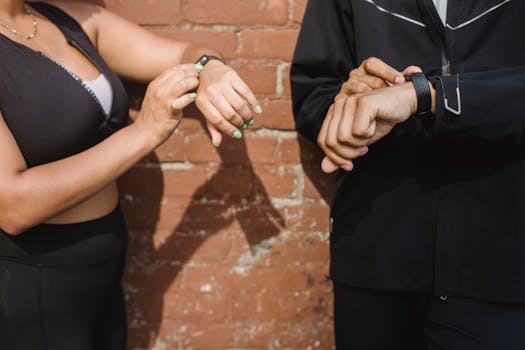
Apple Watch Series 9
Best OverallFor iPhone users who want one device that handles training, notifications, payments, and health monitoring without compromise, the Series 9 is the answer. As a daily device that tracks workouts reliably, nothing comes close in the all-in-one category.
Apple Watch Ultra 2
Best for EnduranceThe Ultra 2 adds 60-hour battery life, titanium construction, dual-frequency GPS, and a 2,000-nit display. Perfect for the athlete who races long, goes on multi-day adventures, or simply refuses to charge their watch every night.
Fitbit Charge 6
Best Under $200Built-in GPS, 5-6 day battery, automatic workout detection, Google Maps integration, and clean sleep tracking, all for under $160. For athletes who want comprehensive tracking without spending $400, nothing beats it at this price.
Samsung Galaxy Watch 6
Best for AndroidThe closest Android equivalent to Apple Watch. Wear OS 4 with Google integration, body composition analysis, advanced sleep coaching, and a rotating bezel that makes navigation fast. Best paired with a Samsung Galaxy phone for full feature access.
Garmin Venu 3
Best Training + LifestyleGarmin training analytics in a lifestyle-friendly design. AMOLED display, body battery tracking, nap detection, and all of Garmin core training intelligence in a case that works at the office and in the gym.
The Bottom Line
For iPhone users, Apple Watch Series 9 is the answer for most people. For endurance athletes who need multi-day battery, Apple Watch Ultra 2 is worth the premium. Budget under $200? Fitbit Charge 6 wins at this price. Android users should look at the Samsung Galaxy Watch 6. And for Garmin training depth in a lifestyle-friendly package, the Garmin Venu 3 is the one.
How to Choose Based on Your Phone
Your smartphone is the single most important factor in narrowing down the all-in-one watch choice. Apple Watch requires an iPhone, full stop. If you use an Android phone, Apple Watch will not pair. For Android users, the Samsung Galaxy Watch 6 with a Galaxy phone offers the closest equivalent experience to Apple Watch: tight platform integration, Google ecosystem services, and a polished smartwatch experience. For Android users on non-Samsung phones, the Garmin Venu 3 is the better choice. It works with any smartphone, prioritizes fitness over smart features, and does not rely on tight platform integration to function well.
For iPhone users the decision is simpler: Apple Watch Series 9 for the best overall daily experience, Apple Watch Ultra 2 if battery life or durability are priorities, and Garmin Venu 3 if you want deeper training analytics in a lifestyle-friendly form factor without caring about smartwatch features.
Battery Life Reality Check
Battery life numbers in watch marketing are always best-case. Real-world results with GPS active, always-on display, heart rate monitoring, and notifications running are consistently lower. The Apple Watch Series 9’s 18-hour claim becomes roughly 14–15 hours under typical all-day use with a one-hour workout. The Garmin Venu 3’s 14-day claim drops to 8–10 days with a daily one-hour GPS workout. The Fitbit Charge 6’s 5–6 day claim holds more reliably because its lower-power display draws less energy. Plan for roughly 70–80% of marketed battery life in real use with GPS workouts included.
Fitness Tracking Accuracy: What Independent Testing Shows
Independent testing of wrist-based heart rate accuracy consistently shows Apple Watch and Garmin at the top for accuracy during steady-state cardio, with more divergence during high-intensity intervals. The optical HR sensor on the wrist struggles with rapid heart rate changes: all devices show lag and occasional errors during HIIT, sprint intervals, and heavy lifting. If your training involves a lot of high-intensity work where precise heart rate zone data matters, pairing any wrist watch with a chest strap heart rate monitor (Polar H10 is the gold standard) eliminates the accuracy limitation entirely.
GPS accuracy testing by DC Rainmaker and other independent reviewers consistently rates Garmin multi-band GPS as the most accurate consumer GPS available. Apple Watch with L1+L5 dual-frequency GPS (Ultra 2 and current Series) performs comparably in open environments and slightly behind Garmin in dense urban settings. Fitbit’s GPS accuracy is adequate for distance tracking but shows more variance in route tracing than either Garmin or Apple Watch.
Software and Health Feature Comparison in 2026
Apple watchOS remains the most complete wearable operating system available. The Health app aggregates data from the watch, connected apps, and manual entries into a comprehensive health record that can be shared with healthcare providers, monitored for trends, and used to flag anomalies. The AFib detection feature has been validated in multiple clinical studies and has genuine medical utility, users have received real atrial fibrillation diagnoses after Apple Watch notifications prompted them to see a cardiologist.
Garmin’s health ecosystem is less medically oriented but more training-specific. Body Battery, Training Readiness, and HRV Status are designed to optimize athletic performance rather than to provide clinical health monitoring. For athletes whose primary use case is training optimization rather than health monitoring, Garmin’s feature set is more directly applicable to their actual needs.
Samsung’s health features sit between the two: comprehensive enough for general health monitoring with body composition analysis (bioelectrical impedance for body fat percentage), sleep coaching, and heart rhythm monitoring, but less training-specific than Garmin and less medically validated than Apple. For non-athlete Android users who want all-around health tracking, Samsung Galaxy Watch 6 is the most complete option in the Android ecosystem.
Frequently Asked Questions
Do all-in-one fitness watches work without a phone?
Most GPS watches work standalone for tracking, storing workouts on the device and syncing to an app when your phone is back in range. Apple Watch Series 9 has cellular options that allow calls and messages without a phone nearby. Garmin watches store workouts locally and sync via Bluetooth or Wi-Fi without requiring a phone during the workout.
How often do all-in-one fitness watches need to be updated?
Both Apple Watch and Garmin receive software updates 3-5 times per year. Updates install automatically overnight on Apple Watch; Garmin updates download through the app and install when you sync. Neither requires frequent manual intervention, updates happen in the background without disrupting daily use.
This guide covers the most important considerations for making the right decision. The best tool is the one you will use consistently, accuracy of data matters less than the habit of collecting and acting on it. Whether you are choosing between devices, building a tracking routine, or optimizing an existing system, start with one clear goal, pick the tool that serves it best, and give it at least eight weeks before evaluating whether it is working. Data compounds over time; the athletes who get the most from their devices are those who have been consistent the longest.
Related: Apple Watch Series 9 Review · Fitbit Charge 6 Review · Garmin vs Apple Watch · Apple Watch Series 9 vs Ultra 2 · best fitness tracker for beginners · how to choose a fitness tracker