

Bottom line: The Polar H10 is the most accurate consumer heart rate monitor you can buy. If you want lab-grade HRV data during workouts rather than overnight wrist estimates, this is the one.
Why a Chest Strap in 2026?
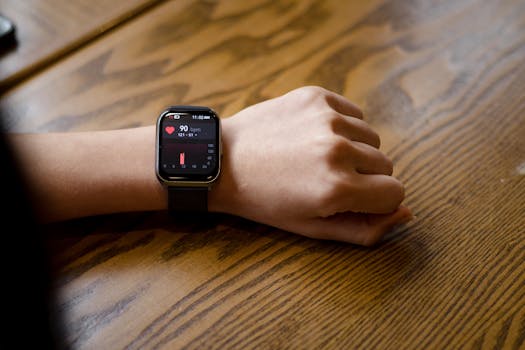
Wrist-based heart rate monitors have gotten good. Optical sensors on the Oura, Garmin, and WHOOP are accurate enough for most use cases. But during high-intensity exercise (intervals, HIIT, heavy lifting) they lag, they drop, and they estimate. The Polar H10 doesn’t. It reads electrical heart signals directly, the same way an ECG does, and the accuracy difference during hard efforts is significant.
The gold-standard chest strap, the most accurate heart rate data you can feed any app or watch.
For anyone who wants real-time HRV measurements during workouts, accurate VO2 max assessments, or simply the most trustworthy heart rate data available during high-intensity training, the H10 is the answer. It’s the chest strap that sports scientists and coaches use as a reference device when calibrating other wearables.
What You Get
The H10 broadcasts via Bluetooth and ANT+ simultaneously: meaning it connects to your phone, your Garmin or Wahoo, your gym’s cardio equipment, and any third-party app at the same time. It has 400-hour internal memory to store RR interval data for offline HRV analysis. Battery lasts around 400 hours on a CR2032 coin cell.
The electrode strap is washable and replaceable. The sensor pod snaps on and off. The whole setup takes about 30 seconds to put on and another 30 to pair. It just works, consistently, every time, which sounds unremarkable until you’ve dealt with optical sensor drop-outs mid-interval.
HRV Accuracy vs. Wrist Devices
At rest and during low-intensity exercise, modern wrist trackers come reasonably close to chest strap accuracy. Above roughly 75% max heart rate, the gap opens up. Optical sensors on the wrist struggle with movement artifacts, skin pressure changes, and vascular constriction during intense effort. The H10’s electrodes have none of these problems, it reads the electrical signal regardless of movement or intensity.
If you use an app like HRV4Training or Elite HRV for morning HRV readings (a 60-second measurement taken at rest right after waking), the H10 will give you consistently more accurate data than any wrist device. Over weeks and months, that translates to a more reliable baseline and cleaner trends.
Who Should Buy It
- Athletes who do high-intensity training and need accurate HR during hard efforts
- Anyone using HRV4Training, Elite HRV, or similar apps for daily HRV monitoring
- Cyclists, rowers, or swimmers who find wrist HR unreliable during their sport
- Anyone who wants to calibrate or validate their wrist tracker’s accuracy
The H10 doesn’t replace a wrist tracker, it complements one. Most serious athletes wear a Garmin or WHOOP for daily tracking and pull out the H10 for key training sessions and morning HRV checks.
Where to Buy
Around $90, no subscription required
Polar H10 Heart Rate Monitor Rating
| Accuracy | ⭐⭐⭐⭐⭐ |
| Connectivity | ⭐⭐⭐⭐⭐ |
| Comfort & Fit | ⭐⭐⭐⭐ |
| Value for Money | ⭐⭐⭐⭐⭐ |
| Ease of Use | ⭐⭐⭐⭐ |
| Overall | ⭐⭐⭐⭐½ |
Related Reading
Setting Up the Polar H10: Pairing and Electrode Care
The H10 pairs via Bluetooth and ANT+ simultaneously. It can connect to a Garmin bike computer and a phone app at the same time. Setup takes under two minutes: wet the electrodes on the underside of the strap, clip the sensor pod, and it auto-connects to any device searching for heart rate. No app is required to use it as a basic sensor.
The H10 has 200-sample internal memory, meaning it can record a session without being connected to a phone and sync it later. This is particularly useful for pool swimming where Bluetooth doesn’t penetrate water reliably.
Electrode maintenance is the main ongoing task. Rinse the strap with fresh water after every session, chlorine and sweat residue degrade the elastic over time. Most straps last 1–2 years with regular use and proper care; replacement straps are widely available and affordable.
Chest Strap vs. Wrist-Based Heart Rate: Where the Gap Is Real
The accuracy gap between a chest strap and wrist-based optical heart rate is most visible at high intensities and during interval training. At steady-state zone 2 (comfortable conversational running) modern wrist sensors (Garmin, Apple Watch, WHOOP) are within 2–5 BPM. During intervals, sprints, and strength training with heavy grip work, the gap opens: wrist sensors can lag 10–20 seconds and misread by 10–20 BPM at peak effort.
For runners using heart rate zones during intervals, the H10 makes a real difference. If you have not set your bands yet, our heart rate zone calculator will build them from your age and resting rate. If you’re doing 400m repeats and relying on a watch for zone feedback, the lag on an optical sensor means you’ve often already left the target zone before the watch registers the change. The H10 responds in under 2 seconds.
Practical conclusion: if you train exclusively at steady-state aerobic effort and care about weekly trends rather than real-time feedback, an optical wrist sensor is adequate. If you do structured interval work and want accurate zone training, the H10 is worth the addition.
Frequently Asked Questions
Does the Polar H10 work with Apple Watch and Garmin? Yes to Garmin via ANT+ and Bluetooth. Apple Watch does not support external Bluetooth heart rate sensors during native workouts, it uses its own optical sensor. You can pair the H10 to an iPhone running Polar Beat or third-party apps simultaneously with a Garmin.
Is it comfortable for overnight HRV monitoring? Most people find a chest strap uncomfortable for a full night. A dedicated 2–3 minute morning HRV measurement lying still after waking is more practical and provides reliable data for tracking long-term trends.
How do I know if the electrodes are making proper contact? The strap should feel snug but not constricting, with the electrodes sitting flat against skin. Erratic readings or dropped connections indicate dry electrodes or poor contact. A small amount of water fixes this in almost every case.
How the Polar H10 Compares to Optical Wrist Sensors
The fundamental advantage of the Polar H10 is signal quality. Chest straps measure electrical heart activity directly (the same method as ECG) rather than estimating heart rate from blood volume changes in the skin like optical wrist sensors do. During steady-state activities like cycling or running at consistent pace, optical sensors have become reasonably accurate. The gap widens during high-intensity intervals, rapid pace changes, and activities with significant wrist movement like rowing, cycling sprints, or HIIT circuits where motion artifacts degrade the optical signal.
For HRV measurement specifically, the Polar H10 is in a different accuracy class from wrist-based trackers. RMSSD measured from chest ECG is the clinical gold standard; wrist PPG HRV is an estimation with meaningful variance. If you’re using HRV to guide training decisions, collecting morning measurements with the H10 for 60 seconds in a seated position produces data comparable to what a cardiologist would use, wrist trackers produce useful trending data but should be understood as approximations.
Real-World Use Cases for the Polar H10
The H10 excels in specific training contexts. For cycling on a smart trainer where precise power-to-heart-rate relationships matter for Zone 2 work, having accurate HR data eliminates the ambiguity of whether you’re actually in the right zone. The same applies to running threshold intervals, knowing your HR hit 172 bpm rather than an optical sensor’s estimated 168 bpm is meaningful when you’re trying to stay just below lactate threshold.
Swimmers are well-served by the H10’s waterproofing and internal memory. It can store data during a swim and sync afterward to the Polar app or compatible platforms. Most smartwatches lose significant accuracy during swimming due to water interference with optical sensors; the H10’s electrode-based measurement is not affected. Strength training is another context where wrist sensors struggle, the H10 maintains accuracy during heavy compound lifts where arm position and wrist flexion disrupt optical readings.
Connectivity and App Compatibility
The Polar H10 transmits over both Bluetooth and ANT+, making it compatible with virtually every fitness platform on the market. Garmin watches, Wahoo cycling computers, Apple Watch via Bluetooth, treadmills with Bluetooth HR input, Zwift, TrainerRoad, and hundreds of fitness apps all receive H10 data without adapters or workarounds. This universal compatibility is a genuine practical advantage, you’re not locked into a single ecosystem the way you are with a smartwatch’s built-in sensor.
The Polar Beat app (free) provides real-time training feedback and post-workout analysis when using the H10 without another device. For runners and cyclists who want training zones, intensity guidance, and workout history without buying a dedicated GPS watch, the H10 plus a phone running Polar Beat is a low-cost but high-accuracy training setup. The combination is particularly compelling for people who want chest-strap accuracy without the $400-plus investment of a GPS sports watch.