
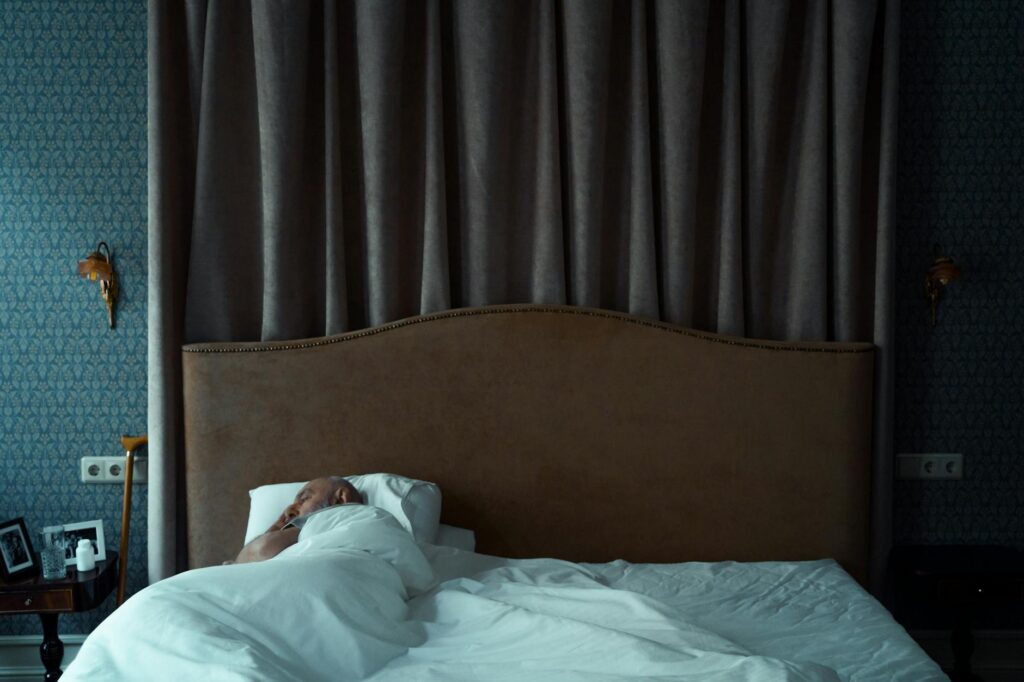
Sleep is the most underrated performance variable in fitness. You can optimize training, nutrition, and supplementation perfectly — but if your sleep is poor, all of it underperforms. This guide covers what actually matters for sleep quality and how to fix the common problems.
Why Sleep Is the Foundation of Athletic Recovery
During deep sleep (slow-wave sleep), your body releases the majority of its daily growth hormone — the primary driver of muscle repair and tissue recovery. Without enough deep sleep, the physiological processes that make training adaptations stick are compromised. Consistently undersleeping doesn’t just make you tired; it slows muscle growth, increases injury risk, impairs cognitive function, and elevates cortisol.
Research consistently shows that athletes sleeping 9–10 hours outperform those sleeping 6–7 on virtually every performance metric: sprint speed, reaction time, accuracy, and endurance. Most adults need 7–9 hours. Most adults are getting 6–7.
Sleep Architecture: What Actually Happens at Night
Sleep cycles through stages roughly every 90 minutes:
- Light sleep (N1/N2): The entry and transition stages. Less physiologically important but necessary as the gateway to deeper stages.
- Deep sleep (N3/slow-wave): The physically restorative phase. Growth hormone release, tissue repair, immune function. Concentrated in the first half of the night.
- REM sleep: Memory consolidation, emotional processing, and motor skill learning. Concentrated in the second half of the night. This is why cutting sleep short — even losing just the last hour — disproportionately removes REM.
This architecture explains why sleep quality matters as much as duration. Eight hours of fragmented sleep is not equivalent to eight hours of solid cycling sleep. Alcohol, for example, increases time in light sleep while suppressing both deep sleep and REM — you sleep the same duration but wake up feeling unrestored.
The Biggest Levers for Better Sleep Quality
Temperature. Your core body temperature needs to drop 1–2°F to initiate sleep. A cool room (65–68°F / 18–20°C) accelerates this process. This is one of the highest-impact, free changes you can make. If you run hot, a cooling mattress pad (like the Eight Sleep Pod) can be transformative — though it’s expensive.
Light. Bright light in the evening — especially blue light from screens — suppresses melatonin and delays sleep onset. Dimming lights 1–2 hours before bed and using blue-light-blocking glasses or warm-toned lighting makes a measurable difference for most people. Morning sunlight exposure (within 30–60 minutes of waking) anchors your circadian rhythm and improves sleep timing at night.
Consistency. Going to bed and waking at the same time every day — including weekends — is the single most powerful sleep intervention. Irregular schedules fragment sleep architecture. Your circadian rhythm is a biological clock that needs consistent timing to run well. “Catching up” on sleep over the weekend doesn’t undo the cognitive and physiological debt from a week of short sleep.
Caffeine timing. Caffeine has a half-life of 5–6 hours. A coffee at 2pm still has half its caffeine active at 8pm. For most people, cutting caffeine after noon meaningfully improves sleep quality even if you think it doesn’t affect you. (The sleep monitoring data usually tells a different story than self-perception.)
Alcohol. Even moderate drinking degrades sleep quality significantly. Alcohol is sedating — it makes falling asleep easier — but it suppresses REM sleep and increases arousals in the second half of the night. You may sleep 8 hours but spend more time in light sleep. HRV-tracking devices like WHOOP and Oura will show you this clearly.
How to Use Sleep Tracking Data
Wearables like the Oura Ring Gen 4 and WHOOP 4.0 give you nightly sleep stage breakdowns, HRV, resting heart rate, and readiness scores. Used well, this data is genuinely useful. Used poorly, it creates anxiety that paradoxically worsens sleep (orthosomnia — performance anxiety about sleep metrics).
Good rules for sleep tracking:
- Look at trends over 1–2 weeks, not individual nights. One bad night is noise.
- Use the data to identify patterns (e.g. alcohol always drops deep sleep, late workouts delay sleep onset) rather than to micromanage.
- Don’t check your sleep score first thing in the morning before deciding how you feel. Let subjective feel inform how you interpret the data — not the other way around.
Supplements: What Actually Works
The supplement industry is full of overpriced sleep products. A few things have reasonable evidence:
- Magnesium glycinate (200–400mg before bed): Supports relaxation and is often deficient in people who train hard. One of the most evidence-backed sleep supplements.
- Melatonin (0.5–1mg, low dose): Useful for shifting sleep timing (e.g. jet lag, night owls trying to sleep earlier). Not a sedative — works by signaling circadian timing. Most OTC doses (5–10mg) are far too high.
- Glycine (3g before bed): Reduces core body temperature slightly, which may improve sleep depth. Some evidence for improving subjective sleep quality.
Everything else — valerian, ashwagandha, L-theanine — has mixed or weak evidence. Fix the environmental factors first before reaching for supplements.
Training Timing and Sleep
Evening training raises core body temperature and cortisol, both of which can delay sleep onset. For most people, training within 2–3 hours of bed makes falling asleep harder. If evenings are your only option, a cool shower post-workout helps accelerate the temperature drop needed for sleep.
Morning training — especially with early sunlight exposure — is the most circadian-friendly option and tends to improve sleep quality by anchoring wake time and building sleep pressure throughout the day.
The Bottom Line
Sleep optimization doesn’t require expensive gadgets or complex protocols. The highest-impact changes are: consistent sleep/wake timing, a cool and dark room, cutting caffeine after noon, and reducing evening light exposure. Do those four things consistently for 30 days and you’ll see the difference — in your performance, recovery, and HRV data.
Related Reading
Reviewed by
Marcus Webb
Recovery & Wearables
Spent years dealing with overtraining before getting serious about recovery data. Has tested nearly every wearable on the market and believes the best tracker is the one you actually respond to — not just the one with the best specs.
The Circadian System: Why Timing Matters as Much as Duration
Your circadian rhythm is a roughly 24-hour internal clock driven by light exposure that regulates sleep timing, hormone release, body temperature, and metabolism. When your sleep schedule aligns with your circadian rhythm — consistently sleeping and waking at the same times — sleep architecture is more efficient, deep sleep percentage is higher, and you wake naturally before or near your alarm. When the schedule varies by more than an hour or two across the week (sleeping in on weekends, late nights on weekdays), the mismatch between your social schedule and biological clock creates what researchers call “social jetlag” — associated with increased fatigue, worse metabolic health markers, and impaired cognitive function even when total sleep duration is adequate.
The single highest-leverage sleep intervention for most people is not sleeping more — it is sleeping consistently. A fixed wake time (the same time every day including weekends) anchors the circadian rhythm more effectively than any other behavioral change. Your body learns when wake time is and prepares accordingly, meaning the final sleep stages become lighter and more alertness-promoting in the 30–60 minutes before your alarm. The struggle to wake up that most people experience is largely a symptom of inconsistent wake timing, not insufficient sleep.
Light Exposure: The Master Circadian Signal
Light is the primary input to the circadian system. Morning bright light (outdoor sunlight or a 10,000 lux light therapy lamp) within 30–60 minutes of waking accelerates cortisol release, suppresses residual melatonin, and sets the circadian clock for the day. Athletes who do this consistently report faster full alertness in the morning and easier sleep onset at night. The dose is 10–30 minutes of outdoor exposure or equivalent artificial light — enough to see the sky, ideally before the sun is fully above the horizon.
Evening light exposure — particularly blue-light-rich screens (phones, laptops, TVs) in the 1–2 hours before bed — suppresses melatonin release and delays sleep onset. The mechanism is the same: the circadian system interprets bright light as daylight and delays the sleep signal. Blue-light blocking glasses reduce but do not eliminate this effect. Dimming screen brightness and switching to night mode (warmer color temperature) after sunset is a partial mitigation. The most effective intervention is the one most people resist: putting devices away 30–60 minutes before bed.
Supplements with Evidence for Sleep Quality
Three supplements have meaningful research support for sleep quality improvement. Magnesium glycinate (300–400mg before bed) is deficient in a significant portion of the population and its deficiency is associated with insomnia and reduced slow-wave sleep. Supplementing athletes who are deficient consistently improves sleep quality markers. Ashwagandha (300–600mg daily) has several RCTs showing improvements in sleep quality, sleep latency (time to fall asleep), and subjective restfulness — the mechanism appears to involve cortisol modulation and GABA activity. Low-dose melatonin (0.5–1mg, not the 5–10mg commonly sold) is most effective for shifting sleep timing (jet lag, shift work, adjusting sleep schedule) rather than improving sleep quality per se.
What does not work well despite widespread use: high-dose melatonin (5–10mg suppresses the body’s natural melatonin production over time and produces grogginess the following morning in most users), ZzzQuil and similar antihistamine sleep aids (effective short-term but suppress deep sleep architecture), and alcohol (widely used as a sleep aid but a well-documented suppressor of REM sleep and deep sleep quality even in small doses). If your sleep tracker shows consistently poor sleep architecture after nights with alcohol, this is not coincidental.