
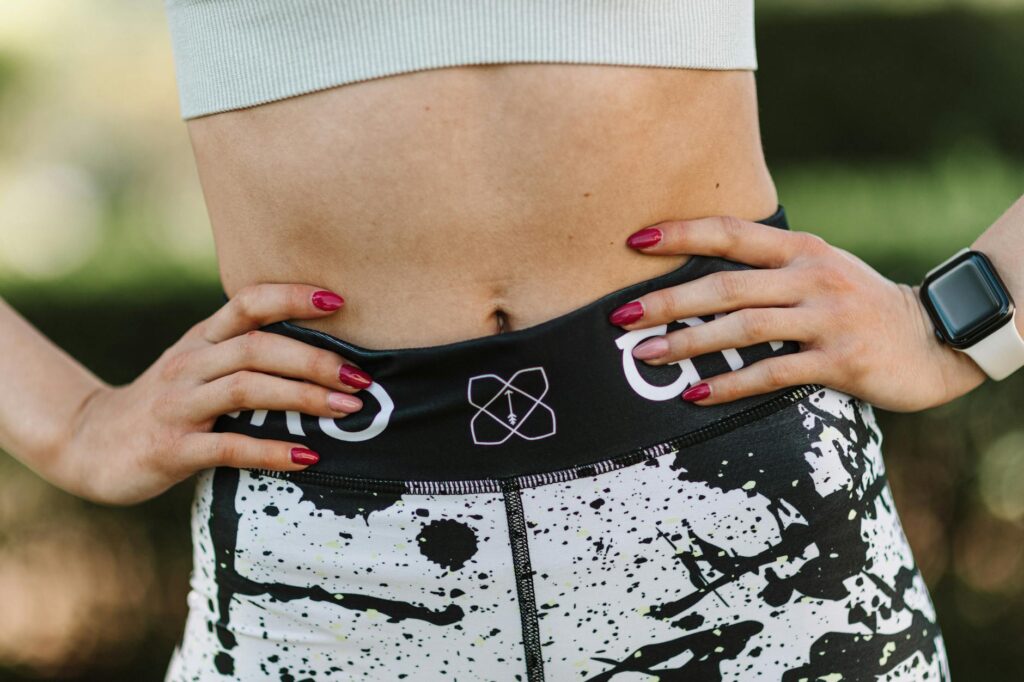
Samsung Galaxy Watch 7 Review: Best Android Fitness Watch in 2026?
The Galaxy Watch 7 is Samsung’s most refined fitness smartwatch to date — advanced BioActive sensor, Energy Score recovery metric, and the deepest Google ecosystem integration available. Here is the honest verdict.
Yes for Android users who want a premium smartwatch with serious health tracking. No for iPhone users (does not pair) and no for dedicated running athletes who need multi-band GPS and deeper training analytics. For the 85% of people who just want their phone’s best smartwatch — this is it.
Samsung makes the best Android smartwatch. This is not a close call — the Galaxy Watch 7 combines Samsung’s BioActive Sensor (optical heart rate, bioelectrical impedance for body composition, and SpO2 in one package), Wear OS 5 with full Google ecosystem integration, and the most refined health analytics available outside of Apple’s ecosystem. For Android users asking what watch to buy, the Galaxy Watch 7 is the answer.
Health Sensors: What “BioActive” Actually Means
The BioActive Sensor is Samsung’s multi-function optical sensor array. It measures: heart rate (optical PPG), blood oxygen (SpO2), electrocardiogram (ECG for AFib detection), and skin conductance for stress response. The body composition measurement — body fat percentage, skeletal muscle mass, body water percentage — uses bioelectrical impedance analysis (BIA), passing a small electrical current through the body from the wrist sensor. This is genuinely useful functionality: BIA accuracy for body composition is lower than DEXA but directionally reliable for tracking changes over time.
Heart rate accuracy during exercise is excellent at steady-state efforts and moderate during high-intensity intervals — the same limitation as every optical wrist sensor. The ECG feature works as advertised and has received FDA clearance for AFib detection. If you have a family history of cardiac events and want a device that monitors for irregular rhythm, Galaxy Watch 7 and Apple Watch are the two validated consumer options.
Energy Score: Samsung’s Recovery Metric
Samsung Health’s Energy Score (0–100) is their equivalent of WHOOP’s Recovery Score or Garmin’s Body Battery — a morning readiness metric derived from sleep quality, heart rate, HRV, and activity history. After 2–3 weeks of baseline data, Energy Score provides a reliable directional signal for daily readiness. It is not as sophisticated as WHOOP’s dedicated recovery algorithm, and it lacks the continuous strain tracking that makes WHOOP’s system cohesive, but as a feature on a watch that does everything else, it is meaningfully better than nothing.
HRV data from the Galaxy Watch 7 is collected during sleep and displayed as a trend in the Samsung Health app. Like Garmin’s HRV Status, the 28-day trend is more useful than individual night readings. Athletes who track HRV seriously and want the most accurate overnight reading should still look at Oura Ring — but for athletes who want passive HRV trend data from their daily watch without adding another device, Galaxy Watch 7 delivers it adequately.
Wear OS 5 and Google Integration
Galaxy Watch 7 runs Wear OS 5, giving it access to the Google Play Store app ecosystem. Google Maps on your wrist, Google Pay, Google Assistant, and thousands of third-party watch apps. Strava, Spotify, and most major fitness apps have Galaxy Watch versions. For Android users deeply embedded in Google’s ecosystem, this integration is seamless — Gmail notifications show full message content, Calendar events pop up with meeting details, and Google Wallet handles contactless payments wherever NFC is supported.
The one limitation: Galaxy Watch 7 is optimized for Samsung Galaxy phones. With a non-Samsung Android phone, most features still work, but the Samsung Health app integration and some advanced features require Samsung-to-Samsung pairing. iPhone users cannot use Galaxy Watch 7 in any meaningful capacity.
Fitness Tracking in Practice
The Galaxy Watch 7 handles running, cycling, swimming (5 ATM rated), HIIT, and strength training with automatic workout detection. GPS performance is solid — single-band, which is less accurate than Garmin’s multi-band in challenging environments but adequate for most road and trail running. Battery life is 40 hours in normal smartwatch mode, 18 hours with continuous GPS — enough for marathon training without mid-run charging anxiety.
Where it falls short versus Garmin: no structured workout guidance, no training load analytics comparable to Garmin’s Training Status, and limited third-party coaching platform integration. Galaxy Watch 7 records your workouts and shows you the data. It does not tell you what to do next based on that data the way Garmin does. For athletes following structured plans, this gap is material. For athletes who want to log activity and maintain health awareness, it is irrelevant.
Galaxy Watch 7 vs Apple Watch Series 9
| Feature | Galaxy Watch 7 | Apple Watch S9 |
|---|---|---|
| Price | $299 | $399 |
| Phone compatibility | Android | iPhone only |
| Body composition | ✅ BIA | ❌ |
| Recovery score | ✅ Energy Score | Limited |
| GPS battery | 18 hours | 6 hours |
| App ecosystem | Google Play | App Store |
| ECG / AFib detection | ✅ | ✅ |
Frequently Asked Questions
Does Samsung Galaxy Watch 7 work with iPhone?
No. Galaxy Watch 7 requires an Android phone for initial setup and most features. iPhone users should look at Apple Watch Series 9 or — if they want a non-Apple option — there are limited third-party options, but none match Galaxy Watch or Apple Watch in capability.
How accurate is the Galaxy Watch 7 body composition measurement?
BIA measurements from wrist sensors are directionally accurate for tracking changes over time but less precise than DEXA scanning for absolute values. Factors that affect accuracy: hydration level, time since last meal, skin temperature. For trend tracking (is body fat going up or down over 8 weeks?), it is useful. For absolute body fat percentage accuracy, use a DEXA scan.
Does Galaxy Watch 7 have offline music?
Yes — you can store music directly on the watch from Spotify, YouTube Music, or locally stored files. Pair wireless headphones and you can leave your phone at home during runs.
Galaxy Watch 7 for Non-Samsung Android Users
Samsung designs the Galaxy Watch ecosystem primarily around Samsung Galaxy phones. The integration is tightest there — Health Monitor (ECG and blood pressure) requires a Samsung phone, some notification features work better with Samsung messages, and the Galaxy AI health features that debuted with Watch 7 are Samsung-ecosystem-first. That said, the Galaxy Watch 7 works functionally well with any Android phone running Android 10 or higher through the Galaxy Wearable app and Google Health Connect.
For non-Samsung Android users — Pixel, OnePlus, Motorola owners — the Galaxy Watch 7 remains one of the best Android smartwatch options because the Wear OS 5 ecosystem it runs is Google’s platform with Samsung’s health layer on top. Google Maps, Google Assistant, Google Pay all work natively. The health tracking is comprehensive and Google Health Connect integrates with third-party apps well. The main loss for non-Samsung users is ECG monitoring, which is limited to Samsung phones in most markets.
Sleep Tracking and Recovery Metrics
Samsung has significantly improved its sleep tracking across the Galaxy Watch 7 generation. Sleep stages (light, deep, REM) are tracked via the BioActive sensor that combines optical heart rate, bioelectrical impedance, and skin temperature. Samsung Health surfaces a Sleep Score and Animal Sleep Archetype — a characterization of your sleep pattern type (lion, bear, dolphin, wolf) that correlates your chronotype with sleep data. This gamification layer is more consumer-friendly than clinical, but the underlying sleep staging data is reasonably accurate.
Body composition analysis via bioelectrical impedance is a feature unique to Samsung in the consumer watch category — the Watch 7 can estimate skeletal muscle mass, body fat percentage, and body water percentage using electrical signals passed between sensors. The accuracy of these measurements is a known weakness — bioelectrical impedance is sensitive to hydration status, recent eating, and ambient temperature, producing measurements that can vary significantly across days. Use body composition data from the Watch 7 for trend tracking only, not as a precise measurement.
Battery Reality: Managing the 40-Hour Claim
Samsung rates the Galaxy Watch 7 at 40 hours (standard) or 28 hours with heavy use including GPS. Real-world testing consistently shows 30–36 hours under normal use conditions: always-on display off, moderate notification volume, one 45-minute GPS workout per day. With always-on display enabled — which many users prefer — battery life drops to 20–24 hours, requiring charging every day or every other day.
The sleep tracking use case creates a specific battery management challenge: if you charge during the day (during work hours), you wake up with a nearly full battery, run through a full active day, and still have enough charge for overnight sleep tracking. If you charge at night, you cannot sleep-track. Most Galaxy Watch 7 users who care about sleep data settle on a morning or midday charging window of 30–45 minutes, which tops the battery from 30–40% (typical overnight drain) to 80–90% for the coming day.
Frequently Asked Questions
Does Galaxy Watch 7 work with iPhone?
No — the Galaxy Watch 7 requires an Android phone running Android 10 or higher. It does not pair with iPhone. Apple Watch is the appropriate choice for iPhone users.
Is the Galaxy Watch 7 good for swimming?
Yes — rated to 5 ATM water resistance, the Galaxy Watch 7 handles lap swimming, open water swimming, and snorkeling. It tracks swim workouts with stroke detection, SWOLF score, and lap counting. The watch should be rinsed after salt water exposure.
How does Galaxy Watch 7 compare to Garmin for fitness tracking?
For general fitness and health monitoring, the Galaxy Watch 7 is comparable. For athletes following structured training plans, Garmin is significantly more sophisticated — offering training load analysis, VO2 Max trending, race prediction, and deeper GPS accuracy. The Galaxy Watch 7 is better as an everyday smartwatch that also does fitness tracking; Garmin is better as a training tool that also tells time.
Related: Apple Watch vs Fitbit · Best All-in-One Fitness Watch · Best Fitness Tracker for Beginners · How to Choose a Fitness Tracker