
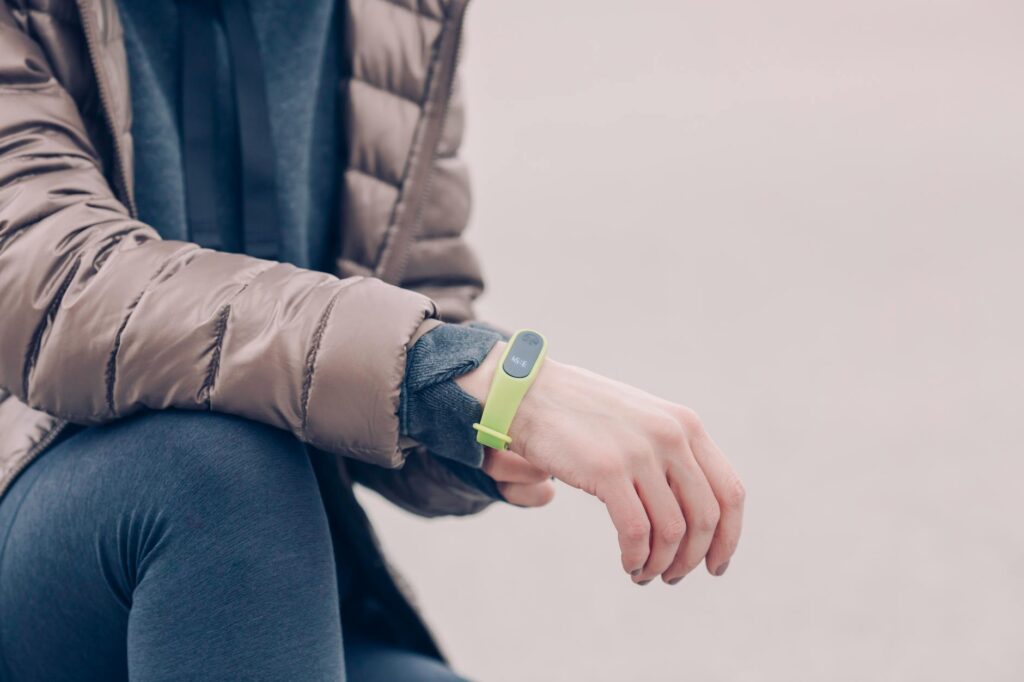
The fitness tracker market is crowded with overlapping specs and marketing language that makes everything sound essential. This guide cuts through it. We’ll help you figure out which type of tracker actually matches how you train, what you care about, and what you’re willing to pay — so you spend money on something you’ll actually wear.
Step 1: Decide What You Actually Want to Track
Most people buy a fitness tracker thinking about features they’d like to have. The better question is: what data will you actually look at and act on? Three categories cover the majority of real use cases.
Recovery and Sleep
If your primary goal is understanding how well you’re recovering — sleep quality, readiness, HRV trends — then dedicated recovery trackers dominate this space. The Oura Ring Gen 4 and WHOOP 4.0 are purpose-built for this use case. Both track HRV nightly, produce daily readiness scores, and give you actionable context around when to push and when to back off. Neither is ideal for GPS run tracking.
Training Analytics
If you run, cycle, or do structured endurance training and want to track pace, distance, VO2 max, training load, and route data, you want a GPS running watch. The Garmin Forerunner 265 and Polar Pacer Pro lead this category. They’re purpose-built for athletes who want to train by data.
General Fitness Awareness
If you want step counts, heart rate trends, basic sleep data, and a watch that handles notifications and daily life alongside fitness — the Apple Watch Series 9 or Apple Watch Ultra 2 (for iPhone users) and the Fitbit Charge 6 cover this well. These are health-aware smartwatches, not hardcore training tools.
Step 2: Match Tracker Type to Your Lifestyle
Form factor matters as much as features. A tracker you find uncomfortable or awkward to wear consistently will give you worse data than a simpler device you’ll actually keep on.
Wrist Watch — Best for GPS, Notifications, and Daily Wear
The most versatile form factor. Works for active workouts, everyday wear, and sleep tracking — though sleep tracking compliance varies since many people take their watch off at night to charge. Best if you want one device that does everything reasonably well.
Smart Ring — Best for Sleep and Recovery Compliance
The Oura Ring and similar ring trackers are the highest-compliance wearables available. They look like jewelry, they’re barely noticeable during the day, and most people find it easier to consistently sleep with a ring than a watch. The tradeoff: no GPS, no display, no notifications.
Chest Strap — Best for HRV Accuracy
The Polar H10 is the most accurate HRV measurement device available at any price. It’s not a daily wearable — it’s a measurement tool. Wear it during your morning routine for 5 minutes to get a validated HRV reading, then pair that data with your training decisions. Worth it if HRV accuracy is your primary concern.
Step 3: Understand the Subscription Landscape
Several leading trackers lock their best features behind ongoing subscriptions, which changes the total cost of ownership significantly.
WHOOP: Membership required to use the device — $239/year includes hardware. No one-time purchase option. If you cancel, the tracker stops working in any meaningful sense.
Oura Ring: $299–$349 hardware purchase, then $72/year subscription. The ring works without it for basic data, but the Readiness Score, trend insights, and most useful features require the subscription.
Garmin, Polar, Apple Watch: No required subscription. All core features available after hardware purchase. Garmin offers an optional Connect+ tier; Polar has no subscription requirement at all.
If subscriptions bother you philosophically or budget-wise, Garmin and Polar are the clean choice. If you’re serious about recovery data, the WHOOP or Oura subscription cost tends to justify itself quickly for the right user.
Step 4: Set a Realistic Budget
Fitness trackers span a wide price range and the relationship between price and value isn’t always linear. Here’s a rough framework:
Under $150: Basic step, heart rate, and sleep tracking. Fitbit Inspire, Garmin Vivosmart range. Good for health awareness, not serious training.
$150–$300: Where most serious fitness trackers live. Fitbit Charge 6, Polar Pacer Pro, Apple Watch Series 9 entry configurations. GPS, proper training metrics, solid app ecosystems.
$300–$500: Advanced training analytics, longer battery life, premium materials. Garmin Forerunner 265, Oura Ring Gen 4 with subscription factored in.
$500+: Flagship tier. Apple Watch Ultra 2, Garmin Fenix series. For serious multi-sport athletes and people who want best-in-class everything.
The Fastest Way to Decide
Answer these three questions: (1) Do you primarily want recovery and sleep data, or training and GPS data? (2) Will you consistently wear a wrist device while sleeping, or do you prefer something less obtrusive? (3) Are you an iPhone user who wants ecosystem integration, or do you want a standalone device that works with anything?
Recovery + sleep + low-profile → Oura Ring or WHOOP. Training + GPS + analytics → Garmin Forerunner or Polar Pacer Pro. Everyday health + iPhone integration → Apple Watch Series 9. General fitness awareness + simplicity → Fitbit Charge 6.
Related Reading
Reviewed by
Daniel Park
Fitness Tech & Smartwatches
Daily runner and tech writer who’s worn more fitness wearables than he’d like to admit. Covers all-in-one smartwatches and fitness apps for people who want useful health data without the obsession.
The Questions to Ask Before You Buy
Four questions narrow the field faster than any feature comparison. First: what phone do you use? Apple Watch requires iPhone. Most Garmin devices work with both but are better on Android for certain features. Samsung Galaxy Watch is optimized for Samsung Galaxy phones. If you use Android, immediately eliminate Apple Watch and any device that requires iOS for full functionality.
Second: what is your primary use case — training tool, health monitor, or daily smartwatch? These prioritize different features. A training tool needs GPS accuracy, training load analytics, and sport-specific data. A health monitor needs accurate sleep tracking, HRV measurement, and passive health metrics. A smartwatch needs notifications, app ecosystem, and payment capability. Trying to optimize for all three leads to overpaying for features in two categories you do not actually need.
Third: how often are you willing to charge it? This is not a trivial question. Apple Watch requires daily charging — if you miss a night, you start your day without a fully charged device. Garmin Forerunner runs 13 days. WHOOP has 14-day battery and charges on-wrist. Oura Ring runs 7–8 days. If you have a history of forgetting to charge devices, a longer battery life is not a luxury — it is a reliability requirement.
Fourth: what is your budget for the next three years, not just today? A $160 Fitbit Charge 6 with no subscription is $160 total. An Oura Ring Gen 4 is $349 plus $216 in subscription costs over three years — $565 total. WHOOP is $597 over three years with hardware included. Budget the total cost of ownership, not just the upfront price.
Fitness Tracker vs Smartwatch vs Recovery Tracker: Which Category Do You Actually Need
Fitness trackers (Fitbit Charge 6, Amazfit Band 7) prioritize health metrics and battery life at lower price points. They are not smartwatches — notification handling is basic and there is no app ecosystem. They are best for people who want reliable step counting, sleep tracking, and workout logging without spending $400+.
Smartwatches (Apple Watch, Samsung Galaxy Watch) prioritize the wrist computer experience — notifications, apps, payments — with fitness tracking as a secondary capability. Best for people who want one device for their wrist that does everything.
Sport computers (Garmin Forerunner, Polar Pacer) prioritize training analytics depth — GPS accuracy, training load, VO2 Max trending, structured workouts. Best for athletes who follow training plans and want data-driven performance development. Recovery trackers (WHOOP, Oura Ring) prioritize HRV and sleep data for recovery intelligence. Best as a complement to a sport computer for athletes training 4+ days per week.
Frequently Asked Questions
What fitness tracker does not require a subscription?
Garmin, Polar, Samsung Galaxy Watch, and Apple Watch all work without any ongoing subscription. The watch purchase is the total cost. WHOOP and Oura Ring both require monthly or annual subscriptions to access their data. Fitbit has a free tier but limits some features behind Fitbit Premium.
Which fitness tracker has the best battery life?
For no GPS: Amazfit Band 7 (18 days), Garmin Venu 3 (14 days), Fitbit Charge 6 (5–6 days). With GPS active: Garmin Forerunner 265 (20 hours GPS), Polar Pacer Pro (35 hours GPS), Apple Watch Ultra 2 (36 hours GPS), Apple Watch Series 9 (6 hours GPS).
Can a fitness tracker replace a gym membership?
No — a tracker measures and motivates; it does not provide the resistance or movement patterns that build strength and fitness. A tracker is most valuable alongside a consistent training routine, not as a substitute for one.
This guide covers the most important considerations for making the right decision. The best tool is the one you will use consistently — accuracy of data matters less than the habit of collecting and acting on it. Whether you are choosing between devices, building a tracking routine, or optimizing an existing system, start with one clear goal, pick the tool that serves it best, and give it at least eight weeks before evaluating whether it is working. Data compounds over time; the athletes who get the most from their devices are those who have been consistent the longest.
Our Top Recommendations by Category
Based on what you are optimizing for — sleep and recovery, running performance, or an all-in-one device — here are the best options at each.
Not sure which to choose? Our Best Recovery Trackers guide compares all three head to head.
Related:best fitness tracker for beginners · best fitness apps for beginners