
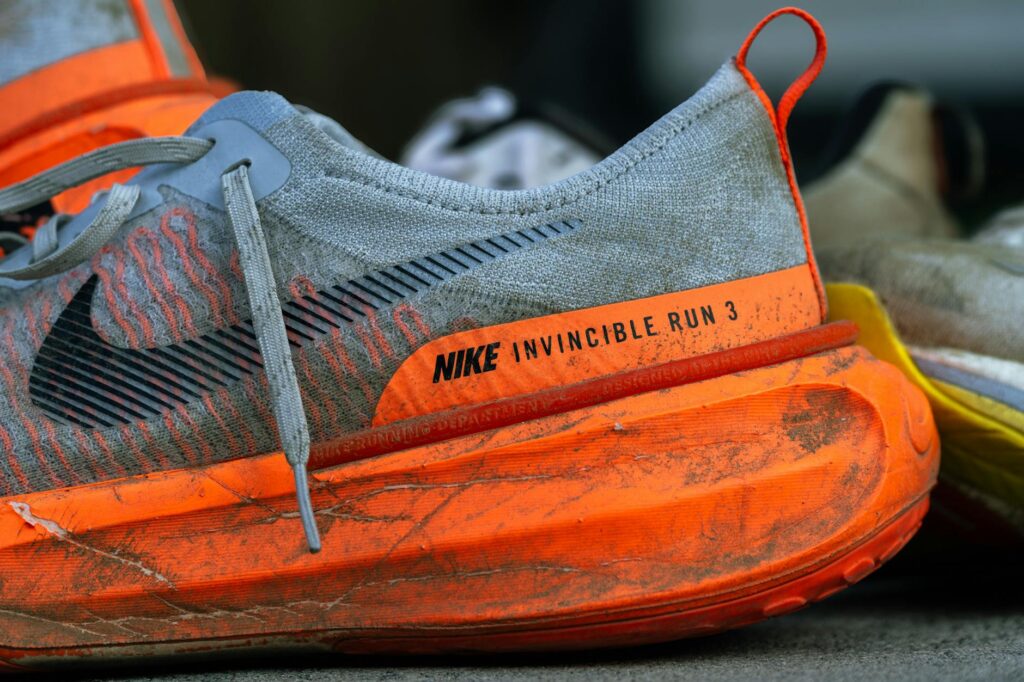
Best Running Shoes for Training in 2026: Ranked by a Data-Driven Athlete
Your GPS watch gives you the data. Your shoes determine whether your body can sustain the load. Here are the running shoes worth buying in 2026 — ranked for daily training, not race day marketing.
Best for high mileage: Brooks Ghost 16 — durable, smooth transition, easy on legs
Best for speed work: New Balance FuelCell Rebel v4 — responsive, lightweight, fast feel
Best trail: Hoka Speedgoat 5 — maximal cushion, aggressive grip, proven on technical terrain
Best budget: ASICS Gel-Contend 9 — under $70, solid for beginners building mileage
How Running Shoes Actually Affect Your Training Data
Your Garmin or Polar watch tracks pace, heart rate, and training load — but the shoes on your feet are the invisible variable in every data point. Insufficient cushioning elevates perceived effort (and heart rate) at any given pace, making your Training Readiness suffer more than the workout should. Worn-out midsoles after 400+ miles produce more impact force per stride, raising injury risk and acute muscle damage that suppresses HRV the next morning. Matching your shoes to your weekly mileage and training phase is as important as any workout prescription.
The right framework: daily training shoes prioritize cushioning and durability over speed. You spend 80% of your mileage in them. Speed shoes (carbon plate or responsive foam) are for workouts and races — 15–20% of total mileage. Rotating two pairs of daily trainers extends midsole life, reduces injury risk, and gives you a consistent tactile cue about where each session sits on the effort spectrum.
#1 Best Daily Trainer: Nike Air Zoom Pegasus 41
The Pegasus has earned its status as the most versatile daily training shoe on the market through 40+ iterations. The Pegasus 41 uses a full-length Air Zoom unit for responsive cushioning that holds up across 500+ miles and works across easy days, moderate tempo runs, and even light speed work. The fit accommodates a wide range of foot shapes — not as accommodating as Brooks’ wide options, but more widely available in half sizes and widths than most competitors.
The one thing the Pegasus is not: maximally cushioned. Runners who prefer a plush underfoot feel or who run primarily on hard pavement and want maximum impact protection should consider the Brooks Ghost or ASICS Gel-Nimbus instead. But for the athlete who wants one shoe that does everything adequately, the Pegasus 41 remains the standard recommendation.
#2 Best for High Mileage: Brooks Ghost 16
The Brooks Ghost 16 is engineered around one thing: handling high mileage without breaking down. The DNA LOFT v3 foam is softer than competitors at the same price point while maintaining durability — most Ghost runners get 500+ miles before meaningful midsole compression. The segmented crash pad at the heel produces the smoothest heel-to-toe transition in the category, which reduces quad fatigue on long runs and makes the shoe genuinely easier on your legs over 15+ mile weeks.
Brooks built the Ghost around a neutral to slightly stable platform, making it appropriate for neutral runners and mild overpronators without requiring a dedicated stability shoe. The fit runs true to size with a roomy toe box that reduces black toenail incidents during long efforts — a small thing that matters enormously after mile 18 of a marathon training run.
#3 Best for Speed Work: New Balance FuelCell Rebel v4
The FuelCell Rebel v4 occupies the category between a daily trainer and a carbon racer — it has more responsiveness than a standard cushioned shoe without the $200+ price tag of a carbon plate shoe. The FuelCell foam provides explosive energy return that makes tempo runs feel fast without the stiff, race-day-specific feel of a super shoe. At 7.3oz it is light enough for interval sessions and 5K races without feeling underpowered for longer workouts.
The tradeoff: less cushioning than the Ghost or Pegasus, which makes it less ideal for recovery runs and easy aerobic days. This is a shoe to rotate as your workout shoe, paired with a more cushioned trainer for easy mileage. Garmin users who track Training Effect will see a noticeably different aerobic vs. anaerobic effect breakdown when running the same heart rate effort in the Rebel vs. a heavier trainer — the shoe is that much more efficient.
#4 Best Trail: Hoka Speedgoat 5
The Speedgoat 5 is the gold standard for technical trail running — maximal cushioning (35mm stack height) paired with an aggressive Vibram Megagrip outsole that handles wet rock, loose dirt, and rooted trails with equal confidence. The cushioning makes it appropriate for longer trail efforts where ground reaction forces accumulate significantly more than on road, and the outsole grip inspires confidence on descents that would demand caution in a less capable shoe.
Trail runners tracking HRV and recovery should note that maximal cushioning shoes like the Speedgoat meaningfully reduce eccentric muscle damage from trail downhills compared to minimally cushioned options — the impact absorption shows up as lower next-day leg soreness and faster HRV recovery after long trail efforts. The shoe is doing real physiological work, not just providing comfort.
#5 Best Budget: ASICS Gel-Contend 9
The ASICS Gel-Contend 9 runs under $70 and delivers a legitimate daily training shoe for runners who are building their first consistent mileage base and do not want to spend $130–$160 on a primary trainer before they know they will stick with the habit. The GEL technology in the heel provides adequate cushioning for 20–30 mile weeks, the fit is accommodating, and the durability holds up through 300–400 miles — enough for 6–8 months of beginner training.
The honest limitation: the Contend 9 is not a performance shoe. At higher weekly mileage or faster training paces, you will feel the midsole limitations. It is the right choice to start, not to finish. Budget a shoe upgrade for when you cross 30 miles per week consistently — at that volume, shoe quality starts showing up in your recovery scores.
How to Choose Based on Your Training Data
If you wear a GPS watch and track your training, use your own data to inform your shoe decision. Athletes running primarily easy aerobic volume (Zone 2, 70–75% max HR) need maximum cushioning and durability — their shoes take more total footstrike impacts over long sessions. Athletes doing structured speed work and tempo runs need a more responsive shoe that does not dampen the propulsive energy of faster strides. If your Garmin shows consistent Training Status of “Productive” or “Peaking,” you are training hard enough that shoe quality genuinely affects your adaptation.
The most under-discussed variable: midsole compression. Running shoe foam compresses permanently with use — after 400–500 miles, most shoes deliver significantly less cushioning than new, even if the upper looks fine. If your HRV is consistently suppressed, leg soreness is elevated, and pace at easy effort has declined, aged shoes are worth ruling out before adjusting training load.
Frequently Asked Questions
How often should you replace running shoes?
Every 400–500 miles for most modern training shoes. Higher-cushion maximalist shoes may last slightly longer; lightweight performance shoes often compress faster. The most reliable signal: increased leg fatigue and soreness at comparable training loads, or visible midsole compression along the lateral heel.
Do carbon plate shoes actually make you faster?
Yes — research consistently shows 2–4% economy improvement in trained runners using carbon plate super shoes compared to conventional trainers at race pace. The benefit is specific to fast running; at easy aerobic paces, the stiff plate works against you. Use carbon shoes only for races and specific speed workouts.
Should you rotate running shoes?
Yes, and the research supports it. Rotating two pairs of training shoes reduces injury risk by approximately 39% compared to wearing one pair exclusively, according to a large prospective study. Alternating shoes gives each midsole 24–48 hours to decompress between runs, extending total shoe life and maintaining consistent cushioning characteristics.
Do running shoes affect GPS accuracy on a watch?
No — your shoe has no effect on GPS signal. However, running cadence and stride length (which change when switching shoe types) do affect running economy metrics on your Garmin or Polar. Expect your running dynamics data to shift slightly when breaking in a new shoe type.
Frequently Asked Questions
How often should you replace running shoes?
Most running shoes are designed to last 300–500 miles of running. The midsole foam — the primary cushioning and energy return material — degrades with compression cycles regardless of upper appearance. A shoe that looks fine visually may have lost 30–40% of its cushioning capacity at 400 miles. Signs of needed replacement: noticeably harder feel underfoot, increased leg fatigue after runs at equivalent effort, visible midsole compression or creasing. Rotating between two pairs of shoes extends the life of each pair by allowing fuller foam recovery between sessions.
Do expensive running shoes run faster?
Carbon fiber plate shoes ($180–$260) genuinely improve running economy by 4–6% on average in research settings through the combination of stiff carbon plate and highly resilient foam that stores and returns energy more efficiently than conventional foam. For runners who race and want to improve finish times, a carbon plate race shoe is the most evidence-backed performance investment available. For everyday training runs, conventional foam trainers are preferable — carbon plate shoes have shorter lifespans (typically 150–250 miles) and the stiffness can create adaptation issues if used for all training.
Should beginners buy stability or neutral running shoes?
Modern research has moved away from prescribing stability shoes based on arch height or static pronation assessment. Current evidence suggests most runners do well in neutral shoes and that the foot naturally stabilizes appropriately when running barefoot-style. The most reliable approach: start with a neutral shoe from a reputable brand (Brooks Ghost, ASICS Gel-Nimbus, New Balance Fresh Foam 1080), run in them for 4–6 weeks, and adjust based on any pattern of discomfort that develops. If medial (inner) knee pain develops, explore mild stability options. If no issues develop, stay neutral.
Related: Best Running Watch in 2026 · How to Improve VO2 Max · How to Train for Your First 5K · Garmin Forerunner 265 Review