
Best Running Shoes for Beginners in 2026: What to Buy First
Most beginners overbuy or underbuy their first running shoe. Here is a direct guide to what actually matters, what does not, and which five shoes handle the first 6 months of training best.
Best overall: Brooks Ghost 17 ($150): neutral, well-cushioned, works for 90% of beginners. Best budget: New Balance Fresh Foam 680 V9 ($85): responsive foam, durable, forgiving. Best motion control: ASICS Gel-Kayano 32 ($160): overpronation support, premium cushioning. Best for wide feet: New Balance 1080 v14 ($165), widest toe box in the premium category. Best lightweight: On Cloud 6 ($160): road feel, light, great for shorter runs.
What Beginners Actually Need
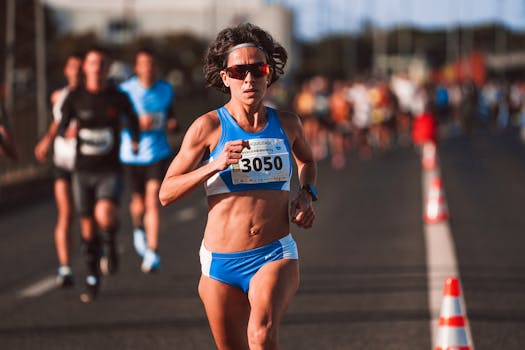
New runners consistently make two mistakes: buying the same shoes elite athletes wear (which are tuned for athletes with very different biomechanics and training volumes) and buying based on looks. What beginner runners actually need is straightforward: adequate cushioning to absorb impact forces that untrained leg muscles are not yet conditioned to handle, a secure but comfortable fit that does not cause hot spots or blisters, and a sole pattern appropriate for the surface they primarily run on (road, trail, or treadmill).
Anything beyond this (carbon fiber plates, advanced foam technologies, minimal heel-to-toe drop) is irrelevant for the first 6 months of running. Those features are optimized for trained runners with established mechanics who are chasing marginal performance gains. For beginners, the priority is injury prevention through adequate cushioning and a fit that does not create friction problems.
#1 Best Overall for Beginners: Brooks Ghost 17
The Brooks Ghost has been one of the most recommended beginner running shoes for over a decade because it consistently gets the fundamentals right. The DNA LOFT v2 cushioning is soft enough to absorb impact for new runners whose joints are not yet conditioned, firm enough to provide responsive energy return, and durable enough to last 400–500 miles. The neutral geometry works for the majority of gait patterns without overcorrecting.
The Ghost 17 updates include a redesigned upper with better midfoot structure, which reduces the lateral movement in the foot that causes some users hot spots in long sessions. It is available in B (standard) and D (wide) widths for women, and D (standard) and 2E (wide) for men. If you are starting a 5K training plan and do not know your gait type, the Ghost 17 is the correct default choice.
#2 Best Budget: New Balance Fresh Foam 680 V9
At $85–$95, the New Balance 680 V9 is the best beginner running shoe under $100. Fresh Foam cushioning delivers more cushion than most shoes in its price range, the AT Tread outsole has enough grip for road and light trail use, and the construction is durable enough to handle the mileage of a beginner training plan (typically 12–20 miles per week for a Couch to 5K or beginner program). For runners who are not sure they will stick with the habit, starting with an $85 shoe makes sense.
#3 Best for Overpronation: ASICS Gel-Kayano 32
Overpronation (the inward rolling of the foot and ankle on foot strike) is the most common gait deviation in beginner runners and a leading cause of knee pain, shin splints, and plantar fasciitis. The ASICS Gel-Kayano 32 is the benchmark stability running shoe, using LITETRUSS technology to limit excessive inward motion without feeling rigid or corrective. 4D Guidance System allows natural flex through the gait cycle while providing medial support.
How to know if you overpronate without a gait analysis: stand with feet hip-width apart and look at the ankle bones from the front. If the ankle bone tilts visibly inward, you likely overpronate and will benefit from a stability shoe. If your arches appear high and rigid, neutral or cushioned shoes without stability features are more appropriate.
#4 Best for Wide Feet: New Balance Fresh Foam X 1080 v14
Standard running shoes (D width) are designed around a medium foot width, which fits approximately 60% of the running population. Athletes with E or 2E width feet who run in standard shoes experience cramped toe boxes, pinching through the midfoot, and callus formation that compounds with mileage. The New Balance 1080 v14 is available in standard and wide widths and has one of the most generous toe boxes in premium running footwear, enough room for natural toe splay without the sloppiness of an oversized shoe.
The FreshFoam X foam compound provides premium cushioning comparable to Nike ZoomX or Brooks Glycerin. At $165 it is a premium price, but for runners with wide feet this is typically the only option that genuinely fits rather than just being tolerable.
#5 Best Lightweight Option: On Cloud 6
The On Cloud 6 uses a proprietary CloudTec sole, hollow rubber pods that compress on impact and firm up on push-off, providing a road-feel that traditional foam soles do not replicate. For beginners who find heavily cushioned shoes feel disconnected from the ground (a common complaint from athletes transitioning from minimalist shoes or barefoot training), the Cloud 6 provides a middle ground: enough cushioning for protection, enough ground feel for proprioceptive feedback.
The 24mm heel / 16mm forefoot stack (8mm drop) is lower than traditional running shoes (typically 10–12mm drop), which places slightly more load on the Achilles and calf. Beginners with no running history transitioning to Cloud 6 should increase mileage more gradually than they would with a higher-drop shoe.
How to Find Your Running Shoe Size
Running shoe sizing typically runs 0.5–1 full size larger than casual shoe sizing. The standard recommendation: there should be a thumb’s width of space between your longest toe and the end of the shoe when standing. This accounts for foot swelling during runs (feet expand by 5–10% during extended running) and the forward slide of the foot in the shoe during downhill running.
Buying running shoes online without trying them on first: order your normal shoe size and one half-size up. Run in both. Return the one that fits worse. Most running-focused retailers (Road Runner Sports, Running Warehouse, Fleet Feet) have 30–90 day return policies specifically to accommodate this process.
How Long Running Shoes Last
Most running shoes are designed to last 300–500 miles. Signs of needed replacement: the midsole foam feels noticeably harder underfoot (compression), the outsole shows significant wear patterns through to the midsole, or you notice increased leg fatigue or soreness after runs at equivalent effort. The outside of the sole typically shows visible wear at 300 miles; the cushioning may be depleted before the upper shows visible damage.
For a beginner running 15 miles per week, a pair of shoes lasts approximately 5–7 months. Rotating two pairs of shoes (alternating training runs) extends the life of both pairs by allowing full foam rebound between uses, each pair lasts approximately 40% longer when rotated.
Frequently Asked Questions
Should I get gait analysis before buying running shoes?
It is helpful but not essential for most beginners. In-person gait analysis at a specialty running store (not a general sporting goods store) takes 10 minutes and involves running on a treadmill while staff observe your foot strike pattern. If you have a history of knee pain, shin splints, or ankle issues during any physical activity, gait analysis before buying is worth prioritizing. If you have no injury history, starting with a neutral cushioned shoe (Brooks Ghost 17) and monitoring for any discomfort over the first 4–6 weeks is a reasonable approach.
Do expensive running shoes prevent more injuries?
Research on this topic is consistently surprising to most people: more expensive, more cushioned shoes do not produce fewer injuries than moderately cushioned shoes. The most important factors are proper fit (no friction points, correct width), appropriate heel-to-toe drop for your gait, and adequate mileage buildup, not price. A properly fitted $90 shoe prevents injuries better than an improperly fitted $200 shoe.
Can I use running shoes for gym workouts?
Running shoes are optimized for forward motion, their cushioning is designed to absorb impact from heel or midfoot strike in a linear direction. For lateral movements (lateral raises, side shuffles, court sports), running shoes provide inadequate lateral stability. For strength training, the cushioned heel of a running shoe actually reduces power transfer in compound lifts like squats and deadlifts. Dedicated training shoes (flat-soled, minimal heel elevation) or cross trainers are better suited for gym work.
Related: How to Train for Your First 5K · Best Running Watch · How to Improve VO2 Max · Best Running Headphones