
Heart rate variability has become the most talked-about metric in fitness wearables, and for good reason. HRV is one of the few biomarkers that gives you an objective, daily snapshot of your autonomic nervous system’s recovery state. But most athletes either ignore it, misinterpret it, or obsess over single readings without understanding the bigger picture.
This guide explains what HRV actually measures, how to use it to make better training decisions, and which devices give you the most actionable HRV data, without the jargon overload.
What HRV Actually Measures
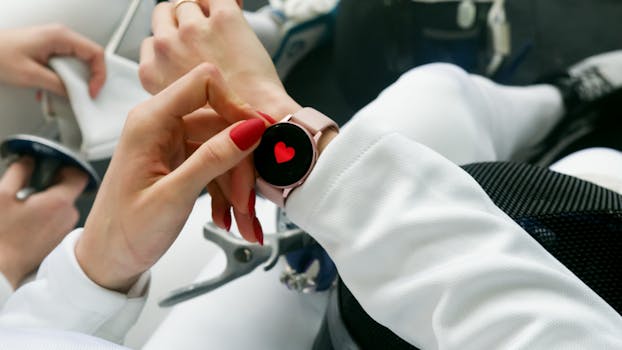
HRV measures the variation in time between consecutive heartbeats. A healthy, well-recovered heart does not beat like a metronome, it beats with subtle irregularity. Higher variability generally indicates a nervous system that is adaptable and ready for stress. Lower variability suggests the body is under strain, fighting off illness, or recovering from hard training.
The autonomic nervous system has two branches: sympathetic (fight-or-flight, stress response) and parasympathetic (rest-and-digest, recovery). HRV reflects the balance between these branches. When the parasympathetic system is dominant (meaning you are recovered and rested) HRV tends to be higher. When sympathetic dominance increases due to training stress, poor sleep, illness, or psychological stress, HRV drops.
This is why HRV is valuable for athletes: it captures the cumulative effect of everything affecting your recovery, not just training load. A hard interval session, a poor night of sleep, work stress, travel, alcohol, all of these show up in your HRV before you consciously feel the effects.
Why Single HRV Readings Are Misleading
The biggest mistake athletes make with HRV is reacting to individual daily readings. Your HRV fluctuates naturally by 10–20% day to day even when nothing meaningful has changed. Eating a large meal before bed, having one drink, sleeping in an unfamiliar room, all produce HRV dips that mean nothing about your training readiness.
What matters is the trend over 7–14 days compared to your personal baseline. A single low reading is noise. Three to five consecutive days of suppressed HRV below your baseline is a meaningful signal that your body is accumulating fatigue faster than it can recover.
This is why the best HRV-tracking wearables show you trend data and baseline comparisons rather than just today’s number. The WHOOP 5.0 presents this as a daily Recovery Score (0–100%) based on your HRV trend relative to baseline, sleep performance, and resting heart rate. The Garmin Forerunner 265 uses HRV Status (showing balanced, low, or poor relative to your 3-month baseline). The Oura Ring 4 integrates HRV into its Readiness Score alongside body temperature, sleep, and resting heart rate.
The HRV-Guided Training Framework
Here is a practical framework for using HRV to make training decisions:
HRV at or above baseline (green zone): Your body is recovered and ready for hard training. This is the day for intervals, tempo runs, heavy lifting, or race-pace work. Your nervous system has the capacity to handle and adapt to high-intensity stress.
HRV slightly below baseline (yellow zone): Proceed with moderate training. A standard easy run, moderate strength session, or technique work is appropriate. Avoid all-out efforts. Your body can handle training load but does not have full capacity for high-intensity adaptation.
HRV significantly below baseline for 3+ days (red zone): Take an easy day or rest day regardless of what your training plan says. This pattern indicates accumulated fatigue, illness onset, or excessive life stress. Pushing through a hard session in this state produces minimal adaptation and maximum injury risk.
The key insight: HRV-guided training does not mean doing less. This is where the evidence is weaker than the popular framing, and we had it wrong here previously. Medellín Ruiz and colleagues in Applied Sciences (2020) pooled eight randomised controlled trials comparing HRV-guided training against predefined plans. HRV-guided training did improve VO2max, maximal aerobic power and aerobic performance from baseline. But against predefined training it showed no significant advantage on any of those measures. Their conclusion is explicit: HRV-based periodization improved the outcomes, but did not provide significant benefit over a predefined plan. A later methodological review found HRV-guided training superior for vagal HRV indices specifically, so the picture is mixed rather than settled. The honest position: the logic of training hard when recovered is sound, and the evidence that following HRV beats following a well-built plan is not there yet.
Which HRV Devices Give the Best Data
Not all wearables measure HRV equally. The accuracy depends on the sensor type, measurement timing, and the algorithm used to process the raw data.
Best for HRV-focused athletes, WHOOP 5.0: WHOOP was built around HRV from the start. It measures continuously during sleep, uses the most reliable sleep window for calculation, and presents recovery as a single actionable score. The Strain Coach feature uses your HRV-based recovery to recommend how much training load your body can handle today. Best for athletes who want HRV to directly drive their training decisions. Subscription model means ongoing cost, but the data quality and coaching integration are unmatched.
Best for runners, Garmin Forerunner 265: Garmin’s HRV Status feature tracks your 7-day HRV average against your rolling 3-month baseline, providing a clear balanced/low/poor status indicator. Combined with Training Readiness score, Body Battery, and training load analysis, it gives runners a comprehensive picture of recovery without needing a separate device. The AMOLED display and integrated GPS make it a complete training tool, not just an HRV tracker.
Best for sleep-focused recovery, Oura Ring 4: The ring form factor is the most comfortable way to track overnight HRV. Oura measures HRV during your deepest sleep phases when readings are most stable and reliable. The Readiness Score combines HRV with body temperature trends and sleep metrics. Ideal for athletes who prioritize sleep optimization as their primary recovery lever. Less useful for real-time training guidance than WHOOP or Garmin.
Budget option, Fitbit Charge 6: Fitbit offers Daily Readiness Score based on HRV, resting heart rate, and sleep. The HRV data is less granular than WHOOP or Garmin, but for athletes starting their HRV journey or those on a budget, it provides meaningful trend data at a fraction of the cost.
Setting Up Your HRV Baseline
When you start tracking HRV, the first 2–3 weeks are calibration. Your device needs consistent data to establish your personal baseline. During this period, wear the device every night and try to maintain relatively normal habits. The baseline will account for your individual range, what is normal for you may be very different from another athlete.
Important: do not compare your HRV numbers to anyone else. HRV is highly individual. A 25-year-old endurance athlete might have an average HRV of 80ms while a healthy 45-year-old might average 35ms. Both are normal. What matters is your trend relative to your own baseline.
Measure at the same time under the same conditions. The gold standard is overnight measurement during sleep. This is what WHOOP, Oura, and Garmin use. Morning measurements taken while standing or sitting can work but are more variable and less reliable for trend analysis.
Common HRV Patterns and What They Mean
Gradual decline over 1–2 weeks: Training load is outpacing recovery. You are accumulating fatigue. Schedule a deload week or add extra rest days before illness or injury forces the issue. This is the classic overtraining warning signal.
Sharp single-day drop followed by recovery: Normal response to a hard training session or poor night of sleep. If HRV returns to baseline within 1–2 days, your body handled the stress appropriately. No action needed.
Sustained elevation above baseline: You are well-recovered and potentially undertrained. This is the signal to increase training intensity or volume. Many athletes in taper phases see this pattern, it indicates readiness for peak performance.
Increased variability (wild swings): Often indicates lifestyle disruptions: irregular sleep schedule, high stress, inconsistent nutrition. Focus on stabilizing daily habits before drawing training conclusions from volatile HRV data.
Drop with elevated resting heart rate: Illness is likely developing. This combination is a strong predictor that you are getting sick. Take 1–2 complete rest days and prioritize sleep. Training through this pattern almost always extends the illness and the resulting time off.
Integrating HRV with Your Training Plan
The most effective approach is not replacing your training plan with HRV. It is using HRV to adjust the plan. Keep your weekly structure (hard days, easy days, long runs, rest days) but use HRV to swap days when needed.
Example: Your plan calls for intervals on Tuesday. Tuesday morning your HRV is in the red zone after a poor night of sleep. Swap Tuesday’s intervals with Wednesday’s easy run. When your HRV recovers by Wednesday, do the intervals then. You still hit the same weekly training load, just at times when your body can actually benefit from it.
This approach requires flexibility but produces better results than rigidly following a plan on days your body cannot absorb the training stimulus. The research consistently shows 3–5% performance improvements in athletes who use HRV-guided training modifications compared to fixed schedules.
Related reading: For a deeper dive on HRV science, see our complete HRV training guide. For choosing a tracker that measures HRV reliably, compare the best sleep trackers or read our Garmin Forerunner 265 review.
Frequently Asked Questions
How long does it take to see useful HRV trends?
Most devices need 2–3 weeks of consistent wearing to establish your personal baseline. After that, you can start making informed training decisions based on trends. The data becomes increasingly valuable over months as you learn what your normal patterns look like during different training phases.
Does alcohol affect HRV?
Yes, significantly. Even moderate alcohol consumption (2–3 drinks) suppresses HRV for 24–72 hours. This is one of the most reliable and visible effects in HRV data. If you drink, expect your recovery scores to be low the following day: this reflects a real physiological impact, not a measurement error.
Can I improve my HRV?
Yes. Consistent aerobic exercise, quality sleep, stress management, and limiting alcohol all improve baseline HRV over weeks to months. Zone 2 training specifically strengthens parasympathetic tone and raises HRV. Our heart rate zone calculator will work out where your zone 2 band actually sits. Many athletes see meaningful baseline HRV improvements after 8–12 weeks of consistent aerobic training.
Is a chest strap more accurate than a wrist sensor for HRV?
During exercise, yes. At rest and during sleep, modern optical sensors (wrist or ring) provide HRV accuracy comparable to chest straps. Since the most useful HRV measurements for training decisions come from overnight data, wrist and ring sensors are perfectly adequate for this purpose.