
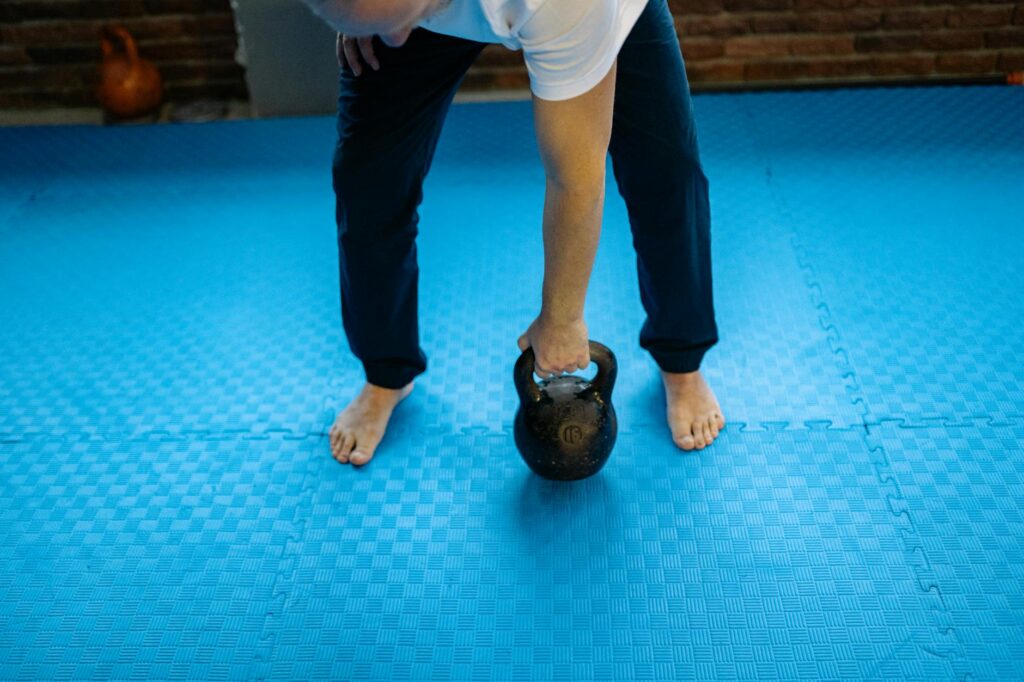
Best Kettlebell in 2026: Ranked by Weight, Quality, and Value
Kettlebells are the highest-ROI piece of home gym equipment available. One well-chosen kettlebell covers conditioning, strength, mobility, and power training in a single tool. Here is how to pick the right one.
Best overall: CAP Barbell Cast Iron Kettlebell: accurate weight, smooth handle, available in every increment, best price per pound. Best adjustable: Bowflex SelectTech 840: replaces six kettlebells in one footprint, ideal for limited space. Best competition-grade: Rogue Fitness Kettlebell: uniform dimensions across all weights, machined handle, lasts decades. Best budget starter: Yes4All Cast Iron: functional, good finish, solid entry point for beginners.
Why Kettlebells Are Worth Owning
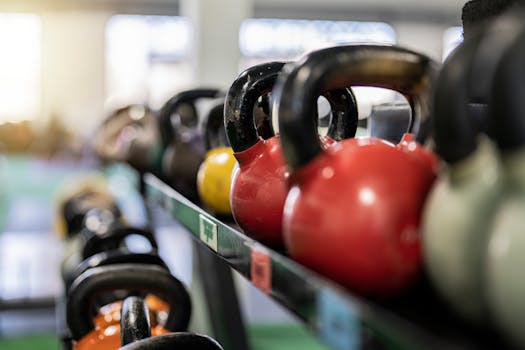
A single 35 lb kettlebell covers more training modalities than most people realize: swings for posterior chain conditioning and cardiovascular fitness, Turkish get-ups for full-body mobility and stability, goblet squats for lower body strength, overhead presses for shoulder development, rows for upper back, and carries for grip and core. No other single piece of equipment at this price point matches that range.
The research on kettlebell training is positive but thinner than the enthusiasm around it suggests, and worth describing accurately. A 10-week study in recreationally active women found gains in both maximum strength (about 24%) and VO2max (about 10%) from the same programme, which is the clearest published example of strength and aerobic capacity improving together. A 12-week twice-weekly kettlebell swing protocol in 53 trained participants measured gains in deadlift strength, jump power, and muscular endurance. Read those honestly, though: sample sizes are small, several trials lack control groups, and durations are short. The combination of strength and conditioning from one implement is genuinely unusual for the price. It is not as thoroughly evidenced as the barbell literature. For athletes who want a home training option that complements their gym work, kettlebells are the highest-value addition.
#1 Best Overall: CAP Barbell Cast Iron Kettlebell
CAP cast iron kettlebells hit the combination that matters most for most buyers: accurate listed weight (within 2–3% tolerance), a handle diameter (33mm) that works for both one-handed and two-handed exercises, a smooth powder-coat finish that is comfortable on the palm during high-rep swings, and the lowest price per pound in the category. They are available in every standard increment from 10 lbs to 70 lbs, which allows progressive overload without buying a specialty set.
The flat base allows upright storage without rolling. The single-cast construction (no welds) means no weak points. For athletes who want one or two specific weights to complement existing gym training (a 35 lb for swings and presses, a 53 lb for heavier work) CAP is the correct default choice.
#2 Best Adjustable: Bowflex SelectTech 840
The Bowflex SelectTech 840 replaces six kettlebells (8, 12, 20, 24, 28, and 32 kg) in a single unit using a dial-select mechanism. For home athletes with limited storage space who want the flexibility to use different weights for different exercises (lighter for Turkish get-ups, heavier for swings), the adjustable format removes the need to own and store six separate bells.
The tradeoff: the SelectTech has a slightly different balance than a standard cast iron kettlebell due to the adjustment mechanism in the base, which some athletes notice during ballistic movements (swings, cleans, snatches). For non-ballistic work (presses, goblet squats, carries, Turkish get-ups) this difference is negligible. For swing-focused training, many athletes prefer the feel of a standard cast iron bell.
#3 Best for Serious Training: Rep Fitness Kettlebell
Rep Fitness kettlebells occupy the sweet spot between competition-grade and budget cast iron, machined handles with consistent 35mm diameter across all weights, a flat base, and weight tolerance within 2%. The matte black powder coat is applied thicker than most budget bells, which significantly reduces the blistering and callus formation that cheaper finishes produce during high-rep sets.
For athletes doing structured kettlebell programs (StrongFirst, Dragon Door, Kettlebell Simple & Sinister) where volume is high and hand integrity matters, the Rep Fitness finish justifies the modest price premium over budget options. Available from 8 kg to 48 kg in standard increments.
#4 Best Budget Set: Yes4All Cast Iron Kettlebell Set
The Yes4All cast iron kettlebells are the correct starting point for athletes who are not sure what weight they need or who want to test whether kettlebell training will become a consistent habit before investing in higher-quality bells. Finish quality is adequate (not exceptional), weight tolerance is within 3–5% (not machined precision), and handle diameter is functional for all standard movements. At this price point, the value is unambiguous.
#5 Best Premium: Rogue Fitness Kettlebell
Rogue kettlebells are machined to competition tolerances, finished with an e-coat that outperforms powder coat for long-term durability and hand comfort, and backed by a warranty that reflects genuine manufacturing confidence. The handle geometry is consistent across all weight increments: a significant advantage for athletes moving between weights, as the movement pattern does not change when you pick up a heavier bell.
At $1.50–$2.00 per pound (versus $0.70–$1.00 for budget options), Rogue is a meaningful premium. For athletes who will use the equipment daily for years, the premium is justified by longevity. For athletes testing kettlebell training or on a budget, start with CAP and upgrade when the habit is established.
What Weight to Start With
The most common beginner mistake with kettlebells is buying too light. Kettlebell swings (the foundational movement) require a weight that provides enough momentum to drive the hip hinge pattern. A weight that is too light allows you to lift with your arms instead of your hips, which defeats the purpose and produces no training effect.
Starting weight guidelines: Men with gym training background, 35 lbs (16 kg). Women with gym training background, 26 lbs (12 kg). Men without training background, 26 lbs (12 kg). Women without training background, 18 lbs (8 kg). If in doubt between two weights, choose the heavier one. You will progress into it faster than you expect.
The 4 Movements That Cover Everything
Swing: The foundation of kettlebell training. Develops posterior chain power, cardiovascular conditioning, and hip hinge mechanics. 2–3 sets of 10–20 reps. Goblet Squat: Best beginner squat teaching tool available. Counterbalance allows naturally upright torso. 3 sets of 8–12 reps. Turkish Get-Up: Full-body stability and mobility in a single movement. 3–5 reps per side at a controlled pace. Overhead Press: Single-arm pressing strength and shoulder stability. 3 sets of 5–8 reps per side. These four movements, performed 2–3 times per week, constitute a complete training program for most recreational athletes.
Common Questions
Can you build muscle with just a kettlebell?
Yes, particularly in the posterior chain (glutes, hamstrings, lats) and shoulders. Kettlebell training is less efficient for building maximum size in chest and quads compared to barbell training with progressive overload. For overall athleticism, conditioning, and functional strength, a kettlebell program is complete. For bodybuilding-specific goals, kettlebells supplement but do not replace a barbell.
What is the difference between a cast iron and competition kettlebell?
Cast iron kettlebells vary in size across weights (a 48 kg is physically larger than a 16 kg). Competition kettlebells have uniform external dimensions across all weights, only the density of the metal changes. For beginners and most recreational athletes, cast iron is appropriate. For athletes doing sport-specific training where the movement mechanics need to be identical across weights, competition bells are preferred.
How many kettlebells do you need?
One kettlebell covers a complete training program. Most athletes progress to two: a lighter bell for pressing and Turkish get-ups, a heavier bell for swings and squats. A three-bell setup (light/medium/heavy) covers every training scenario. More than three is rarely necessary unless programming specifically requires it.
Related: Best Resistance Bands · How to Build a Strength Program · Best Home Gym Equipment · Strong App vs Hevy
What Weight Kettlebell Should You Start With?
The single most common kettlebell mistake is buying too light. A weight that challenges you for swings will feel very different for Turkish get-ups or windmills, but the swing weight is the right starting point because swings and deadlifts drive the most training value early on.
| Athlete Type | Recommended Starting Weight | Why |
|---|---|---|
| Women: beginner, limited strength training background | 18–26 lbs (8–12 kg) | Light enough to learn form, heavy enough to produce real stimulus for swings |
| Women: intermediate, regular gym training | 26–35 lbs (12–16 kg) | Challenging for swings, manageable for goblet squats and presses |
| Men: beginner, limited strength training background | 35 lbs (16 kg) | The classic starting weight for men: heavy enough to be real work, light enough to learn |
| Men: intermediate, regular strength training | 44–53 lbs (20–24 kg) | Will produce real strength and conditioning adaptation for swings and carries |
| Experienced athletes adding kettlebells to existing training | 53 lbs (24 kg) for women / 70 lbs (32 kg) for men | Competition standard weights, the most commonly used sizes in serious KB practice |
If budget allows, buy two kettlebells: one for pressing and overhead work (lighter) and one for swings, deadlifts, and carries (heavier). The strength demands of these movement categories are different enough that one weight will always be a compromise. A common starting pair for intermediate athletes: 26 lbs + 35 lbs (women) or 44 lbs + 53 lbs (men).
Cast Iron vs Competition vs Adjustable: Which Type Is Right for You
Cast Iron Kettlebells
Cast iron is the default for most athletes. The bell and handle are a single cast piece, making them extremely durable with no failure points. Handle diameter typically ranges from 30–35mm depending on the manufacturer and weight, larger bells have wider handles. The shape changes slightly across weights, which affects how the bell sits in the rack position. Best for: home gyms, general athletic use, anyone who does not compete in kettlebell sport.
Competition Kettlebells
Competition kettlebells (also called sport kettlebells) maintain identical external dimensions across all weights, a 16kg and a 48kg competition bell are exactly the same size. This is critical for kettlebell sport athletes who need consistent rack position and shoulder mechanics across weights. The handle diameter is standardized at 33–35mm. They are typically hollow-filled to achieve target weights, which some athletes find affects the feel of dynamic movements. Best for: kettlebell sport competitors, athletes who train with multiple weights and want consistent mechanics. The Rogue kettlebell is the best widely available option in this category.
Adjustable Kettlebells
Adjustable kettlebells (the Bowflex SelectTech 840 being the most proven design) replace multiple bells with a single unit. The SelectTech 840 adjusts from 8 to 40 lbs in 5-pound increments. The advantages are significant for space-constrained training environments, one footprint replaces six separate bells. The trade-off: adjustable kettlebells are bulkier than the equivalent weight in a cast iron bell, which affects balance in some movements. The dial mechanism adds a failure point that solid cast iron does not have. Best for: apartment dwellers, home gyms with limited floor space, athletes who want to explore a weight range before committing to permanent bells.
The Four Exercises That Justify Owning a Kettlebell
Kettlebells are not just a novelty, specific movements are genuinely better performed with a kettlebell than with dumbbells or barbells:
Swing: The two-handed swing is the foundational kettlebell movement, a hip hinge power exercise that simultaneously trains posterior chain strength, aerobic conditioning, and anti-flexion core stability. No other single exercise in the same time investment produces this combination of adaptations. A 10-minute swing protocol (10 swings every minute for 10 minutes) is a legitimate conditioning session for most athletes.
Turkish Get-Up (TGU): The TGU takes you from lying flat on the floor to standing with a weight held overhead, then back down: requiring shoulder stability, hip mobility, core anti-rotation, and full-body coordination. It is one of the best assessments and developers of functional movement quality available. A single 10-minute TGU practice is effective warm-up or active recovery for strength athletes.
Goblet Squat: Holding a kettlebell at chest height counterbalances the squat, making it easier to achieve depth and an upright torso than a barbell back squat. This makes it ideal for teaching squat mechanics, for athletes with limited hip mobility, and as a loaded squat option when barbell training is not available.
Single-Arm Press and Clean: The offset center of mass of a kettlebell creates rotational demand during pressing and cleaning that dumbbells do not. The clean into rack position is a skill: once learned, it enables a full chain of ballistic movements (clean, press, snatch) from a single bell.
Frequently Asked Questions
How many kettlebells do I actually need?
One well-chosen kettlebell is enough to start and covers most training needs for months. Two kettlebells (one for pressing, one for swings) unlock double kettlebell work and remove the compromise of using one weight for everything. Beyond two, additional weights add variety but are not essential until you have exhausted the programming potential of what you have. Most serious KB athletes own 3–5 bells covering their full working weight range.
Are kettlebells worth it for home gyms?
Yes. They have the highest training output per square foot of any piece of home gym equipment. A single 35-pound cast iron kettlebell takes up less than 1 square foot of floor space and enables hundreds of exercises covering strength, conditioning, and mobility. The cost per year of use is lower than any gym membership for athletes who train consistently at home.
Can you build muscle with kettlebells alone?
Yes, to a meaningful degree, especially for intermediate and recreational athletes. Published trials show meaningful strength gains from structured kettlebell programmes, though most measure strength and power rather than muscle size directly, so treat the hypertrophy claim as the weaker half of that sentence. The limiting factor at advanced levels is load: without very heavy bells or double-bell work, progressive overload becomes harder to sustain beyond intermediate training stages. Athletes who prioritize maximum hypertrophy will eventually need barbells or heavier implements; for general strength and fitness, kettlebells are sufficient for most people’s goals.
What is the difference between a kettlebell and a dumbbell?
The center of mass is below the handle in a kettlebell and within the handle in a dumbbell. This shifts weight distribution and makes ballistic movements (swings, cleans, snatches) more natural with a kettlebell because the bell can rotate around the hand freely. Dumbbells are better for isolation exercises (curls, lateral raises) where precise control is needed. Kettlebells are better for dynamic, full-body movements. For home training with limited equipment, a single well-chosen kettlebell covers more athletic development than the equivalent investment in a dumbbell pair.