
Best Home Gym Equipment in 2026: What to Buy First (And What to Skip)
Most home gym advice starts with what is impressive. This guide starts with what actually makes you stronger. Here is the equipment that earns its space, ranked by training value per dollar.
Buy in this order: adjustable dumbbells first, then a pull-up bar, then a barbell and plates if space allows. Every other piece of home gym equipment is secondary to these three. Once you are loading a barbell, our plate loading calculator works out which plates go on each side, including when your set cannot make a given weight at all. A $300 investment in those three items delivers more training value than a $2,000 multi-gym machine.
The home gym equipment market is full of products that look impressive in a garage photo but do not make you meaningfully stronger or fitter. The barbell has not changed meaningfully in 80 years because it does not need to. It is the most effective strength training tool humans have developed. The same is true of a pull-up bar and a set of dumbbells. Building around these fundamentals, in priority order, produces better training outcomes than a room full of specialty equipment bought out of sequence.
Priority 1: Adjustable Dumbbells
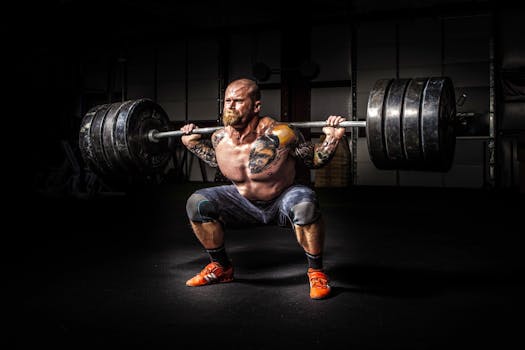
Adjustable dumbbells are the single highest-value home gym purchase. A single pair replaces 15–20 individual dumbbells, covers compound and isolation exercises, stores in a fraction of the space, and provides enough variety to run a complete strength program for years before outgrowing them. The two market leaders are PowerBlocks and Bowflex SelectTech, both use dial or pin adjustment systems that allow fast weight changes between sets.
The Bowflex SelectTech 552s adjust from 5–52.5 lbs per dumbbell in 2.5 lb increments. This covers the full range for upper body work for most athletes and provides enough weight for goblet squats, Romanian deadlifts, and weighted lunges. The range tops out for intermediate-advanced athletes doing heavy pressing, at which point you are strong enough to justify a barbell anyway.
Priority 2: Pull-Up Bar
Pull-ups are one of the most effective upper body exercises available: engaging lats, biceps, rear delts, and core simultaneously. A doorframe pull-up bar costs $30–$50 and installs in seconds. A wall-mounted bar costs $60–$100 and provides more stability for kipping, L-sits, and weighted pull-ups. There is no substitute in home gym training for vertical pulling, rows target a different movement pattern and do not develop the same scapular control and lat width.
Priority 3: Barbell + Bumper Plates
Once you can do 10 pull-ups and are pressing 45+ lb dumbbells, a barbell opens up training capabilities that dumbbells and machines cannot replicate: heavy deadlifts, squats, bench press, overhead press, and rows with progressive overload into the hundreds of pounds. A standard Olympic barbell (20kg, 28mm diameter) and 200–300 lbs of bumper plates is a one-time purchase that serves a lifetime of training.
Rogue Ohio Bar is the benchmark: excellent tensile strength, good knurling, smooth rotation, 10-year warranty. It is $300 and worth it for athletes who will train seriously for years. Budget option: the CAP Barbell Olympic bar at $120–$150 is adequate for most home lifters who are not competing and not lifting extreme loads.
Priority 4: Squat Stand or Power Rack
A barbell is only half useful without something to rack it on for squats and bench press. A basic squat stand ($150–$250) provides safety pins and J-hooks for loaded squats and bench without the full footprint of a power rack. A power rack ($300–$600) adds a full safety cage, essential for training to failure alone on squats and bench. If space allows, a power rack is the correct purchase. If space is limited, a folding squat stand is the compromise.
Priority 5: Resistance Bands
A set of loop resistance bands ($20–$40) adds exercise variety without taking up meaningful space. Banded pull-aparts for shoulder health, hip circle work for glute activation, banded deadlifts for speed work, face pulls for rear delt development, bands cover assistance exercises and mobility work that free weights do not address as efficiently. Buy them before specialty machines, cardio equipment, or any cable system.
What to Skip (At Least Initially)
Multi-gym cable machines: Useful but expensive ($1,500–$4,000) and less versatile than free weights for compound movements. If you have a full barbell setup, a cable machine is a luxury addition, not a foundational purchase. Smith machines: Force you into a vertical movement plane that reduces activation of stabilizer muscles and limits transfer to real-world strength. Spend the money on a squat rack instead. Cardio equipment: A treadmill costs $1,000–$3,000 and dominates a room. A jump rope ($15) provides cardiovascular conditioning in a fraction of the space. Only buy large cardio equipment if space and budget are genuinely not constraints.
Tracking Your Home Gym Progress
Home gym athletes benefit enormously from workout logging apps. Without a trainer watching, progressive overload becomes accidental rather than systematic. Strong App or Hevy logging each session (weights, reps, rest times) creates the data trail that makes consistent strength progress possible. Pairing this with a recovery tracker (WHOOP or Oura Ring) to manage the balance between home gym training and recovery closes the feedback loop that most home gym athletes are missing.
Common Questions
How much does a complete home gym cost?
A complete functional home gym (adjustable dumbbells, pull-up bar, barbell, bumper plates, and squat stand) runs $800–$1,500 depending on brand choices. This covers essentially every strength training need indefinitely. A starter setup (just adjustable dumbbells and pull-up bar) runs $300–$400.
Do you need a power rack to train safely at home?
For heavy squats and bench press without a spotter, yes, a power rack with safety pins allows you to fail safely. For dumbbell training and deadlifts, a rack is not required. The squat is the highest-risk lift to train alone without safety equipment.
What flooring do you need for a home gym?
Rubber flooring (horse stall mats at $40–$50 per 4×6 sheet) is the cost-effective standard. It protects your subfloor from dropped weights, reduces noise transmission, and provides grip. For a typical garage gym, 3–4 mats cover the lifting area completely.
Can you build a competitive physique in a home gym?
Absolutely. The equipment in a well-outfitted home gym covers every major movement pattern. The limiting factor is rarely equipment. It is programming, consistency, and recovery. Many competitive natural bodybuilders and powerlifters train primarily at home.
Building Your Home Gym in Phases
The mistake most people make with home gyms is buying too much too soon, discovering what they actually use, and ending up with $2,000 of equipment they use 30% of and storage problems. A phased approach is significantly smarter. Phase 1 (months 1–3): establish the training habit with minimal equipment: adjustable dumbbells, a pull-up bar, a resistance band set. Total cost: $200–$400. Identify what movements you consistently do and what you consistently avoid. Phase 2 (months 4–12): add equipment targeted at the movements your Phase 1 data revealed you actually perform. Phase 3 (year 2+): specialty equipment for the specific training you have proven you will sustain.
The equipment that almost always survives Phase 1 and gets upgraded in Phase 2: a barbell and plates (the ceiling of what adjustable dumbbells can load), a squat rack (enables the most effective lower body training available), and a quality bench. These three pieces (barbell, rack, bench) have equipped professional athletes for decades and produce better strength outcomes than any machine at any price point. A complete barbell/rack/bench setup costs $600–$1,200 for quality entry-level equipment and lasts for decades of daily use.
Flooring: The Most Overlooked Home Gym Investment
Flooring is consistently the most important quality-of-life improvement in a home gym and the most frequently underestimated. Dropping weights on concrete damages equipment rapidly and creates noise that carries through the house. Training on concrete with bare feet or thin shoes creates joint impact that accumulates into lower leg and foot problems over months of heavy use. And the psychological effect of training on a proper surface versus bare concrete or carpet is meaningful, a proper gym floor signals that the space is dedicated to training.
Rubber stall mats (the 4×6 foot, 3/4 inch thick mats sold at farm supply stores) are the gold standard for home gym flooring at a fraction of the cost of specialty gym tiles. A 10×10 foot space requires 4 mats at approximately $50 each, $200 total for flooring that will last 10+ years. Specialty puzzle tile flooring ($1.50–$3/sqft) is more aesthetically polished but not meaningfully more functional for most training purposes. Lay the mats, tape the seams if needed for aesthetics, and move on to equipment.
The Home Gym Equipment That Never Gets Used
Every experienced home gym owner has a graveyard of equipment that seemed essential before purchase and is now a coat rack or garage storage item. The most consistent offenders: ab rollers purchased before the core strength to use them correctly, battle ropes that require more space and a secure anchor than most home setups provide, TRX suspension trainers that go unused once the novelty wears off, and treadmills that become functional clothes storage after the first 6 months.
Common theme: equipment that requires high motivation to use consistently will not be used consistently. A barbell sits in a rack and is ready to use immediately. An ab roller requires finding it, finding floor space, and remembering the technique. A pull-up bar bolted to the doorframe is used every time you walk past it; a set of gymnastics rings hung in the garage is used when you remember they exist. Prioritize equipment that is immediately accessible and requires minimal setup.
Frequently Asked Questions
What is the minimum investment for a functional home gym?
A set of adjustable dumbbells ($150–$300), a pull-up bar ($30), and a resistance band set ($15–$40) costs under $400 total and covers the vast majority of training needs for most athletes. Adding a barbell, plates, and squat rack ($600–$800 for quality entry-level) creates a home gym capable of supporting elite-level strength training. The mythical “$5,000 home gym” is real but not necessary: most athletes train better with $1,000 of well-chosen basics than $5,000 of varied equipment they do not use.
How do you soundproof a home gym for dropping weights?
Three layers: floor (rubber mats absorb impact), bumper plates instead of iron (rubber coating dramatically reduces noise on drops), and wall insulation (moving blankets on walls reduce echo in smaller spaces). Bumper plates are the single most effective noise reduction investment, the combination of rubber construction and intentional drop design reduces impact noise by 60–70% versus iron plates on rubber mats alone.
Is a squat rack worth it for home gym?
If you barbell squat, bench press, or overhead press, yes, unequivocally. A squat rack makes these movements safely self-spottable (safety bars catch the bar if you fail a rep), which removes the need for a training partner and expands the range of intensities you can safely train at home. A quality entry-level power rack ($400–$600) is the highest-ROI equipment purchase for a strength-focused home gym.
Related: How to Build a Strength Program · Best Strength Training App · Strong App vs Hevy · Creatine Guide for Athletes