
Best Strength Training App in 2026: Ranked and Reviewed
The right logging app compounds over time, every session you track is data you can actually use. Here is what to use and what to pair it with.
The best strength training app is the one you actually use every session: consistently, mid-set, without friction. But the app is only part of the equation. If you are training seriously enough to track your lifts, the gear you lift with matters too. This guide covers both: the best apps for logging your training and the hardware worth adding as your numbers climb. If you want the short answer before the detail: Hevy is the best free logger for most lifters, and the gear that actually changes your training is a decent adjustable bench long before it is anything with a screen.
Why Tracking Your Lifts Matters
Progressive overload is the core mechanism of strength development. More volume, more intensity, or more density over time. That is how muscles adapt. Without a log, you are guessing whether you are actually applying progressive overload or just doing the same workout indefinitely. After six months of consistent logging, most lifters can point to exactly where they stalled, exactly where they accelerated, and exactly what changed. That is not possible with memory alone.
The habit of logging also creates accountability mid-session. Knowing you have to record the set makes you less likely to cut reps or bail early on a hard set. Small effect, real effect.
Our Top Picks
Strong App
Best OverallStrong is the benchmark for strength logging. The fastest session logging on the market, automatic rest timers, pre-loaded previous weights, a built-in plate calculator, and clean PR tracking across thousands of exercises. It does one thing (log your training) and does it better than anything else. At $29.99/year, it earns back its cost in the first month.
Hevy
Best Free OptionHevy’s free tier is genuinely unlimited: no routine caps, no paywalls on core features. The social feed lets you follow other lifters and see real training logs, which creates low-key accountability and exposes you to new exercise variations. Community-shared programs make getting started fast. For lifters who want to build the logging habit before paying, Hevy is the smartest starting point.
Rogue Ohio Power Bar
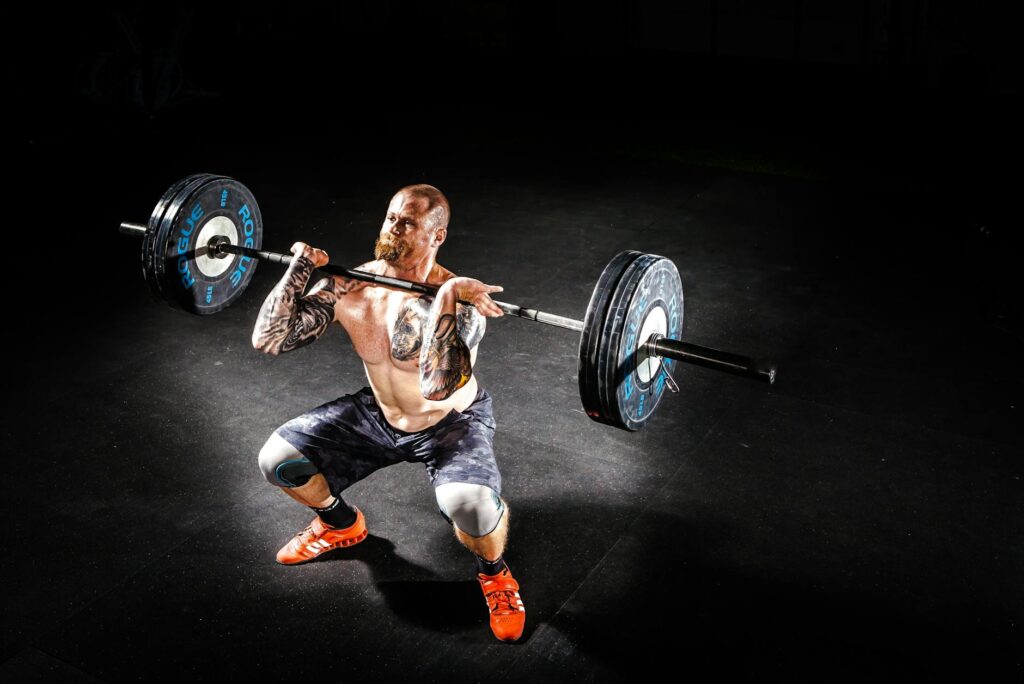
Top Gear PickNo strength logging app is useful without a bar worth logging. The Ohio Power Bar is the standard: 205,000 PSI tensile strength steel, aggressive knurling that bites without shredding, and dual knurl marks for powerlifting and Olympic. If you are building a home gym and buying one bar, this is the one. It will outlast every app on this list.
Gymreapers Lifting Belt (10mm)
Essential GearOnce you are squatting or deadlifting above 85% of your max consistently, a belt stops being optional. The Gymreapers 10mm lever belt is the best value in serious belts: single-ply leather, quick lever buckle, and the 10mm thickness that powerlifting federations allow. Pair it with Strong or Hevy and the PRs you are logging will actually be comparable week to week.
Gymreapers Wrist Wraps (18″)
Worth AddingWrist stability becomes a real issue as pressing numbers climb. Gymreapers wrist wraps are stiff enough to provide genuine support without being so rigid you lose feel on the bar. The thumb loop makes solo wrapping easy. If you are logging pressing sessions in Strong or Hevy and noticing wrist discomfort above 80% of your max, these are the cheapest performance upgrade you can make.
The Bottom Line
Start with Hevy if you want to build the logging habit for free. There is no reason not to. Upgrade to Strong once logging is part of your routine and you want the fastest, cleanest experience possible. At $29.99/year, Strong is cheaper than a single month of most supplements that do less for your training.
For gear: a quality bar and a belt become genuinely important once you are squatting and deadlifting consistently above 80% of your max. The Gymreapers belt and wrist wraps are the highest-value gear upgrades at their price points.
How Strength Apps Handle Progressive Overload
Progressive overload (the systematic increase in training stress over time) is the mechanism that makes you stronger. The apps handle this differently and the difference matters for athletes who want more than a log book. Strong tracks your estimated 1-rep max for every exercise using the Epley formula (weight × reps × 0.0333 + weight) and graphs the trend over time. That is the same calculation behind our one rep max calculator, which also shows the Brzycki result and a full percentage chart for programming. When your estimated 1RM stops improving across multiple sessions, it is a clear signal to evaluate your program: whether that means adding weight, adjusting reps, increasing volume, or deloading.
Hevy displays similar progress metrics and includes a volume heatmap that shows which muscle groups you have been training most and least over recent weeks. For athletes who run push-pull-legs or upper-lower splits, this heatmap quickly surfaces imbalances, the common pattern of too much chest and not enough back becomes visible as lopsided volume distribution, which is more actionable than a vague sense that you might be overtrained in one area.
Building Your First Strength Program in an App
The fastest way to start logging is to use one of the built-in programs rather than building from scratch. Strong includes several popular beginner programs (5/3/1, Starting Strength, GZCLP) that you can load with one tap and begin on the same day. Hevy has community-uploaded programs including most of the same templates, searchable by training style and experience level. For beginners, picking any well-structured beginner program and executing it consistently for 12 weeks produces better results than spending time designing a custom program.
When you are ready to build your own: structure routines around the four fundamental movement patterns (hip hinge, squat, horizontal push, pull), pick 4–6 exercises per session, track 3–5 sets per exercise, and log every session. The first month of data will show you which exercises you progress fastest on (genetics and motor learning vary), which you find hardest to recover from, and where your weakest links are. Building a program around your personal data is more effective than following someone else’s program generically, and you cannot do it without a log.
Gear That Extends What the App Tracks
A kitchen or postal scale lets you track bodyweight with one-gram precision for nutrition logging alongside your workout logs, seeing strength and body composition data in parallel tells a more complete story than either alone. A training journal (physical notebook) alongside the app might seem redundant, but many athletes find handwriting session notes (RPE, technical cues, how a movement felt) captures context that an app’s structured fields do not. When you look back six months later trying to understand a plateau, those notes often contain the answer.
For home gym athletes, a barbell and bumper plates are the most efficient investment in progressive overload available: more flexible than any machine, more measurable than dumbbells, and the foundation of the most effective strength programs ever written. The Gymreapers lifting belt becomes relevant once you are squatting and deadlifting above 80% of your max consistently, it supports intra-abdominal pressure for heavy compound movements and enables more consistent rep quality at high loads.
This guide covers the most important considerations for making the right decision. The best tool is the one you will use consistently, accuracy of data matters less than the habit of collecting and acting on it. Whether you are choosing between devices, building a tracking routine, or optimizing an existing system, start with one clear goal, pick the tool that serves it best, and give it at least eight weeks before evaluating whether it is working. Data compounds over time; the athletes who get the most from their devices are those who have been consistent the longest.
Related: Strong App Review · Hevy App Review · Strong vs Hevy · how to build a strength program · best free workout tracking apps