
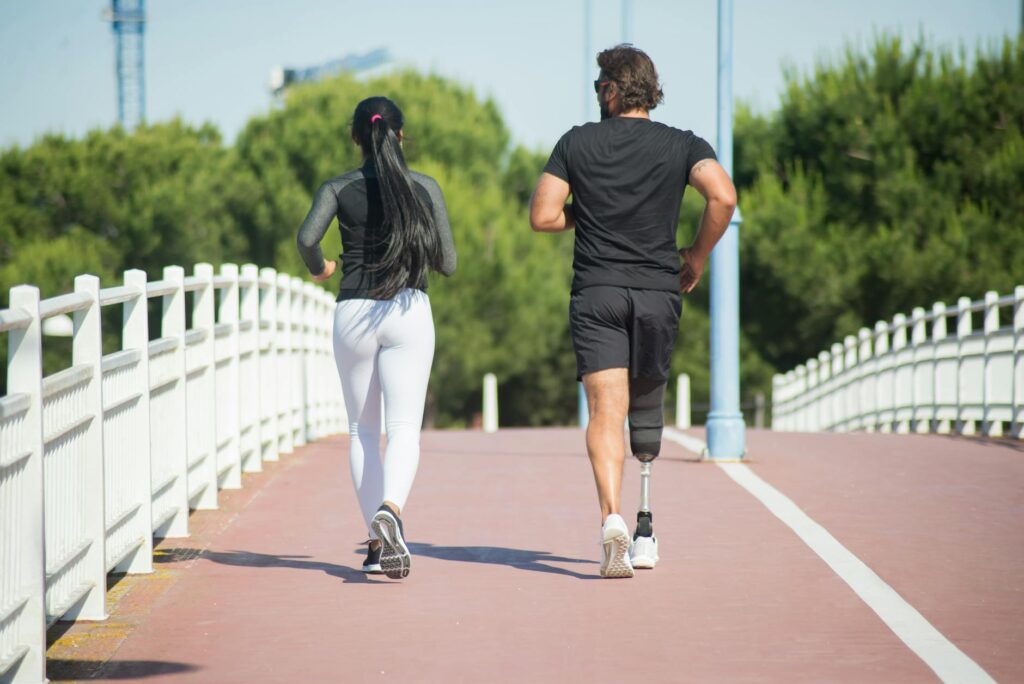
A 5K is 3.1 miles. For most non-runners, it feels like a daunting distance, and then they finish one and wonder what the fuss was about. The training is simpler than most guides make it look. This is a no-fluff plan to get you from couch to 5K finish line in 8 weeks without getting injured.
What Actually Matters in 5K Training

Three things determine whether your first 5K goes well: building aerobic base gradually enough that you don’t get injured, developing running-specific leg strength to handle the repetitive impact, and showing up consistently enough that adaptations accumulate. Everything else is secondary.
The most common reason people fail to finish a 5K training plan is injury, not lack of fitness. Shin splints, knee pain, and IT band issues are almost always the result of doing too much too soon. The plan below is conservative on purpose. The goal is arriving at race day healthy, not maximizing training volume.
Before You Start: Gear and Baselines
Running shoes: Get fitted at a running store if possible. The right shoe for your gait makes a bigger difference than any training hack. Budget $100–$150 for a decent pair, it’s the most important equipment investment.
Baseline test: Walk briskly for 30 minutes. If you can do that comfortably, you’re ready to start. If 30 minutes of brisk walking is difficult, spend 1–2 weeks building walking fitness first.
Optional tracking: A GPS watch like the Garmin Forerunner 265 or even just your phone tracks distance and pace. Useful but not required, perceived effort works fine for this plan.
The 8-Week Plan
This follows a run/walk interval approach in the early weeks, transitioning to continuous running by week 5. Train 3 days per week with at least one rest day between sessions.
Weeks 1–2: Run/Walk Foundation
Each session: 5-minute warm-up walk, then alternate 1 minute running / 2 minutes walking for 20 minutes, 5-minute cool-down walk. Total time: ~30 minutes. The running intervals should feel conversational, if you can’t speak in short sentences while running, slow down.
Weeks 3–4: Extending the Runs
Each session: 5-minute warm-up, then alternate 2 minutes running / 1 minute walking for 20–25 minutes, 5-minute cool-down. Total time: ~35 minutes. You’ll start to feel the difference between comfortable and pushed effort, aim for comfortable.
Weeks 5–6: First Continuous Runs
Session 1 and 2: Run 20 minutes continuously, no walking breaks. It will feel hard at first, the first 8–10 minutes are always the worst and then it gets easier. Go slow enough that you could hold a conversation. Session 3: Run 25 minutes.
Weeks 7–8: Race Prep
Session 1: 25-minute run. Session 2: 30-minute run. Session 3 in week 7: 28-minute run. Week 8: Monday, 25 min easy run. Wednesday, 20 min easy run. Race day: rest Thursday and Friday, light walk Saturday, race Sunday.
Pacing Strategy for Race Day
The most important thing on race day: start slower than you think you should. Every first-timer goes out too fast and struggles in mile 2. A good rule: your first mile should feel embarrassingly easy. You can always negative-split (run the second half faster). You can’t undo a blown first mile.
If you’ve been training with a GPS watch, aim to run your first mile at least 30 seconds per mile slower than your training pace. For non-watch runners: if your first minute feels genuinely easy, you’re probably pacing right.
Common Problems and Fixes
Side stitch (cramp under your ribs): Usually caused by starting too fast or shallow breathing. Slow down, breathe deeply focusing on your exhale, and it typically resolves in 1–2 minutes.
Shin pain: Sign you’re doing too much too soon. Take 2–3 rest days, apply ice, and repeat the previous week’s training when you return, don’t try to push through.
“I can’t breathe”: Almost always pacing, you’re running faster than your aerobic system can sustain. Slow down until you can breathe through your nose. That’s your aerobic zone.
What to Do After Your First 5K
You’ll probably want to run another one faster. Give yourself a week of easy walking and light activity before resuming structured training. Then continue from week 7 of this plan, adding 5 minutes per long run each week. A sub-30-minute 5K is achievable within 3–4 months of your first finish for most people who train consistently.
For tracking your progress and HR zones, a GPS watch like the Garmin Forerunner 265 or the lightweight Polar Pacer Pro will give you pace, distance, and effort data to train smarter as you progress.
Related Reading
Week-by-Week 8-Week 5K Training Plan
| Week | Mon | Wed | Fri | Sun |
|---|---|---|---|---|
| 1–2 | Run 1 min, walk 2 min × 8 | Rest or walk 30 min | Run 1 min, walk 2 min × 8 | Walk 40 min |
| 3–4 | Run 2 min, walk 1 min × 8 | Rest or walk 30 min | Run 3 min, walk 1 min × 6 | Easy 20 min run/walk |
| 5–6 | Run 5 min, walk 1 min × 4 | Rest | Run 8 min, walk 1 min × 3 | Easy 25 min continuous |
| 7 | Run 15 min continuous | Rest | Run 20 min continuous | Easy 20 min |
| 8 (Race) | Easy 15 min jog | Rest | Easy 10 min shakeout | Race day, 5K |
The pace for all runs in weeks 1–6 should be conversational. You should be able to hold a short conversation without gasping. Most beginners run too fast, which is the primary reason run-walk intervals feel unsustainable. If you cannot say a short sentence while running, slow down. The cardiovascular fitness will come; running economy comes from accumulating easy miles at a sustainable pace, not from suffering through fast ones.
What to Do About Side Stitches, Shin Pain, and Soreness
Side stitches (sharp pain under your ribs during running) are caused by shallow breathing and diaphragm fatigue. The fix: slow down, take several deep belly breaths, and press your fingers into the side where the stitch is. They become less frequent as you develop better running breathing patterns over weeks 3–4. Do not stop running: walk briefly, breathe deeply, and resume at a slower pace.
Shin soreness in the first two to three weeks is normal muscle adaptation. Actual shin splints (sharp pain along the shin bone that persists after the run ends) requires two to three days of rest and ice. If shin splint pain returns after rest, see a physiotherapist before continuing the program. Running through shin splints creates stress fracture risk. The most common cause in beginners is progressing mileage too quickly, the plan above is conservative specifically to avoid this.
General muscle soreness 24–48 hours after a run (DOMS) is normal and does not require rest unless it is severe enough to alter your gait. Walking on sore days promotes blood flow and recovery. Completing easy scheduled sessions on sore days builds the resilience that makes soreness less frequent as the weeks progress.
Race Day Preparation and Strategy
The night before your race, lay out everything you need: shoes, socks, running clothes, race bib, timing chip if provided, and anything you plan to carry. Eat a familiar dinner, nothing new or unusual. Aim for 7–8 hours of sleep, accepting that pre-race nerves may reduce actual sleep time. A night of slightly less sleep than usual does not meaningfully affect 5K performance. What affects performance is going into the race having eaten and hydrated consistently in the 48 hours before it.
On race morning: wake up at least 90 minutes before your start time. Eat a light, familiar breakfast (oatmeal, toast, a banana) 60–90 minutes before start. Drink water steadily but do not overhydrate. Arrive at the race site 30–40 minutes early to collect your bib if needed, warm up with 5–10 minutes of easy jogging, and do some dynamic stretching (leg swings, high knees, butt kicks).
For pacing: start at a pace that feels easier than you think you need to. The biggest mistake first-time 5K runners make is going out too fast in the excitement of race day, then struggling through the second half. A conversational pace for the first kilometer, slightly harder for kilometers 2–4, and whatever you have left for the final kilometer produces better results and a more enjoyable experience than going out at race effort from the gun.
This guide covers the most important considerations for making the right decision. The best tool is the one you will use consistently, accuracy of data matters less than the habit of collecting and acting on it. Whether you are choosing between devices, building a tracking routine, or optimizing an existing system, start with one clear goal, pick the tool that serves it best, and give it at least eight weeks before evaluating whether it is working. Data compounds over time; the athletes who get the most from their devices are those who have been consistent the longest.
Gear for Your First 5K Training Block
You do not need much to train for a 5K, but the right shoes and a way to track your runs make a meaningful difference in how sustainable the training feels.
Free running apps: Strava tracks your GPS routes and pace progression. Nike Run Club has a free guided 5K training plan built in.
Optional Gear for Your First 5K
You do not need anything to start running \u2014 that is the point. But once you are consistent, a GPS watch makes pacing your run/walk intervals far easier than staring at a phone. Budget options like the COROS Pace 3 or Garmin Forerunner 55 cover everything a new runner needs.