

Bottom line: The Oura Ring is a sleep and recovery monitor that happens to sit on your finger. The Garmin Forerunner 265 is a running computer that also tracks recovery. They answer different questions, here’s how to pick.
These Are Not the Same Product
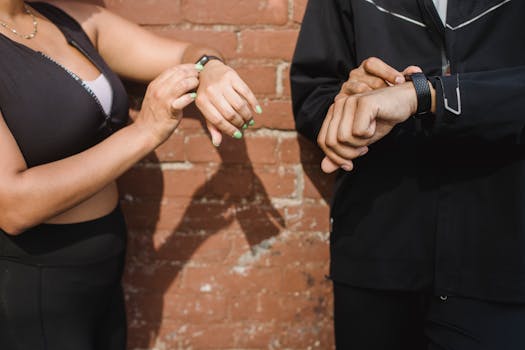
Comparing the Oura Ring 4 to the Garmin Forerunner 265 is a bit like comparing a glucose monitor to a treadmill: both relate to health, but they serve fundamentally different purposes. Understanding that difference is how you pick the right one.
The Oura Ring is a passive health tracker. You wear it, it collects data overnight and throughout the day, and it gives you a readiness score in the morning. It has no GPS, no workout tracking, and no real-time performance metrics. It’s a recovery and sleep intelligence device.
The Garmin Forerunner 265 is an active sports watch. It has multi-band GPS, advanced running metrics, VO2 max testing, structured workout guidance, and a Body Battery recovery score. It also tracks sleep and HRV, but that’s one feature among many, not the whole point of the product.
Sleep Tracking: Oura Wins Clearly
Oura’s sleep staging accuracy is the best available in any consumer wearable. The ring form factor gives it a cleaner photoplethysmography signal than a wristband, and the algorithms behind the readiness score are the most sophisticated available outside clinical settings. If understanding your sleep is the primary goal, Oura has no real competition.
The Garmin’s sleep tracking is solid (you get sleep stages, sleep score, and HRV status) but it’s not as accurate or as detailed as Oura. For most runners, it’s good enough. For anyone making sleep the center of their health practice, it’s not.
Running & Training: Garmin Wins Completely
The Oura Ring does not track runs. It has no GPS, no pace data, no route mapping, no real-time heart rate during workouts, and no structured training features. If you run, the Oura Ring is not your primary wearable, it’s a complement to one.
The Garmin Forerunner 265 has 20-hour GPS battery, multi-band accuracy, Garmin Coach training plans, real-time pace alerts, VO2 max tracking, and everything else a serious runner needs. It’s one of the best running watches at its price point.
Cost Comparison
Oura Ring 4
$349 upfront
+ $5.99/month subscription
Year 1: ~$421
Garmin Forerunner 265
$449 upfront
No subscription
Year 1: $449 total
By year two, Oura costs $72/year more than Garmin just in subscription fees. The Garmin is cheaper long-term and requires no ongoing commitment.
Who Should Get Each One
Get the Oura Ring 4 if: Sleep is your primary focus, you already have a sports watch for workouts, you want the most accurate recovery data available, and you don’t mind the subscription.
Get the Garmin Forerunner 265 if: You’re a runner or triathlete, you want GPS and real-time workout metrics, you hate subscriptions, or you want one device that does most things well without a monthly fee.
Get both if: You’re a serious runner who also wants elite sleep tracking. Many performance-focused athletes wear a Garmin for workouts and an Oura at night. It’s the best of both systems.
Where to Buy
$349 + $5.99/month
Where to Buy
From $449 on Amazon, no subscription
Related Reading
They Do Completely Different Things
Oura Ring and Garmin Forerunner 265 are not actually competing for the same job. The Garmin tracks what you do during training: GPS, pace, heart rate, training load, VO2 Max, and performance analytics. The Oura Ring tracks how your body responds to everything: training, sleep, stress, lifestyle. Both are excellent at their specific jobs. The confusion arises because both generate a “readiness” or recovery score, and both track HRV, but the context and depth differ significantly.
Garmin’s Training Readiness score is generated from HRV status, sleep quality, training load, recovery time, and stress level. It is a training-context score, specifically designed to inform whether your body is ready for a training session and what intensity is appropriate. It works best for athletes who primarily want to know whether to push or hold back on a given workout.
Oura’s Readiness Score is a broader recovery and health assessment: it incorporates sleep staging, temperature deviation, HRV, resting heart rate, and activity balance into a single number. It is more sensitive to non-training stressors (life stress, illness onset, travel) than Garmin’s metric, which is more training-focused. For athletes who want to understand their total physiological state (not just training readiness but overall health and recovery) Oura provides a more complete picture.
The Best Setup: Using Both
The combination of Oura Ring + Garmin Forerunner 265 is one of the most effective dual-device setups available for serious athletes. Garmin handles GPS tracking, training analytics, structured workout delivery, and real-time pace/HR data during sessions. Oura handles overnight recovery monitoring, sleep staging, and morning readiness assessment. Since Oura is a ring and Garmin is a watch, wearing both simultaneously is practical: no wrist conflict, no charging coordination required beyond managing two devices.
The practical workflow: wake up, check Oura Readiness Score to understand your recovery state. Open Garmin Connect for Training Readiness and the day’s suggested workout. If both agree (high readiness on both platforms), push hard. If both are suppressed, rest or go easy. When they disagree, the additional context from each platform helps resolve the ambiguity, Oura might show temperature deviation suggesting early illness while Garmin shows normal training readiness, which should trigger caution regardless of the Garmin score.
Three-Year Cost Comparison
| Device | Year 1 | Year 2–3/yr | 3-Year Total |
|---|---|---|---|
| Garmin FR265 | $449 | $0 | $449 |
| Oura Ring Gen 4 | $421 | $72 | $565 |
| Both Together | $870 | $72 | $1,014 |
HRV Measurement: Ring vs Wrist
Oura Ring measures HRV from the finger where the photoplethysmography signal is cleaner than the wrist. The digital arteries in the finger are closer to the skin surface than the radial artery at the wrist, producing less motion artifact and more consistent overnight readings. The validation record supports that, with two corrections to how it usually gets stated. Dial and colleagues in Physiological Reports (2025) compared five wearables against an ECG reference across 536 nights and found Oura Gen 4 and Gen 3 the most accurate for nocturnal HRV (concordance 0.99 and 0.97), with Garmin’s Fenix 6 the weakest of the group at 0.87. So the ranking in Oura’s favour is real. But the reference in these studies is a chest-strap or lab ECG rather than a Holter monitor, and the strong agreement applies to some HRV metrics more than others: a JMIR validation (2022) found high correlation for RMSSD while SDNN and high-frequency power were only moderate. A later analysis also found accuracy degrades in older users. Treat Oura as the better HRV sensor of the two, not as a lab instrument. Garmin measures HRV from the wrist using its Elevate optical sensor, which is more susceptible to motion artifact. Garmin compensates by measuring during sleep only, which reduces the motion artifact problem significantly. Independent tests show Garmin’s HRV Status trending is reliable for detecting week-over-week changes even if absolute values are less precise than Oura’s ring-based measurement. For athletes making daily training decisions from HRV data, Oura’s higher measurement accuracy produces more stable and reliable signals, fewer “noisy” mornings where the score seems inconsistent with how you feel.
Activity Tracking: What Each Misses
Garmin Forerunner 265 excels at structured workout tracking (GPS, pace zones, intervals, Training Effect) but misses some of the passive health monitoring that Oura Ring captures. Garmin does not track temperature deviation (an early illness signal), does not produce the same quality of sleep staging data, and does not generate a readiness score that integrates non-training stressors as sensitively. Oura Ring tracks all passive health metrics with high accuracy but cannot guide a structured running session, show real-time pace, or connect to a power meter. The combination covers every gap; individually, each leaves something on the table. Athletes who can only afford one device and primarily want training guidance with adequate recovery data should choose Garmin. Athletes who already own a GPS watch and want to add recovery intelligence should choose Oura.
Frequently Asked Questions
Does Oura Ring work with Garmin Connect?
Oura syncs activity and recovery data to Apple Health and Google Health Connect. From there it can connect to Garmin Connect through third-party integration apps, though the sync is not native and requires setup. Garmin Connect does not natively receive Oura data.
Which device gives better battery life?
Oura Ring Gen 4 runs 7-8 days; Garmin Forerunner 265 runs 13 days in smartwatch mode or 20 hours with GPS active. For daily wear with occasional GPS workouts, Garmin requires charging roughly twice as often as Oura. Neither requires daily charging, which both have over Apple Watch.
This guide covers the most important considerations for making the right decision. The best tool is the one you will use consistently, accuracy of data matters less than the habit of collecting and acting on it. Whether you are choosing between devices, building a tracking routine, or optimizing an existing system, start with one clear goal, pick the tool that serves it best, and give it at least eight weeks before evaluating whether it is working. Data compounds over time; the athletes who get the most from their devices are those who have been consistent the longest.
Related: Oura Ring Gen 4 Review · Garmin Forerunner 265 Review · Best Recovery Trackers of 2026 · Oura Ring 4 review